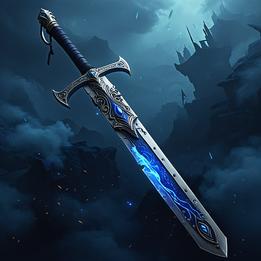
Hilt
The handle of a bladed weapon, representing control, readiness, and the interface between wielder and tool.
Hilt Dream Meaning
The handle of a bladed weapon, representing control, readiness, and the interface between wielder and tool.
Interpretive Themes
Control and Mastery
highGrasping the hilt implies taking charge.
Readiness and Defense
highHilt in hand signals alertness.
Interface and Connection
mediumSymbolizes how you engage with power.
Hidden Potential
mediumBlade sheathed; power is latent.
Ancestral Legacy
lowMay reference family heirlooms or duties.
Cultural Lenses
Jungian Perspective
View Context →Represents the ego's grasp on the 'weapon' of consciousness or will—the handle to the shadow's blade. It's the point where conscious intention meets archetypal power, often seen in hero myths.
Freudian Perspective
View Context →A phallic symbol representing masculine power, aggression, or sexual readiness. The act of gripping may relate to control of libidinal energies or repressed violent impulses.
Gestalt Perspective
View Context →You are the hilt—the part of yourself that 'handles' situations. What does its condition (smooth, rough, broken) say about how you manage your life or conflicts?
Cognitive Perspective
View Context →May reflect mental schemas related to control or problem-solving. The brain processes it as a tool interface, possibly indicating rehearsal for real-world decisions or threat assessment.
Evolutionary Perspective
View Context →Taps into ancient adaptations for tool use and threat response. The hilt signifies preparedness for combat or hunting, activating neural pathways for grip, defense, and resource control.
European Perspective
View Context →Historically, the hilt of a sword (especially a knight's) symbolized oath, lineage, and feudal authority. In modern context, it can represent personal honor, heritage, or legal/moral 'grip'.
East Asian Perspective
View Context →In traditions like Japanese katana-making, the hilt (tsuka) is sacred, wrapped to reflect the wielder's soul. It represents disciplined control, as the blade is only drawn with intent.
Middle Eastern Perspective
View Context →In Islamic and pre-Islamic contexts, ornate hilts on daggers (jambiya) signify social status, tribal identity, and masculinity. Dream may relate to personal honor (sharaf) or protection.
African Perspective
View Context →In many cultures, the hilt of a ceremonial knife or spear can represent ancestral authority, initiation into adulthood, or connection to warrior spirits. It's a link to communal power.
South Asian Perspective
View Context →In Hindu and Sikh traditions, the hilt of a weapon (like a kirpan) symbolizes duty (dharma), self-defense, and spiritual sovereignty. It's a reminder of righteous action.
Modern Western Perspective
View Context →Often metaphorical—'getting a handle on things.' Represents personal agency, decision-making power, or the interface with technology/tools. Detached from literal violence, it's about control.
Global/Universal Perspective
View Context →Across cultures, the hilt universally symbolizes the point of control for a cutting tool. It represents human ingenuity in mastering force, the transition from intention to action.
Want a deeper analysis?
Get a personalized interpretation of your entire dream including this symbol.
Interpret My DreamCommon Appearances & Contexts
| Context | Emotion | Interpretation |
|---|---|---|
| Context Grasping a hilt | Emotion Determined | Interpretation Taking control of situation. |
| Context Hilt breaking | Emotion Vulnerable | Interpretation Loss of control or support. |
| Context Ornate, jeweled hilt | Emotion Proud | Interpretation Valued authority or status. |
| Context Searching for hilt | Emotion Frustrated | Interpretation Seeking means to act. |
| Context Hilt offered to you | Emotion Honored | Interpretation Being given responsibility. |
| Context Hilt too large/small | Emotion Inadequate | Interpretation Mismatch with role. |
| Context Hilt in scabbard | Emotion Restrained | Interpretation Power held in check. |
| Context Hilt burning hot | Emotion Fearful | Interpretation Authority feels dangerous. |
| Context Polishing a hilt | Emotion Focused | Interpretation Preparing for action. |
| Context Hilt transforming | Emotion Confused | Interpretation Changing relationship to power. |
| Context Hilt as key | Emotion Hopeful | Interpretation Tool for unlocking. |
| Context Hilt underwater | Emotion Overwhelmed | Interpretation Control submerged by emotions. |
Interpret Your Full Dream
Beyond this symbol, every dream carries a unique story. Share your dream for a personalized AI-powered interpretation.