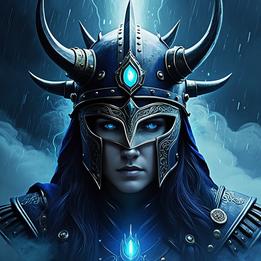
Helm
A helm represents leadership, control, and protection, often symbolizing authority, direction, and responsibility in navigating life's challenges.
Helm Dream Meaning
A helm represents leadership, control, and protection, often symbolizing authority, direction, and responsibility in navigating life's challenges.
Interpretive Themes
Mythological Resonance
Odysseus
GreekTied to the mast to hear the Sirens' song while his crew rowed with ears plugged, demonstrating controlled leadership through temptation.
Naglfari
NorseThe ship made from dead men's nails that will carry Loki's army at Ragnarök, symbolizing a helm steering toward inevitable destruction.
Cultural Lenses
Jungian Perspective
View Context →Represents the Self or ego steering the psyche, integrating conscious and unconscious elements for individuation, often linked to archetypes of the captain or ruler.
Freudian Perspective
View Context →Symbolizes phallic authority and control, possibly reflecting repressed desires for power or paternal conflicts, with the helm as a tool of dominance.
Gestalt Perspective
View Context →Seen as a projection of the dreamer's need for direction or avoidance of responsibility, encouraging exploration of personal agency and life choices.
Cognitive Perspective
View Context →Interpreted as a mental schema for problem-solving or decision-making, reflecting cognitive processes related to planning, risk assessment, and goal orientation.
Evolutionary Perspective
View Context →Rooted in survival instincts for navigation and group leadership, symbolizing adaptive traits for cooperation, resource management, and territorial control.
Global/Universal Perspective
View Context →Widely recognized as a symbol of leadership and guidance across cultures, often associated with maritime traditions, governance, and spiritual direction.
East Asian Perspective
View Context →In traditions like Chinese or Japanese, it may represent Confucian ideals of righteous leadership, harmony, and familial duty, with historical ties to samurai or naval authority.
European Perspective
View Context →Linked to medieval knighthood, Viking exploration, and naval empires, symbolizing chivalry, conquest, and colonial expansion, with modern ties to corporate leadership.
Middle Eastern Perspective
View Context →Associated with ancient seafaring cultures like the Phoenicians, Islamic caliphates, or Bedouin navigation, emphasizing wisdom, trade, and divine guidance in harsh environments.
African Perspective
View Context →May relate to tribal leadership, such as chiefs steering communities, or historical trade routes like the Swahili coast, symbolizing unity, protection, and ancestral legacy.
Modern Western Perspective
View Context →Often metaphorical for CEOs, politicians, or self-help concepts, emphasizing personal empowerment, strategic planning, and ethical leadership in a fast-paced world.
Latin American Perspective
View Context →Connected to pre-Columbian navigation, colonial shipbuilding, and revolutionary leaders, symbolizing resistance, cultural fusion, and community stewardship in diverse societies.
Historical Authorities
Want a deeper analysis?
Get a personalized interpretation of your entire dream including this symbol.
Interpret My DreamThe Oracle's Prediction
Combine multiple symbolsA new leadership role or significant project direction will be offered.
Timeframe
Seasonal (~3 Months)
Intensity
Deep
Common Appearances & Contexts
| Context | Emotion | Interpretation |
|---|---|---|
| Context Steering a ship | Emotion confident | Interpretation Mastery over life's journey. |
| Context Losing the helm | Emotion panicked | Interpretation Fear of losing control. |
| Context Handing over helm | Emotion relieved | Interpretation Delegating responsibility willingly. |
| Context Broken helm | Emotion frustrated | Interpretation Feeling directionless or stuck. |
| Context Fighting for helm | Emotion aggressive | Interpretation Power struggles in life. |
| Context Polishing a helm | Emotion proud | Interpretation Preparing for leadership role. |
| Context Ancient helm found | Emotion awed | Interpretation Discovering ancestral wisdom. |
| Context Helm in storm | Emotion determined | Interpretation Resilience during crises. |
| Context Helm too heavy | Emotion overwhelmed | Interpretation Burdened by responsibilities. |
| Context Helm as gift | Emotion honored | Interpretation Accepting a new role. |
| Context Helm on land | Emotion confused | Interpretation Misplaced authority or control. |
| Context Multiple helms | Emotion indecisive | Interpretation Too many choices or leaders. |
Interpret Your Full Dream
Beyond this symbol, every dream carries a unique story. Share your dream for a personalized AI-powered interpretation.