Haruspex
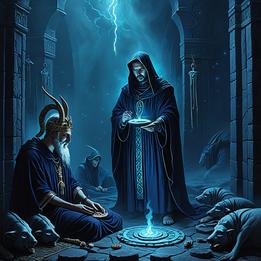
An ancient Roman priest-diviner who interpreted omens by examining animal entrails, representing divination, fate, and ritual sacrifice.
Haruspex Dream Meaning
An ancient Roman priest-diviner who interpreted omens by examining animal entrails, representing divination, fate, and ritual sacrifice.
Interpretive Themes
Mythological Resonance
The Haruspices
Etruscan/RomanPriests who read animal entrails to determine divine will, particularly the liver as a microcosm of the universe.
Bārû priests
MesopotamianAncient diviners who examined animal livers in elaborate rituals to predict royal and state outcomes.
Cultural Lenses
Global/Universal Perspective
View Context →Universal human desire to predict the future and understand fate through ritual means, reflecting anxiety about uncertainty and the search for control in chaotic environments.
Jungian Perspective
View Context →Archetype of the wise old man or seer, representing the unconscious mind's attempt to communicate hidden truths through symbolic imagery (entrails as symbols of inner contents).
Freudian Perspective
View Context →Symbol of repressed desires and anxieties about the body (entrails as visceral, bodily symbols) and death, with ritual as sublimation of primal instincts.
Gestalt Perspective
View Context →Projection of the dreamer's need for clarity and understanding; the haruspex represents parts of the self that seek to interpret internal conflicts or life patterns.
Cognitive Perspective
View Context →Mental process of pattern recognition and prediction-making; the dream reflects cognitive efforts to find meaning in random events or reduce uncertainty through mental models.
Evolutionary Perspective
View Context →Adaptive behavior for survival; divination rituals may have evolved to reduce anxiety, promote group cohesion, or help decision-making in uncertain environments.
European Perspective
View Context →Specifically ancient Roman/Etruscan practice that influenced Western concepts of prophecy and priesthood, historically tied to state religion and political decision-making.
Middle Eastern Perspective
View Context →Parallels to ancient Mesopotamian hepatoscopy (liver divination), where priests examined animal livers to discern divine will, reflecting similar cosmological beliefs.
East Asian Perspective
View Context →Comparable to oracle bone divination in ancient China, where cracks in heated bones were interpreted, showing cross-cultural use of animal remains for prophecy.
African Perspective
View Context →Similar to various traditional divination practices using animal parts (like throwing bones) to communicate with ancestors or spirits for guidance and healing.
Modern Western Perspective
View Context →Viewed as superstitious pseudoscience, but metaphorically represents modern data analysis, forecasting, or any systematic attempt to predict outcomes from complex information.
Latin American Perspective
View Context →Echoes in curanderismo or traditional healing practices that may incorporate divination elements, blending indigenous, African, and European spiritual traditions.
Historical Authorities
Want a deeper analysis?
Get a personalized interpretation of your entire dream including this symbol.
Interpret My DreamThe Oracle's Prediction
Combine multiple symbolsA physical transformation or healing will occur through release.
Timeframe
Seasonal (~3 Months)
Intensity
Deep
Common Appearances & Contexts
| Context | Emotion | Interpretation |
|---|---|---|
| Context Examining entrails | Emotion Fascination | Interpretation Seeking hidden truths. |
| Context Performing ritual | Emotion Reverence | Interpretation Connecting with divine. |
| Context Interpreting omens | Emotion Anxiety | Interpretation Fear of bad news. |
| Context Being consulted | Emotion Power | Interpretation Authority over fate. |
| Context Sacrificing animal | Emotion Dread | Interpretation Cost of knowledge. |
| Context Seeing haruspex | Emotion Awe | Interpretation Witnessing ancient wisdom. |
| Context Ignoring omens | Emotion Defiance | Interpretation Rejecting predestination. |
| Context Failed divination | Emotion Confusion | Interpretation Uncertainty remains. |
| Context Modern haruspex | Emotion Nostalgia | Interpretation Longing for certainty. |
| Context Haruspex in crisis | Emotion Desperation | Interpretation Urgent need for answers. |
| Context Teaching divination | Emotion Pride | Interpretation Passing on tradition. |
| Context Haruspex as fraud | Emotion Skepticism | Interpretation Doubt about predictions. |
Interpret Your Full Dream
Beyond this symbol, every dream carries a unique story. Share your dream for a personalized AI-powered interpretation.