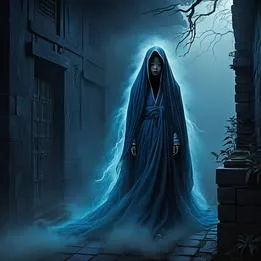
Gwishin Ghost Dream Meaning
A restless Korean spirit, often a deceased person with unresolved earthly attachments or grievances, seeking closure or retribution.
Common Appearances & Contexts
| Context | Emotion | Interpretation |
|---|---|---|
| Being chased | Terror | Avoiding confronting issue. |
| Ghost communicating | Unease | Message needs decoding. |
| Helping ghost | Compassion | Desire to resolve past. |
| Ghost in home | Violation | Personal boundaries invaded. |
| Multiple ghosts | Overwhelm | Many unresolved matters. |
| Ghost transforming | Confusion | Issue changing nature. |
| Banishing ghost | Empowerment | Taking control back. |
| Ghost as familiar | Sadness | Grief for lost connection. |
| Ghost in mirror | Self-doubt | Internalized guilt or fear. |
| Ignoring ghost | Denial | Refusing to acknowledge. |
| Ghost causing harm | Victimization | Feeling powerless to past. |
| Peaceful ghost | Acceptance | Coming to terms. |
Interpretive Themes
Cultural Lenses
Jungian Perspective
View Context →Represents the shadow self or unintegrated aspects of the psyche—traumas, repressed emotions, or ancestral patterns that haunt the conscious mind, demanding acknowledgment and integration for wholeness.
Freudian Perspective
View Context →Symbolizes repressed desires, often of a sexual or aggressive nature, or unresolved childhood conflicts (like Oedipal issues) returning from the unconscious in a disguised, frightening form.
Gestalt Perspective
View Context →An unfinished situation or unexpressed emotion from the past that needs completion; the dreamer may be asked to dialogue with the ghost to reclaim projected parts of themselves.
Cognitive Perspective
View Context →A mental representation of anxiety or intrusive thoughts about death, loss, or unresolved problems; the brain processes fears through this narrative schema during sleep.
Evolutionary Perspective
View Context →A byproduct of hyperactive agency detection, evolved to avoid potential threats; may reflect ancestral fears of predators or hostile spirits, now applied to social or psychological dangers.
East Asian Perspective
View Context →In Korean tradition, Gwishin are spirits unable to cross to the afterlife due to wrongful death, strong attachment, or lack of proper funeral rites; modern views blend shamanistic beliefs with horror cinema tropes.
Global/Universal Perspective
View Context →A cross-cultural archetype of the restless dead, often symbolizing societal taboos, unavenged wrongs, or the fear that the past can return to haunt the present.
South Asian Perspective
View Context →Similar to Bhoot or Preta in Hindu/Buddhist lore—spirits trapped by attachment, karma, or improper death rites; rituals aim to release them, reflecting cycles of rebirth and liberation.
Perspective
View Context →Often depicted in horror as a metaphor for trauma, guilt, or repressed memory; psychologically, it can represent the 'ghosts' of past relationships or unresolved grief in therapy contexts.
European Perspective
View Context →Historically, ghosts like revenants signaled unresolved sins or broken oaths; in folklore, they often seek justice or completion, blending Christian afterlife concepts with pagan ancestor veneration.
African Perspective
View Context →In many traditions, ancestors or spirits of the dead remain active; a restless ghost may indicate disrupted community harmony, unmet ritual obligations, or a warning from the spiritual realm.
Latin American Perspective
View Context →Blends Indigenous, African, and Catholic beliefs; ghosts like ánimas may represent souls in purgatory seeking prayers, or symbolize historical injustices and cultural memory in narratives like La Llorona.
Interpret Your Full Dream
Beyond this symbol, every dream carries a unique story. Share your dream for a personalized AI-powered interpretation.