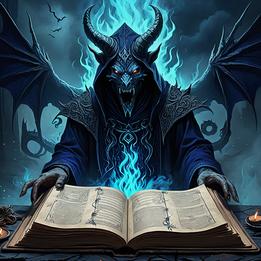
Goetia
A medieval grimoire detailing 72 demons, representing forbidden knowledge, occult power, and the shadow aspects of consciousness.
Goetia Dream Meaning
A medieval grimoire detailing 72 demons, representing forbidden knowledge, occult power, and the shadow aspects of consciousness.
Interpretive Themes
Forbidden Knowledge
highDream may reflect curiosity with risks.
Shadow Integration
highSymbolizes facing inner demons.
Power and Control
mediumMay indicate desire for influence.
Spiritual Rebellion
mediumDreamer questioning authority or dogma.
Hidden Truths
lowPotential for revelation or deception.
Mythological Resonance
Solomon
BiblicalKing Solomon commanded 72 demons to build his temple, representing mastery over chaotic forces through divine wisdom.
Faust
MedievalScholar makes pact with demon Mephistopheles for forbidden knowledge, ultimately losing his soul to shadow forces.
Cultural Lenses
Jungian Perspective
View Context →Represents the Shadow archetype—the repressed, unconscious aspects of personality. Engaging with Goetia symbolizes confronting and integrating these dark elements for wholeness, a crucial individuation process.
Freudian Perspective
View Context →Manifests repressed Id impulses—aggression, desire, taboo thoughts. The demonic imagery symbolizes superego conflict; the book represents forbidden sexual or aggressive knowledge surfacing from the unconscious.
Gestalt Perspective
View Context →The dreamer is the Goetia. It represents disowned parts of self—power, fear, or forbidden desires. Each demon is a projected aspect needing re-ownership for personal integration and completeness.
Cognitive Perspective
View Context →Schemas related to danger, secrecy, or power are activated. The symbol may reflect cognitive distortions like catastrophizing (demonic consequences) or mental rehearsal for confronting feared scenarios in waking life.
Evolutionary Perspective
View Context →Taps into threat-detection systems—demons as hyper-agency representations of predators or rivals. The grimoire symbolizes survival knowledge (e.g., poison, traps) that is powerful but socially risky to possess.
European Perspective
View Context →Rooted in medieval Christian demonology, Goetia represents heresy and witchcraft fears. Historically, it signified apostasy; modernly, it symbolizes countercultural esotericism and Gothic aesthetic in Western subcultures.
Middle Eastern Perspective
View Context →Echoes pre-Islamic and Islamic jinn lore, where summoning entities reflects dangerous spiritual intermediation. It symbolizes the thin veil between worlds and the moral risks of seeking power through unseen forces.
Modern Western Perspective
View Context →Often appears in pop culture (games, films) as shorthand for occult power. Symbolizes rebellion against mainstream norms, the allure of the taboo, or exploration of identity through esoteric frameworks.
East Asian Perspective
View Context →Parallels exist in Taoist and folk magic with spirit catalogs. It may symbolize yin energy—chaotic, hidden forces. Modern view often blends with horror tropes, representing consequences of disturbing spiritual balance.
African Perspective
View Context →Resonates with traditions of ancestral and spirit communication, but Goetia's demonic focus aligns more with colonial-era fears of evil spirits. It can symbolize dangerous, imported spiritual concepts or the shadow of colonization.
Global/Universal Perspective
View Context →Archetype of the forbidden text containing dangerous power. Cross-culturally, it represents humanity's fascination with controlling unseen forces, the moral ambiguity of hidden knowledge, and the universal shadow concept.
Historical Authorities
Want a deeper analysis?
Get a personalized interpretation of your entire dream including this symbol.
Interpret My DreamThe Oracle's Prediction
Combine multiple symbolsConfrontation with hidden aspects of self or others that have been repressed.
Timeframe
Immediate (Next 48h)
Intensity
Deep
Common Appearances & Contexts
| Context | Emotion | Interpretation |
|---|---|---|
| Context Reading the book | Emotion Fascination | Interpretation Intellectual curiosity with danger. |
| Context Summoning a demon | Emotion Terror | Interpretation Fear of unleashed consequences. |
| Context Burning the grimoire | Emotion Relief | Interpretation Rejecting dark influences. |
| Context Hiding the book | Emotion Guilt | Interpretation Secret knowledge burdens. |
| Context Being commanded by | Emotion Submission | Interpretation Feeling controlled by forces. |
| Context Discussing with others | Emotion Excitement | Interpretation Shared esoteric interest. |
| Context Finding it accidentally | Emotion Shock | Interpretation Unexpected confrontation with shadow. |
| Context Protecting it fiercely | Emotion Possessiveness | Interpretation Guarding personal power source. |
| Context Translating ancient text | Emotion Determination | Interpretation Decoding complex inner conflicts. |
| Context Seeing it glow | Emotion Awe | Interpretation Recognizing potent hidden energy. |
| Context Losing the book | Emotion Panic | Interpretation Fear of losing control. |
| Context It speaks to you | Emotion Unease | Interpretation Internal dialogue manifesting. |
Interpret Your Full Dream
Beyond this symbol, every dream carries a unique story. Share your dream for a personalized AI-powered interpretation.