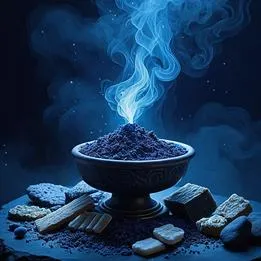
Frankincense Dream Meaning
A sacred resin used historically in religious rituals and healing, symbolizing purification, spiritual connection, and divine offering.
Common Appearances & Contexts
| Context | Emotion | Interpretation |
|---|---|---|
| Burning in temple | Awe | Divine presence felt. |
| Offering to ancestors | Reverent | Honoring lineage spirits. |
| Healing ritual | Hopeful | Seeking restoration wellness. |
| Meditation space | Calm | Mindfulness deepening focus. |
| Ancient market trade | Curious | Exploring spiritual value. |
| Gift to deity | Devout | Expressing faith devotion. |
| Cleansing ceremony | Relieved | Releasing past burdens. |
| Funeral rite | Sorrowful | Guiding soul onward. |
| Altar decoration | Peaceful | Creating sacred space. |
| Mystical vision | Transcendent | Accessing higher realms. |
| Aromatherapy session | Relaxed | Modern stress relief. |
| Ritual preparation | Focused | Setting spiritual intention. |
Interpretive Themes
Cultural Lenses
Jungian Perspective
View Context →Symbolizes the Self's yearning for wholeness and connection to the collective unconscious. Represents archetypal rituals of transformation and the individuation process through sacred symbolism.
Freudian Perspective
View Context →May represent sublimated desires for parental approval or divine favor, with its smoke symbolizing repressed thoughts rising to consciousness. Linked to oral fixation in ritual contexts.
Gestalt Perspective
View Context →Represents the dreamer's need for purification or integration of conflicting parts. The act of burning symbolizes transformation of current experiences into meaningful whole.
Cognitive Perspective
View Context →Reflects mental schemas about spirituality and healing. The scent triggers memory networks associated with ritual, meditation, or comfort, processing emotional states.
Evolutionary Perspective
View Context →Taps into ancient adaptations for group bonding through shared rituals. The smoke signals cooperative behavior and social cohesion, enhancing survival through spiritual community.
Middle Eastern Perspective
View Context →Deeply rooted in Abrahamic traditions as one of the three Magi gifts. Historically traded along incense routes, used in temples for millennia to signify prayer and divine communication.
African Perspective
View Context →Used in traditional healing ceremonies and ancestor veneration across regions like Somalia and Ethiopia. Symbolizes connection to spiritual realms and community purification rituals.
East Asian Perspective
View Context →In Buddhist and Taoist practices, burned in temples to purify spaces and aid meditation. Represents the ascending nature of prayers and spiritual aspirations.
European Perspective
View Context →Associated with Christian liturgy, especially Catholic and Orthodox services. Historically valued in medieval medicine and royal ceremonies as a symbol of holiness and prestige.
South Asian Perspective
View Context →Used in Hindu and Jain rituals for temple offerings and meditation. Called 'dhoop,' it purifies environments and enhances spiritual focus during worship practices.
Modern Western Perspective
View Context →Primarily associated with aromatherapy, wellness culture, and alternative spirituality. Represents a return to natural remedies and mindfulness practices in contemporary life.
Global/Universal Perspective
View Context →Cross-culturally recognized as a sacred substance for rituals, healing, and spiritual connection. Symbolizes humanity's universal desire for transcendence and purification across traditions.
Interpret Your Full Dream
Beyond this symbol, every dream carries a unique story. Share your dream for a personalized AI-powered interpretation.