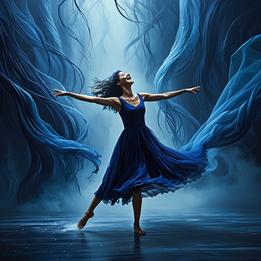
Dancing
A rhythmic, expressive movement symbolizing emotional release, social connection, and life's flow. It represents freedom, celebration, and embodied communication.
Dancing Dream Meaning
A rhythmic, expressive movement symbolizing emotional release, social connection, and life's flow. It represents freedom, celebration, and embodied communication.
Interpretive Themes
Cultural Lenses
Jungian Perspective
View Context →Symbolizes the integration of opposites (e.g., conscious/unconscious) through movement, often representing the individuation process. Ritual dances connect to archetypes like the Self or Anima/Animus.
Freudian Perspective
View Context →Often interpreted as sublimated sexual energy or repressed desires expressed through rhythmic motion. May symbolize libidinal release or unconscious wishes for intimacy.
Gestalt Perspective
View Context →Viewed as a projection of the dreamer's current life dance—how they move through situations. Each dance element represents an aspect of the self needing integration.
Cognitive Perspective
View Context →Seen as mental rehearsal for social coordination, emotional regulation, or problem-solving. Reflects brain processes related to rhythm, memory, and embodied cognition.
Evolutionary Perspective
View Context →Rooted in mating displays, social bonding, and group cohesion rituals. Symbolizes adaptive behaviors for communication, hierarchy, and community survival.
Global/Universal Perspective
View Context →A cross-cultural symbol of celebration, ritual, and community. Historically used in ceremonies, from harvest festivals to rites of passage, uniting people across eras.
East Asian Perspective
View Context →In traditions like Chinese or Japanese dance, it often symbolizes harmony with nature (e.g., fan dances), ancestral reverence, or storytelling in rituals like Noh or Kabuki.
South Asian Perspective
View Context →Deeply spiritual, as in Indian classical dance (e.g., Bharatanatyam), representing divine stories, cosmic order (dharma), and devotional expression in temples and festivals.
Middle Eastern Perspective
View Context →In cultures like Arabic or Persian, dance (e.g., belly dance) symbolizes fertility, joy, and social connection, often in weddings and celebrations, with historical Sufi whirling for transcendence.
African Perspective
View Context →Integral to community life, symbolizing storytelling, ancestral communication, and rites of passage. Used in rituals for healing, harvest, and social cohesion across diverse tribes.
Latin American Perspective
View Context →Blends indigenous, African, and European influences, as in salsa or samba, symbolizing cultural identity, resistance, and festivity in carnivals and social gatherings.
Modern Western Perspective
View Context →Often emphasizes individual expression, leisure, and identity in contexts like clubs, TikTok trends, or therapy. Reflects shifts toward personal freedom and digital connectivity.
Want a deeper analysis?
Get a personalized interpretation of your entire dream including this symbol.
Interpret My DreamCommon Appearances & Contexts
| Context | Emotion | Interpretation |
|---|---|---|
| Context Alone in field | Emotion Free | Interpretation Personal liberation unfolding. |
| Context At a wedding | Emotion Joyful | Interpretation Celebrating union or harmony. |
| Context With a stranger | Emotion Curious | Interpretation Exploring new connections. |
| Context In darkness | Emotion Fearful | Interpretation Hidden emotions emerging. |
| Context On stage | Emotion Anxious | Interpretation Performance or scrutiny fears. |
| Context With ancestors | Emotion Reverent | Interpretation Cultural or spiritual lineage. |
| Context In water | Emotion Fluid | Interpretation Emotional depths explored. |
| Context Mechanical movements | Emotion Restricted | Interpretation Lack of spontaneity felt. |
| Context Falling while dancing | Emotion Panicked | Interpretation Loss of control feared. |
| Context Leading a group | Emotion Empowered | Interpretation Influence or guidance role. |
| Context Dancing with animals | Emotion Primal | Interpretation Instinctual nature connecting. |
| Context Floating while dancing | Emotion Euphoric | Interpretation Transcendence or spiritual elevation. |
Interpret Your Full Dream
Beyond this symbol, every dream carries a unique story. Share your dream for a personalized AI-powered interpretation.