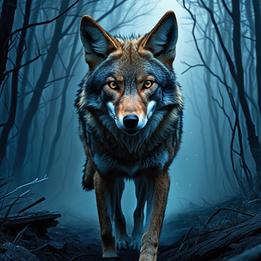
Coyote Trickster
A shape-shifting archetype representing chaos, transformation, and the subversion of order to reveal deeper truths.
Coyote Trickster Dream Meaning
A shape-shifting archetype representing chaos, transformation, and the subversion of order to reveal deeper truths.
Interpretive Themes
Mythological Resonance
Coyote (Navajo/Diné)
Native AmericanA shape-shifting trickster who brings both chaos and wisdom, stealing fire for humanity and creating the constellations through mischievous acts.
Loki
NorseThe cunning god of mischief who challenges divine order, embodying both creative trickery and destructive chaos that reshapes fate.
Cultural Lenses
Jungian Perspective
View Context →Represents the Trickster archetype from the collective unconscious—a boundary-crosser who disrupts ego consciousness to facilitate individuation through chaos and transformation.
Freudian Perspective
View Context →Manifestation of repressed id impulses, particularly sexual and aggressive drives disguised as animal imagery, representing unconscious desires breaking through societal repression.
Gestalt Perspective
View Context →Projection of the dreamer's own trickster qualities—aspects of self that create chaos, break rules, or subvert expectations to highlight unmet needs or internal conflicts.
Cognitive Perspective
View Context →Mental simulation of unpredictable scenarios, helping the brain practice adaptability and problem-solving in chaotic situations through metaphorical threat assessment and social navigation.
Evolutionary Perspective
View Context →Adaptive mechanism for practicing deception detection and social manipulation skills, enhancing survival through simulation of unpredictable agents in the ancestral environment.
North American Perspective
View Context →Central figure in many Indigenous traditions (Navajo, Nez Perce, etc.) as creator-destroyer who shaped the world through chaotic acts, teaching through humorous or dangerous lessons about balance.
Global/Universal Perspective
View Context →Cross-cultural trickster figure (Loki, Anansi, Hermes) representing the human need for chaos in ordered systems, appearing in dreams during periods requiring radical change or perspective shifts.
Modern Western Perspective
View Context →Symbol of counterculture and anti-establishment sentiment, often romanticized as creative chaos agent in art and media, representing rebellion against conformity and rigid systems.
African Perspective
View Context →Anansi the spider trickster from Akan folklore—a shape-shifter who outsmarts stronger beings through cunning, representing survival wisdom and cultural transmission through storytelling.
European Perspective
View Context →Loki from Norse mythology—ambiguous god of mischief who triggers Ragnarok, representing the necessary destructive element in cyclical creation, and the danger of unchecked cunning.
Latin American Perspective
View Context →Nahual shapeshifter traditions blending Indigenous and Spanish influences—tricksters who cross human/animal boundaries, representing fluid identity and spiritual power in mestizo cultures.
South Asian Perspective
View Context →Krishna as divine trickster in Hindu texts—playfully subverting expectations to teach dharma, representing how spiritual wisdom sometimes comes through unconventional, even chaotic means.
Historical Authorities
Want a deeper analysis?
Get a personalized interpretation of your entire dream including this symbol.
Interpret My DreamThe Oracle's Prediction
Combine multiple symbolsAn unexpected opportunity will arise from disrupted plans.
Timeframe
Lunation (~29 Days)
Intensity
Deep
A deceptive situation may undermine your trust.
Timeframe
Immediate (Next 48h)
Intensity
Deep
Common Appearances & Contexts
| Context | Emotion | Interpretation |
|---|---|---|
| Context Being tricked | Emotion Betrayed | Interpretation Hidden truths revealed. |
| Context Shape-shifting animal | Emotion Awe | Interpretation Fluid identity emerging. |
| Context Breaking rules | Emotion Liberated | Interpretation Rebellion against constraints. |
| Context Chaotic situation | Emotion Overwhelmed | Interpretation Old structures collapsing. |
| Context Teaching moment | Emotion Enlightened | Interpretation Learning through paradox. |
| Context Crossing boundaries | Emotion Adventurous | Interpretation Exploring forbidden areas. |
| Context Social disruption | Emotion Amused | Interpretation Subverting expectations playfully. |
| Context Personal transformation | Emotion Unsettled | Interpretation Identity in flux. |
| Context Sacred foolery | Emotion Humbled | Interpretation Wisdom from mistakes. |
| Context Creative destruction | Emotion Hopeful | Interpretation New beginnings emerging. |
| Context Moral ambiguity | Emotion Conflicted | Interpretation Questioning right/wrong. |
| Context Unpredictable ally | Emotion Cautious | Interpretation Dangerous help offered. |
Interpret Your Full Dream
Beyond this symbol, every dream carries a unique story. Share your dream for a personalized AI-powered interpretation.