Comma
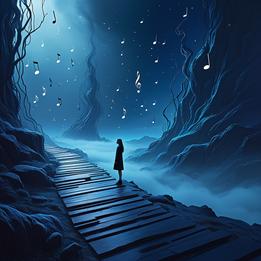
A punctuation mark representing a brief pause, connection, or transition, often symbolizing rhythm, flow, and the spaces between thoughts or actions.
Comma Dream Meaning
A punctuation mark representing a brief pause, connection, or transition, often symbolizing rhythm, flow, and the spaces between thoughts or actions.
Interpretive Themes
Mythological Resonance
Hermes (again)
GreekGod of boundaries and transitions, guiding souls between worlds with fluid movement.
The Tao
TaoistThe way that flows like water, embracing natural pauses and continuations in existence.
Cultural Lenses
Jungian Perspective
View Context →Represents the anima/animus or shadow integration—a pause for unconscious material to surface. Historically, it marks transitions in individuation, symbolizing the space between conscious and unconscious realms.
Freudian Perspective
View Context →Symbolizes a repression or pause in libidinal energy, often related to oral or anal stages. In dreams, it may indicate suppressed desires or interruptions in psychosexual development.
Gestalt Perspective
View Context →Viewed as a pause for awareness or unfinished business. In therapy, it represents the space between figure and ground, encouraging clients to explore what is omitted or paused in their experience.
Cognitive Perspective
View Context →Reflects cognitive processing pauses, such as in memory or decision-making. Modernly, it symbolizes mental breaks needed for information integration, akin to buffering in digital contexts.
Evolutionary Perspective
View Context →May stem from primal pauses for survival, like hesitating before action. In ancestral contexts, it allowed for assessment of threats, evolving into symbolic pauses in communication and thought.
East Asian Perspective
View Context →In Chinese and Japanese contexts, commas (頓號) mark lists or pauses in classical texts, symbolizing harmony and order. Modernly, they represent balance in expression and respect for tradition in writing.
European Perspective
View Context →Historically, commas evolved from medieval scribal marks, denoting rhetorical pauses. In modern Western culture, they symbolize grammatical precision and the flow of narrative in literature and music.
Middle Eastern Perspective
View Context →In Arabic script, commas are used similarly but can reflect poetic pauses in Quranic recitation. They symbolize divine rhythm and the spaces between revelations in religious and literary traditions.
African Perspective
View Context →In oral traditions, commas represent pauses in storytelling or drum communication, symbolizing community listening and reflection. Modernly, they mark transitions in narratives that preserve cultural heritage.
Latin American Perspective
View Context →Reflects pauses in rhythmic speech or music, such as in salsa or tango. Historically, it symbolizes the blend of indigenous and colonial influences, representing cultural syncretism in expression.
Global/Universal Perspective
View Context →A cross-cultural symbol of pause and connection in communication. From ancient inscriptions to digital texts, it universally marks transitions, inviting reflection and continuity in human interaction.
Historical Authorities
Want a deeper analysis?
Get a personalized interpretation of your entire dream including this symbol.
Interpret My DreamThe Oracle's Prediction
Combine multiple symbolsA minor delay will lead to a significant opportunity.
Timeframe
Immediate (Next 48h)
Intensity
Deep
Common Appearances & Contexts
| Context | Emotion | Interpretation |
|---|---|---|
| Context Writing a sentence | Emotion Frustration | Interpretation Struggle with expression. |
| Context Music sheet pause | Emotion Anticipation | Interpretation Awaiting next note. |
| Context Conversation interruption | Emotion Anxiety | Interpretation Fear of discontinuity. |
| Context List of items | Emotion Overwhelm | Interpretation Too many choices. |
| Context Poetry line break | Emotion Contemplation | Interpretation Deep thought required. |
| Context Speech hesitation | Emotion Uncertainty | Interpretation Doubting what to say. |
| Context Code syntax error | Emotion Confusion | Interpretation Logical flow broken. |
| Context Breath between words | Emotion Calm | Interpretation Natural rhythm present. |
| Context Punctuation debate | Emotion Irritation | Interpretation Rules causing conflict. |
| Context Sentence without end | Emotion Suspense | Interpretation Awaiting conclusion. |
| Context Musical rest symbol | Emotion Peace | Interpretation Silence has value. |
| Context Pause in movement | Emotion Hesitation | Interpretation Momentary stop in action. |
Interpret Your Full Dream
Beyond this symbol, every dream carries a unique story. Share your dream for a personalized AI-powered interpretation.