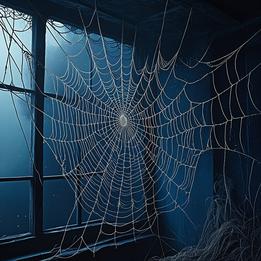
Cobweb
A delicate, dusty network of threads spun by spiders, often found in neglected spaces. Symbolizes forgotten memories, entrapment, or intricate hidden connections.
Cobweb Dream Meaning
A delicate, dusty network of threads spun by spiders, often found in neglected spaces. Symbolizes forgotten memories, entrapment, or intricate hidden connections.
Interpretive Themes
Cultural Lenses
Jungian Perspective
View Context →Represents the collective unconscious's intricate connections between archetypes. Cobwebs symbolize the anima's delicate web of relationships or the shadow's neglected aspects. Modernly, it reflects the psyche's networked nature.
Freudian Perspective
View Context →Symbolizes repressed memories or sexual entanglements (web as female genitalia). The dust represents forgotten childhood experiences. In modern therapy, it indicates avoidance of unresolved conflicts.
Gestalt Perspective
View Context →The dreamer IS the cobweb—both creator and creation. Represents how one constructs their reality through interconnected perceptions. Modern interpretation focuses on self-as-system.
Cognitive Perspective
View Context →Represents memory consolidation during sleep—neural networks forming connections. The cobweb illustrates how the brain organizes information. Modern view ties to neuroplasticity and learning.
Evolutionary Perspective
View Context →Ancient threat detection—cobwebs signaled abandoned shelters or predator presence. Modernly triggers disgust response to potential contamination. Represents adaptive avoidance of neglect.
European Perspective
View Context →Medieval folklore associated cobwebs with fairy traps or witches' works. Victorian era saw them as signs of melancholy. Modern European art uses cobwebs for Gothic aesthetics and decay themes.
East Asian Perspective
View Context →In Chinese tradition, spider webs bring good luck when intact—money webs. Japanese culture associates them with patience and craftsmanship. Modernly represents internet connectivity in tech cultures.
African Perspective
View Context →Anansi spider stories depict webs as wisdom traps or communication networks. In some traditions, cobwebs protect against evil spirits. Modern African art uses webs for community interconnection themes.
Middle Eastern Perspective
View Context →Persian poetry uses cobwebs as metaphors for fragile beauty. Islamic art sometimes incorporates web patterns representing divine order. Modern interpretations include political entanglements.
Latin American Perspective
View Context →Day of the Dead decorations use cobwebs for the veil between worlds. Amazonian traditions see webs as forest communication systems. Modern magic realism treats cobwebs as memory portals.
South Asian Perspective
View Context →Hindu mythology features Maya's web of illusion. Buddhist teachings use cobwebs for interconnected suffering. Modern Indian philosophy discusses web as digital samsara.
Global/Universal Perspective
View Context →Nearly universal symbol of neglect, time passage, and intricate connection. Appears in global abandonment narratives and creation myths. Modernly represents both digital networks and environmental decay.
Want a deeper analysis?
Get a personalized interpretation of your entire dream including this symbol.
Interpret My DreamCommon Appearances & Contexts
| Context | Emotion | Interpretation |
|---|---|---|
| Context Clearing cobwebs | Emotion determination | Interpretation Addressing neglected issues. |
| Context Trapped in cobweb | Emotion panic | Interpretation Feeling stuck or constrained. |
| Context Admiring cobweb | Emotion awe | Interpretation Appreciating hidden complexity. |
| Context Cobweb in home | Emotion guilt | Interpretation Neglecting personal life. |
| Context Cobweb on face | Emotion disgust | Interpretation Unwanted past clinging. |
| Context Golden cobweb | Emotion wonder | Interpretation Valuable hidden connections. |
| Context Cobweb breaking | Emotion relief | Interpretation Escaping constraints. |
| Context Cobweb in workplace | Emotion frustration | Interpretation Bureaucratic entanglements. |
| Context Spinning cobweb | Emotion focus | Interpretation Creating complex systems. |
| Context Cobweb with prey | Emotion fear | Interpretation Feeling ensnared. |
| Context Ancient cobweb | Emotion reverence | Interpretation Connecting to deep past. |
| Context Cobweb in mind | Emotion confusion | Interpretation Tangled thoughts. |
Interpret Your Full Dream
Beyond this symbol, every dream carries a unique story. Share your dream for a personalized AI-powered interpretation.