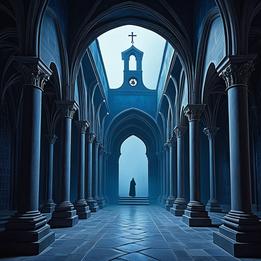
Cloister
A secluded, often sacred architectural space for religious retreat, contemplation, and separation from the secular world.
Cloister Dream Meaning
A secluded, often sacred architectural space for religious retreat, contemplation, and separation from the secular world.
Interpretive Themes
Mythological Resonance
Desert Fathers
ChristianEarly Christian hermits who retreated to deserts for prayer and asceticism, seeking divine connection in solitude.
Ashram
HinduSpiritual hermitages where seekers live in community for meditation and study, away from worldly distractions.
Cultural Lenses
Jungian Perspective
View Context →Represents the temenos, a sacred precinct of the psyche for individuation. Symbolizes withdrawal to integrate unconscious contents, often appearing during midlife crisis or spiritual awakening.
Freudian Perspective
View Context →May symbolize womb regression or anal-retentive tendencies. The enclosed space suggests desire for security, with arches and columns potentially representing phallic symbols in repressed religious contexts.
Gestalt Perspective
View Context →The dreamer IS the cloister—explore what parts feel walled off or open. Each architectural element represents aspects of self needing integration or separation in current life situations.
Cognitive Perspective
View Context →Mental schema for 'sanctuary' activated during stress. The brain processes isolation needs through familiar architectural metaphors, possibly indicating problem-solving through withdrawal rather than confrontation.
Evolutionary Perspective
View Context →Manifests ancient safety-seeking behavior—the defended enclosure. May indicate heightened threat perception triggering ancestral shelter-seeking instincts, or social bonding needs through ritual space metaphors.
European Perspective
View Context →Deeply rooted in medieval monasticism. Historically represents vows, illuminated manuscripts, and Gregorian chant. Modernly symbolizes heritage tourism or neo-monastic movements seeking pre-industrial simplicity.
East Asian Perspective
View Context →Resonates with Zen temple retreats and mountain hermitages. Incorporates Confucian study halls and Taoist alchemical laboratories—spaces for scholarly cultivation rather than divine communion alone.
Middle Eastern Perspective
View Context →Evokes early Christian desert fathers and Islamic zawiyas. Represents radical asceticism against materialism, with modern parallels in digital minimalism and urban meditation centers.
South Asian Perspective
View Context →Connects to ashrams and viharas. Embodies guru-disciple lineages, with architecture mirroring mandala patterns for spiritual progression. Contemporary interpretations include wellness retreats.
African Perspective
View Context →May reference initiation lodges or secret society enclosures. Spaces for elder wisdom transmission, with modern parallels in community healing centers preserving indigenous knowledge against globalization.
Latin American Perspective
View Context →Colonial convents syncretized with indigenous sacred spaces. Represents both forced conversion and hidden resistance, with modern manifestations in liberation theology base communities.
Modern Western Perspective
View Context →Metaphor for self-care spaces—from meditation apps to minimalist homes. Reflects secular seeking of sacred architecture's psychological benefits without religious doctrine.
Historical Authorities
Want a deeper analysis?
Get a personalized interpretation of your entire dream including this symbol.
Interpret My DreamThe Oracle's Prediction
Combine multiple symbolsA period of restorative solitude will improve mental clarity.
Timeframe
Immediate (Next 48h)
Intensity
Deep
Common Appearances & Contexts
| Context | Emotion | Interpretation |
|---|---|---|
| Context Entering a cloister | Emotion Awe | Interpretation Initiating spiritual journey. |
| Context Leaving a cloister | Emotion Anxiety | Interpretation Fear of re-entering world. |
| Context Locked in cloister | Emotion Trapped | Interpretation Feeling restricted or confined. |
| Context Cloister in ruins | Emotion Melancholy | Interpretation Lost faith or tradition. |
| Context Building a cloister | Emotion Determined | Interpretation Creating personal sanctuary. |
| Context Cloister garden | Emotion Peaceful | Interpretation Inner growth and nurture. |
| Context Empty cloister | Emotion Lonely | Interpretation Isolation or abandonment. |
| Context Crowded cloister | Emotion Overwhelmed | Interpretation Lack of personal space. |
| Context Cloister at night | Emotion Fearful | Interpretation Unconscious fears emerging. |
| Context Cloister bells ringing | Emotion Alert | Interpretation Call to awareness. |
| Context Cloister with open door | Emotion Hopeful | Interpretation Opportunity for retreat. |
| Context Cloister on a cliff | Emotion Precarious | Interpretation Isolated but vulnerable. |
Interpret Your Full Dream
Beyond this symbol, every dream carries a unique story. Share your dream for a personalized AI-powered interpretation.