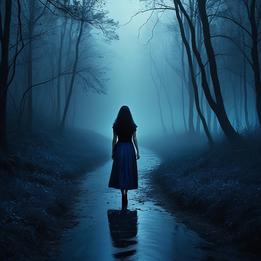
Dimness
A state of reduced light or clarity, often representing uncertainty, transition, or hidden aspects of consciousness.
Dimness Dream Meaning
A state of reduced light or clarity, often representing uncertainty, transition, or hidden aspects of consciousness.
Interpretive Themes
Mythological Resonance
Persephone's Ascent
GreekThe queen returns from underworld to surface world during twilight's dim light, representing transition between states of being.
Yūgen
JapaneseThe profound aesthetic of dimness and shadow that suggests the mysterious depth of things rather than revealing them completely.
Cultural Lenses
Jungian Perspective
View Context →Represents the shadow self or collective unconscious emerging. Dimness symbolizes the threshold between conscious and unconscious realms, where archetypes manifest before full integration into awareness.
Freudian Perspective
View Context →Symbolizes repressed desires or memories surfacing from the unconscious. Dimness represents the censoring mechanism of the psyche, where forbidden thoughts appear in obscured form to protect the ego.
Gestalt Perspective
View Context →Represents incomplete perceptions or unfinished business. Dimness symbolizes the figure-ground relationship in flux, where the dreamer must complete the perceptual field to achieve wholeness.
Cognitive Perspective
View Context →Reflects memory consolidation or problem-solving processes during sleep. Dimness represents incomplete cognitive schemas or information processing that requires further integration for clarity.
Evolutionary Perspective
View Context →Stems from ancestral survival mechanisms for low-light environments. Dimness triggers adaptive responses for threat assessment, resource location, or social navigation in reduced visibility conditions.
East Asian Perspective
View Context →In Taoist and Buddhist traditions, dimness represents the balance of yin-yang or the middle way. Historically seen as the space between extremes where enlightenment emerges through gradual illumination.
South Asian Perspective
View Context →In Hindu philosophy, dimness symbolizes maya (illusion) or avidya (ignorance) that obscures Brahman (ultimate reality). Rituals often use dim light to represent spiritual seeking before divine revelation.
Middle Eastern Perspective
View Context →In Islamic dream interpretation, dimness often represents uncertainty in faith or moral decisions. Historically, twilight was considered a sacred time for prayer and reflection between day and night.
European Perspective
View Context →In Celtic and Norse traditions, dimness represented the veil between worlds thinning. Modern European interpretations often associate dimness with psychological ambiguity or existential uncertainty.
African Perspective
View Context →In many African traditions, dimness represents ancestral presence or spiritual communication. Twilight is often considered a powerful time for rituals, as boundaries between realms become permeable.
North American Perspective
View Context →In Indigenous traditions, dimness often represents vision quest transitions or spirit world entry. Contemporary interpretations frequently connect dimness to identity exploration or cultural memory preservation.
Modern Western Perspective
View Context →Often symbolizes information overload, decision fatigue, or the search for authenticity in digital age. Dimness represents the need for mental clarity amidst constant stimulation and competing priorities.
Historical Authorities
Want a deeper analysis?
Get a personalized interpretation of your entire dream including this symbol.
Interpret My DreamThe Oracle's Prediction
Combine multiple symbolsA period of uncertainty in your work will clarify into a new direction or opportunity.
Timeframe
Seasonal (~3 Months)
Intensity
Deep
You will discover a hidden aspect of yourself or a latent talent.
Timeframe
Lunation (~29 Days)
Intensity
Deep
Common Appearances & Contexts
| Context | Emotion | Interpretation |
|---|---|---|
| Context Walking through fog | Emotion confusion | Interpretation Direction unclear, path hidden. |
| Context Dimly lit room | Emotion anxiety | Interpretation Unknown dangers present. |
| Context Twilight landscape | Emotion melancholy | Interpretation Endings and beginnings merge. |
| Context Fading memories | Emotion nostalgia | Interpretation Past becoming unclear. |
| Context Shadowy figures | Emotion fear | Interpretation Unidentified threats loom. |
| Context Dawn approaching | Emotion hope | Interpretation Clarity coming soon. |
| Context Candle flickering | Emotion uncertainty | Interpretation Light may fail. |
| Context Misty forest | Emotion wonder | Interpretation Magic hidden within. |
| Context Fading photograph | Emotion sadness | Interpretation Memories disappearing. |
| Context Dim theater | Emotion anticipation | Interpretation Performance about to begin. |
| Context Cloudy water | Emotion confusion | Interpretation Truth obscured below. |
| Context Dusk settling | Emotion peace | Interpretation Day's end approaching. |
Interpret Your Full Dream
Beyond this symbol, every dream carries a unique story. Share your dream for a personalized AI-powered interpretation.