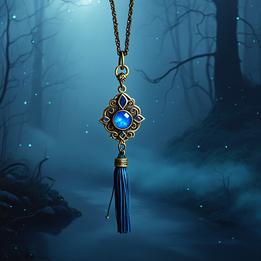
Charm
A small decorative object, often worn as jewelry, believed to bring good luck, protection, or magical influence to its bearer.
Charm Dream Meaning
A small decorative object, often worn as jewelry, believed to bring good luck, protection, or magical influence to its bearer.
Interpretive Themes
Cultural Lenses
Jungian Perspective
View Context →Symbol of the Self or a protective aspect of the psyche; an archetypal object representing the individuation process, magical thinking, or connection to the collective unconscious and its symbols of wholeness.
Freudian Perspective
View Context →A phallic symbol or fetish object; represents sublimated desires, anxiety about castration, or a comforting transitional object linked to early childhood attachments and magical belief systems.
Gestalt Perspective
View Context →A projection of the dreamer's own perceived power or vulnerability; the charm is an aspect of the self—what part of you feels like a charm, needs a charm, or is acting as a charm for others?
Cognitive Perspective
View Context →Represents a cognitive schema for managing uncertainty or threat; a mental shortcut (heuristic) for feeling in control, reflecting learned associations between objects and safety or positive outcomes.
Evolutionary Perspective
View Context →A modern manifestation of an adaptive tendency for agency detection and superstition; a low-cost ritual object that historically reduced anxiety about unpredictable threats, promoting group cohesion and perceived control.
East Asian Perspective
View Context →Often involves specific materials (jade, red thread) and symbols (fu, maneki-neko) for luck, wealth, and warding off evil spirits; deeply integrated into Feng Shui and traditional folk practices for harmonizing qi.
South Asian Perspective
View Context →Frequently tied to religious iconography (Om, Hamsa, Nazar) or astrological gems (Navaratna); used in rituals for protection from the evil eye, attracting blessings, and balancing planetary influences in one's life.
Middle Eastern Perspective
View Context →Centered on the Hamsa (Hand of Fatima) and blue-eye beads as powerful amulets against the evil eye; embodies a blend of pre-Islamic, Islamic, and regional folk beliefs in tangible spiritual protection.
European Perspective
View Context →Historically includes Christian relics, Celtic knots, and herbal sachets; evolved from pagan protective talismans to saint medals and lucky tokens like four-leaf clovers, reflecting layered spiritual histories.
African Perspective
View Context →Often crafted from natural materials (bones, beads, shells) as gri-gri or juju bags; charged by ritual specialists for protection, healing, or influencing events, embodying a tangible link to ancestral and spiritual forces.
Latin American Perspective
View Context →Blends indigenous amulets (like Milagros), Catholic saint medals, and Afro-Caribbean practices (Santería, Candomblé); used for protection, healing, and attracting love or luck within a vibrant syncretic spiritual framework.
Modern Western Perspective
View Context →Primarily commercialized as fashion (charm bracelets) or pop-culture items; retains subcultural significance in neopagan and New Age practices as tools for intention-setting, mindfulness, and personal spirituality.
Want a deeper analysis?
Get a personalized interpretation of your entire dream including this symbol.
Interpret My DreamCommon Appearances & Contexts
| Context | Emotion | Interpretation |
|---|---|---|
| Context Receiving a charm | Emotion Hopeful | Interpretation Anticipation of positive change. |
| Context Losing a charm | Emotion Vulnerable | Interpretation Fear of lost protection. |
| Context Giving a charm | Emotion Caring | Interpretation Wishing well for another. |
| Context Charm breaking | Emotion Anxious | Interpretation Omen of misfortune. |
| Context Finding a charm | Emotion Curious | Interpretation Discovery of potential. |
| Context Buying a charm | Emotion Determined | Interpretation Active pursuit of luck. |
| Context Charging a charm | Emotion Reverent | Interpretation Ritual empowerment. |
| Context Multiple charms | Emotion Overwhelmed | Interpretation Seeking excessive control. |
| Context Ancient charm | Emotion Awed | Interpretation Connection to tradition. |
| Context Charm glowing | Emotion Amazed | Interpretation Manifestation of power. |
| Context Charm rejected | Emotion Insecure | Interpretation Doubt in its efficacy. |
| Context Charm stolen | Emotion Violated | Interpretation Loss of personal power. |
Interpret Your Full Dream
Beyond this symbol, every dream carries a unique story. Share your dream for a personalized AI-powered interpretation.