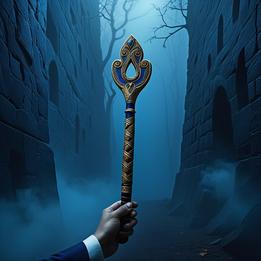
Ceremonial Club
A ceremonial club symbolizes authority and power, often representing cultural strength and the important role of tradition in leadership.
Ceremonial Club Dream Meaning
A ceremonial club symbolizes authority and power, often representing cultural strength and the important role of tradition in leadership.
Interpretive Themes
Leadership and Authority
highRepresents the weight of leadership and responsibility.
Heritage and Tradition
highEmbodies the significance of preserving cultural identity.
Conflict Resolution
mediumIllustrates the potential for power to be used for peace.
Power Dynamics
mediumExplores the balance of power in social situations.
Ritual and Ceremony
highReflects the sacredness of leadership in cultural contexts.
Mythological Resonance
Maui's Fishhook
PolynesianThe demigod Maui used his magical fishhook (often depicted as a club-like object) to pull islands from the sea, demonstrating creative authority over nature.
The Gae Bulg
CelticCú Chulainn's barbed spear that could only be wielded by him, representing both deadly authority and the burden of power.
Cultural Lenses
African Perspective
View Context →Used in rituals and as a symbol of tribal authority. Integral in community decision-making ceremonies. [African Tribes] A mark of honor and reverence within tribal societies.
Oceanian Perspective
View Context →Traditionally used in ceremonies to signify importance and authority. Essential in welcoming dignitaries and during significant events. [Maori] Embodies pride in heritage.
Historical Authorities
Want a deeper analysis?
Get a personalized interpretation of your entire dream including this symbol.
Interpret My DreamThe Oracle's Prediction
Combine multiple symbolsYou will be tested in a position of authority or leadership.
Timeframe
Seasonal (~3 Months)
Intensity
Deep
Common Appearances & Contexts
| Context | Emotion | Interpretation |
|---|---|---|
| Context Wielding a ceremonial club in a gathering | Emotion Pride | Interpretation Represents recognition and a sense of belonging. |
| Context Seeing someone else use a ceremonial club | Emotion Admiration | Interpretation Symbolizes respect for authority and cultural practices. |
| Context Engaging in a ceremonial dance with a club | Emotion Joy | Interpretation Reflects celebration of culture and identity. |
| Context Using a ceremonial club to establish order | Emotion Confidence | Interpretation Signifies the ability to lead and bring structure. |
| Context Witnessing a conflict resolved with a ceremonial club | Emotion Relief | Interpretation Represents the ability to restore peace in a disruptive situation. |
| Context Losing a ceremonial club | Emotion Fear | Interpretation Indicates anxiety about losing one's identity or status. |
| Context Passionately defending a tradition with a club | Emotion Fury | Interpretation Highlights the importance of standing up for one's beliefs. |
| Context Carving intricate designs into a ceremonial club | Emotion Creativity | Interpretation Symbolizes personal expression and the crafting of legacy. |
| Context Seeing a broken ceremonial club | Emotion Sorrow | Interpretation Reflects loss of cultural practices or authority. |
| Context Being presented with a ceremonial club by a leader | Emotion Honor | Interpretation Represents recognition of one’s role within a community. |
Interpret Your Full Dream
Beyond this symbol, every dream carries a unique story. Share your dream for a personalized AI-powered interpretation.