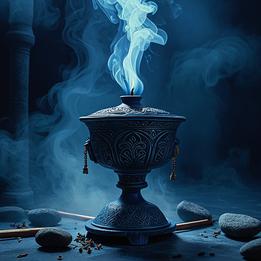
Censer
A ritual vessel for burning incense, symbolizing purification, prayer, and connection between earthly and spiritual realms.
Censer Dream Meaning
A ritual vessel for burning incense, symbolizing purification, prayer, and connection between earthly and spiritual realms.
Interpretive Themes
Cultural Lenses
Jungian Perspective
View Context →Represents the Self's connection to the collective unconscious; smoke symbolizes the transcendent function mediating between conscious and unconscious realms in individuation.
Freudian Perspective
View Context →Symbolizes sublimated sexual energy; the rising smoke represents phallic imagery, while the vessel represents feminine receptivity in ritualized form.
Gestalt Perspective
View Context →Represents the dreamer's need for ritual or structure; the censer's function reveals the dreamer's relationship with tradition versus personal expression.
Cognitive Perspective
View Context →Reflects memory consolidation of ritual experiences; the brain processes sensory memories of incense, connecting emotion with established behavioral patterns.
Evolutionary Perspective
View Context →Represents evolved ritual behavior for social cohesion; smoke signals served ancestral communication needs, now ritualized in spiritual contexts.
East Asian Perspective
View Context →In Buddhist and Taoist traditions, represents offerings to deities and ancestors; the smoke carries prayers while purifying sacred spaces in temples and homes.
Middle Eastern Perspective
View Context →Ancient Near Eastern temples used censers in divine worship; in Abrahamic traditions, represents God's presence (as in Solomon's Temple) and penitential prayers.
European Perspective
View Context →Medieval Christian liturgy used thuribles for sanctification; the swinging motion symbolized prayers rising, while incense represented saints' virtues in Catholic tradition.
African Perspective
View Context →In various traditions, represents communication with ancestors; herbal incense cleanses spaces of negative energies while inviting protective spiritual presence.
Latin American Perspective
View Context →Mesoamerican cultures used copal incense in pyramids; contemporary practices blend indigenous spiritual cleansing with Catholic liturgical traditions in syncretic rituals.
South Asian Perspective
View Context →Hindu puja rituals use incense (agarbatti) for deity worship; the fragrance pleases gods while creating sacred atmosphere in temples and home altars.
Global/Universal Perspective
View Context →Cross-cultural symbol of spiritual communication; nearly all religious traditions use smoke rituals to bridge human and divine realms through sensory engagement.
Want a deeper analysis?
Get a personalized interpretation of your entire dream including this symbol.
Interpret My DreamCommon Appearances & Contexts
| Context | Emotion | Interpretation |
|---|---|---|
| Context Lighting censer | Emotion Reverent | Interpretation Initiating sacred connection |
| Context Broken censer | Emotion Anxious | Interpretation Disrupted spiritual practice |
| Context Empty censer | Emotion Lonely | Interpretation Spiritual emptiness felt |
| Context Overflowing smoke | Emotion Overwhelmed | Interpretation Prayers overwhelming space |
| Context Ancient censer | Emotion Awed | Interpretation Connecting with tradition |
| Context Modern censer | Emotion Curious | Interpretation Adapting old practices |
| Context Multiple censers | Emotion Harmonious | Interpretation Community spiritual unity |
| Context Censer in nature | Emotion Peaceful | Interpretation Natural sacred connection |
| Context Censer in home | Emotion Secure | Interpretation Domestic sanctity established |
| Context Censer without fire | Emotion Frustrated | Interpretation Ritual incomplete |
| Context Censer carried | Emotion Purposeful | Interpretation Bringing sanctity elsewhere |
| Context Censer cleaning | Emotion Satisfied | Interpretation Preparing for ritual |
Interpret Your Full Dream
Beyond this symbol, every dream carries a unique story. Share your dream for a personalized AI-powered interpretation.