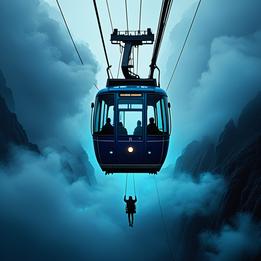
Cablecar
A suspended transport representing transitions, ascension, and vulnerability in movement between high and low points.
Cablecar Dream Meaning
A suspended transport representing transitions, ascension, and vulnerability in movement between high and low points.
Interpretive Themes
Cultural Lenses
Jungian Perspective
View Context →Symbolizes the transcendent function connecting conscious and unconscious realms. Represents the Self's journey toward wholeness, suspended between opposites like spirit/matter, with historical roots in mountain ascension rituals.
Freudian Perspective
View Context →Phallic symbol representing sexual tension and release. The up/down motion signifies arousal and climax, while the suspended state reflects anxiety about sexual performance or societal expectations.
Gestalt Perspective
View Context →Represents the dreamer's current 'position' in life. The cablecar is an extension of self—how one navigates between polarities (high/low, safe/risky) reveals unresolved conflicts about direction and support systems.
Cognitive Perspective
View Context →Mental schema for processing transitions. The brain uses this familiar transport metaphor to organize thoughts about risk assessment, goal progression, and spatial navigation during waking problem-solving.
Evolutionary Perspective
View Context →Activates ancient predator/prey vigilance systems. The elevated, exposed position triggers instinctual height anxiety and scanning behaviors, while the mechanical movement represents modern adaptation of territorial exploration.
East Asian Perspective
View Context →In Chinese culture, symbolizes ascending toward heavenly favor (sheng). In Japan, associated with pilgrimage to sacred mountains like Fuji, representing disciplined spiritual ascent through modern means while maintaining tradition.
European Perspective
View Context →Rooted in Alpine engineering triumphs over nature. Represents Romantic era sublime—awe mixed with terror when confronting majestic landscapes. Modern ski resorts transform it into leisure class mobility symbol.
Latin American Perspective
View Context →In Andean regions like Medellín, represents overcoming geographical segregation and social elevation. Ritually used in pilgrimage to mountain shrines, now symbolizes urban integration and tourism-driven development aspirations.
Modern Western Perspective
View Context →Eco-tourism icon representing controlled adventure. Signifies privilege of panoramic consumption, while also evoking anxiety about technological dependency and climate change impacts on mountain ecosystems.
African Perspective
View Context →In South Africa's Table Mountain context, symbolizes post-apartheid accessibility and unity. Contrasts with traditional mountain ascension rituals, representing modernization's tension with ancestral land relationships.
Middle Eastern Perspective
View Context →In UAE's Palm Jumeirah, represents hyper-modern conquest of environment. Contrasts with ancient caravan routes, symbolizing rapid transition from desert tradition to engineered luxury, often evoking disorientation.
Global/Universal Perspective
View Context →Cross-cultural symbol of human ingenuity overcoming terrain. From Swiss Alps to Hong Kong, represents globalization's standardized solutions, yet universally triggers primal fears of heights and falling.
Want a deeper analysis?
Get a personalized interpretation of your entire dream including this symbol.
Interpret My DreamCommon Appearances & Contexts
| Context | Emotion | Interpretation |
|---|---|---|
| Context Ascending smoothly | Emotion Joy | Interpretation Positive life progression. |
| Context Descending rapidly | Emotion Fear | Interpretation Loss of control. |
| Context Stuck mid-air | Emotion Anxiety | Interpretation Life stagnation. |
| Context Overcrowded car | Emotion Claustrophobia | Interpretation Social pressure. |
| Context Empty car | Emotion Isolation | Interpretation Solitary journey. |
| Context Breaking cable | Emotion Terror | Interpretation Sudden collapse. |
| Context Scenic view | Emotion Awe | Interpretation Clarity achieved. |
| Context Missing stop | Emotion Frustration | Interpretation Missed opportunity. |
| Context New destination | Emotion Hope | Interpretation Fresh beginnings. |
| Context Foggy ascent | Emotion Confusion | Interpretation Unclear direction. |
| Context Swaying violently | Emotion Panic | Interpretation Emotional instability. |
| Context Helping others | Emotion Compassion | Interpretation Shared journey. |
Interpret Your Full Dream
Beyond this symbol, every dream carries a unique story. Share your dream for a personalized AI-powered interpretation.