Spiritual & Myth

Burial Mound Dream Meaning

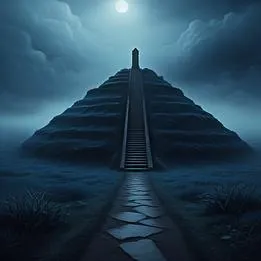
A burial mound represents the passage of life and the transition into the afterlife, serving as a powerful symbol of memory, reverence, and ancestral connection.

Common Appearances & Contexts

Context Emotion Interpretation
Visiting a burial mound Sorrow This may reflect unresolved grief or a desire to connect with ancestral roots.
Creating a burial mound Reflection Indicates a need to honor personal history or someone lost.
Being part of a burial ceremony Reverence Suggests deep respect for traditions and the importance of community ties.
Seeing a thriving nature around a burial mound Comfort Symbolizes peace with the cycle of life and death.
Digging in a burial mound Anxiety Could suggest uncovering buried emotions or family secrets.
Walking past a neglected burial mound Guilt Might indicate feelings of neglecting one's heritage or past.
Dancing around a burial mound Joy Represents celebration of life and honoring the legacy of ancestors.
Finding an artifact at a burial mound Surprise Reflects discovering hidden aspects of the self or culture.
Discussing burial practices with a group around a mound Connection Highlights the need for communal healing and shared experiences of loss.
Fearing a burial mound Fear Suggests confronting fears about mortality and the afterlife.
Seeing a burial mound disappear Loss Might symbolize a fear of losing cultural traditions or family connections.
Meditating at a burial mound Peace Indicates a search for tranquility and understanding of life's transitions.
Learning about burial mound construction Curiosity Represents a thirst for understanding personal heritage or legacy.
Mound overgrown with weeds Neglect Could point to cultural aspects that are being forgotten or ignored.
Exploring burial grounds with ancestors Guidance Indicates a strong connection with ancestry and the search for wisdom.

Interpretive Themes

Cultural Lenses

Jungian Perspective

Full Hub →

Represents the collective unconscious and ancestral wisdom. Symbolizes burial of outdated aspects of self to access deeper archetypal layers. Historically linked to tumuli as sacred memory containers. Ritually signifies transformation and integration of shadow material.

Freudian Perspective

Full Hub →

Symbolizes repressed desires and unresolved childhood conflicts. The mound represents maternal womb and burial signifies sexual repression. Historically connects to tomb as forbidden knowledge container. Emotionally evokes anxiety about mortality and unresolved parental issues.

Gestalt Perspective

Full Hub →

Represents unfinished business and unexpressed emotions. The mound symbolizes accumulated unresolved experiences. Ritually signifies need to confront buried feelings. Emotionally connects to grief work and closure processes in therapeutic settings.

Cognitive Perspective

Full Hub →

Represents memory consolidation and information processing during sleep. Symbolizes neural networks organizing experiences. Historically connects to memory palaces. Emotionally associated with processing loss and integrating traumatic memories through sleep architecture.

Evolutionary Perspective

Full Hub →

Represents ancestral burial practices and territory marking. Symbolizes survival memory of grave sites as danger zones. Historically connects to mound-building cultures' death rituals. Emotionally triggers avoidance responses and group cohesion through shared mourning rituals.

East Asian Perspective

Full Hub →

In Chinese tradition, represents feng shui harmony with ancestors. Historically imperial tumuli like Qin Shi Huang's. Ritually signifies filial piety and ancestral worship. Emotionally connects to family continuity and geomancy principles affecting living descendants.

European Perspective

Full Hub →

In Celtic tradition, represents sidhe (fairy mounds) as portals to Otherworld. Historically Neolithic barrows like Newgrange. Ritually connects to Samhain and ancestral communication. Emotionally evokes both reverence and fear of supernatural encounters at burial sites.

North American Perspective

Full Hub →

In Native traditions, represents sacred earthworks like Cahokia mounds. Historically used for burials and celestial alignments. Ritually signifies connection to land and ancestors. Emotionally embodies cultural memory and resistance against colonial desecration of burial sites.

African Perspective

Full Hub →

In West African traditions, represents royal burial mounds like those in Ghana. Historically connects to ancestor veneration and earth cults. Ritually signifies continuity between living and dead. Emotionally embodies collective memory and sacred geography.

Middle Eastern Perspective

Full Hub →

In Mesopotamian tradition, represents ziggurats as artificial mountains connecting heaven and earth. Historically tomb mounds of kings. Ritually signifies divine kingship and afterlife journey. Emotionally connects to epic narratives like Gilgamesh seeking immortality.

Latin American Perspective

Full Hub →

In Mesoamerican tradition, represents pyramid mounds like Monte Albán. Historically used for royal burials and sacrificial rituals. Ritually connects to calendar cycles and underworld journeys. Emotionally embodies cultural resilience and archaeological reclamation.

Modern Western Perspective

Full Hub →

Represents archaeological heritage and contested memory sites. Historically connects to battlefield memorials and unmarked graves. Ritually signifies forensic investigation and truth reconciliation. Emotionally evokes debates about historical preservation versus development on sacred ground.

AI-Powered

Interpret Your Full Dream

Beyond this symbol, every dream carries a unique story. Share your dream for a personalized AI-powered interpretation.