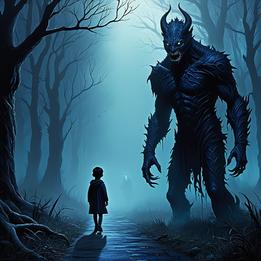
Bogeyman
A mythical creature used to frighten children into good behavior, representing primal fears, societal control, and the unknown.
Bogeyman Dream Meaning
A mythical creature used to frighten children into good behavior, representing primal fears, societal control, and the unknown.
Interpretive Themes
Cultural Lenses
Jungian Perspective
View Context →Archetype of the Shadow, representing repressed aspects of the psyche that society deems unacceptable. Historically a tool for moral instruction, now symbolizes integration of darkness for wholeness.
Freudian Perspective
View Context →Projection of superego's punishing authority and repressed childhood fears, particularly related to parental figures and sexual anxieties. Modern context shows displacement of guilt.
Gestalt Perspective
View Context →Aspect of self representing feared qualities one disowns. Historically externalized, modern interpretation encourages owning these projections as parts of oneself needing integration.
Cognitive Perspective
View Context →Cognitive schema for threat detection and safety learning. Historically reinforced through storytelling, now represents maladaptive thought patterns about danger and control.
Evolutionary Perspective
View Context →Adaptive fear response to potential predators and social threats. Historically protected children, now manifests as hypersensitivity to danger in safe environments.
European Perspective
View Context →Variants like Germany's 'Butzemann' or England's 'Bogey' used for centuries to enforce bedtime and behavior. Modernly appears in folklore studies and psychological discussions of fear.
Middle Eastern Perspective
View Context →Figures like 'Abu Rigl Maslukha' (man with burnt legs) in Egypt scare children from dangerous areas. Historically protected from physical harm, now symbolizes cultural preservation of cautionary tales.
Latin American Perspective
View Context →El Coco or Cucuy varies by region, often with colonial influences blending indigenous and Spanish elements. Modernly appears in media as cultural identifier and parenting tool.
East Asian Perspective
View Context →Japan's 'Namahage' demons visit homes at New Year to scare children into obedience, with ritual roots in Shinto tradition. Modernly preserved in festivals and psychological symbolism.
African Perspective
View Context →Varied figures like South Africa's 'Tokoloshe' or West Africa's 'Mami Wata'-related beings enforce social norms through fear. Historically connected to spiritual beliefs, now represents cultural continuity.
North American Perspective
View Context →Blended immigrant traditions creating figures like the Boogeyman, popularized in 20th-century media. Historically social control, now symbolizes collective childhood fears in popular culture.
Global/Universal Perspective
View Context →Cross-cultural phenomenon of fear-based figures for child socialization. Historically served protective and educational functions, now represents universal human experience of manufactured fear.
Want a deeper analysis?
Get a personalized interpretation of your entire dream including this symbol.
Interpret My DreamCommon Appearances & Contexts
| Context | Emotion | Interpretation |
|---|---|---|
| Context Childhood bedroom | Emotion Terror | Interpretation Vulnerability to fear. |
| Context Dark hallway | Emotion Anxiety | Interpretation Approaching unknown threat. |
| Context Being chased | Emotion Panic | Interpretation Escaping consequences. |
| Context Hiding place | Emotion Paranoia | Interpretation Fear of discovery. |
| Context Telling children | Emotion Guilt | Interpretation Perpetuating fear cycle. |
| Context Confronting bogeyman | Emotion Courage | Interpretation Facing inner fears. |
| Context Bogeyman transforming | Emotion Confusion | Interpretation Fear shape-shifting. |
| Context Multiple bogeymen | Emotion Overwhelm | Interpretation Multiple threats present. |
| Context Bogeyman defeated | Emotion Relief | Interpretation Overcoming fear. |
| Context Becoming bogeyman | Emotion Shame | Interpretation Internalizing feared role. |
| Context Bogeyman laughing | Emotion Humiliation | Interpretation Mockery of fears. |
| Context Empty threat | Emotion Anger | Interpretation Realizing manipulation. |
Interpret Your Full Dream
Beyond this symbol, every dream carries a unique story. Share your dream for a personalized AI-powered interpretation.