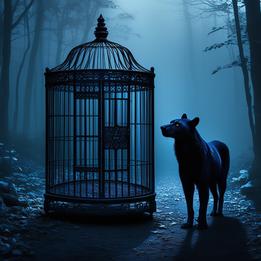
Beast
The beast often represents primal instincts, fears, and the shadow self in dreams. It symbolizes the untamed aspects of one's personality that may need acknowledgment or integration.
Beast Dream Meaning
The beast often represents primal instincts, fears, and the shadow self in dreams. It symbolizes the untamed aspects of one's personality that may need acknowledgment or integration.
Interpretive Themes
Inner Conflict
highOften highlights the parts of ourselves we try to suppress.
Fear and Anxiety
highCan indicate personal or societal anxieties.
Transformation
mediumFocuses on growth through facing fears.
Power and Control
mediumChallenges the dreamer to reclaim their personal power.
Cyclical Nature
mediumEncourages embracing one's true self without societal constraints.
Mythological Resonance
The Minotaur
GreekThe bull-headed man confined in Daedalus's Labyrinth, representing the terrifying, hybrid shadow-self that Theseus must confront and integrate.
Humbaba
MesopotamianThe fearsome giant guardian of the Cedar Forest in the Epic of Gilgamesh, whom Gilgamesh and Enkidu slay—only to face divine wrath for destroying a necessary aspect of the natural order.
Cultural Lenses
African Perspective
View Context →Beasts often represent the spiritual connection to nature and the wild. Symbolic animals in tribal rituals represent qualities needed for survival. Animals are revered and their characteristics reflected in community behavior.
Jungian Perspective
View Context →The beast is a projection of the shadow; recognizing it leads to integration of the self. In therapy, confronting one’s inner beast can be part of shadow work. Encourages reconciliation with one's instincts.
European Perspective
View Context →Beasts often symbolize guardians and connections to the Otherworld. In folklore, beasts may be protectors of sacred spaces. [Celtic] Celtic lore often intertwines with themes of transformation.
Historical Authorities
Want a deeper analysis?
Get a personalized interpretation of your entire dream including this symbol.
Interpret My DreamThe Oracle's Prediction
Combine multiple symbolsA profound confrontation with a repressed aspect of yourself will lead to significant personal power.
Timeframe
Lunation (~29 Days)
Intensity
Deep
Unacknowledged anger or instinct may erupt in a damaging way.
Timeframe
Immediate (Next 48h)
Intensity
Deep
Common Appearances & Contexts
| Context | Emotion | Interpretation |
|---|---|---|
| Context Chased by a beast | Emotion Fearful | Interpretation Represents avoidance of personal issues. |
| Context Taming a beast | Emotion Empowered | Interpretation Indicates overcoming fears and embracing power. |
| Context A friendly beast | Emotion Comforted | Interpretation Suggests acceptance of one’s darker traits. |
| Context Beast attacking others | Emotion Anxious | Interpretation May reflect fears about chaos or loss of control in relationships. |
| Context Seeing a beast in a cage | Emotion Confined | Interpretation Indicates feelings of being trapped by one's own instincts. |
| Context Transforming into a beast | Emotion Conflicted | Interpretation Signifies a fear of losing control over one’s emotions. |
| Context Hunting a beast | Emotion Aggressive | Interpretation Symbolic of confronting fears head-on. |
| Context Beast as a guardian | Emotion Secure | Interpretation Represents protection found in embracing the wild self. |
| Context A beast in the shadows | Emotion Nervous | Interpretation Indicates unacknowledged fears or anger lurking beneath the surface. |
| Context Beast leading the way | Emotion Brave | Interpretation Suggests trust in one's instincts and intuition. |
Interpret Your Full Dream
Beyond this symbol, every dream carries a unique story. Share your dream for a personalized AI-powered interpretation.