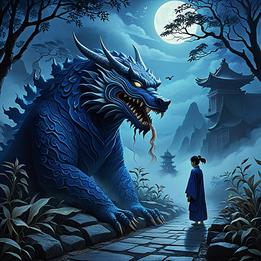
Baku Dream-eater
A benevolent Japanese yokai that consumes nightmares, offering protection and spiritual cleansing by devouring bad dreams.
Baku Dream-eater Dream Meaning
A benevolent Japanese yokai that consumes nightmares, offering protection and spiritual cleansing by devouring bad dreams.
Interpretive Themes
Mythological Resonance
Baku
JapaneseA mythical beast with the body of a bear, elephant's trunk, and tiger's legs, summoned by whispering its name to eat bad dreams.
Baku in Anime/Manga
Global Pop CultureOften depicted as a cute, benevolent spirit that protects sleepers, like in 'Mushishi' or 'Yu-Gi-Oh!'.
Cultural Lenses
Jungian Perspective
View Context →Archetype of the healing animus/anima, integrating shadow material through symbolic consumption. Represents the Self's capacity to transmute trauma into wisdom, a psychopomp guiding through darkness.
Freudian Perspective
View Context →Superego figure censoring id impulses (nightmares), representing wish-fulfillment for paternal protection. Oral fixation theme—consuming forbidden thoughts to maintain psychic equilibrium and avoid anxiety.
Gestalt Perspective
View Context →Projection of one's own healing capacity onto an external entity. The dreamer IS the Baku—exploring disowned power to 'consume' and integrate fragmented self-parts for wholeness.
Cognitive Perspective
View Context →Mental schema for threat neutralization, a cognitive coping mechanism personified. Represents the brain's error-correction system during sleep, metaphorically 'deleting' maladaptive fear memories.
Evolutionary Perspective
View Context →Adaptive fiction reducing sleep disruption from threat simulation. By externalizing nightmare resolution, it lowers cortisol, preserves restorative sleep, and enhances survival through better rest.
East Asian Perspective
View Context →Originating in Chinese folklore, adapted in Japanese Edo period as protective talisman. Historically invoked via prayer or placing Baku images under pillows—modernly remains in children's culture as sleep guardian.
Modern Western Perspective
View Context →Adopted as New Age/spiritual symbol for anxiety management. Commercialized in sleep apps, plush toys, and therapy metaphors—representing desire for quick, external solutions to psychological distress.
Global/Universal Perspective
View Context →Cross-cultural motif of benevolent monsters eating fears (e.g., Native American dream catchers, European mare-riders). Taps universal longing for supernatural protection during vulnerable sleep states.
South Asian Perspective
View Context →Parallels to Vedic Aswini Kumaras—divine healers removing disease/demons. In Ayurvedic dream theory, represents balancing of doshas (humors) through symbolic digestion of mental toxins.
African Perspective
View Context →Echoes of Mami Wata or orisha interventions in dreams. In diasporic traditions, resembles spiritual 'cleansing' rituals where nightmares are fed to sacred animals for transformation.
European Perspective
View Context →Medieval parallels to guardian angels warding off succubi. In folk Catholicism, saints like St. Raphael seen as 'consuming' demonic dreams—modernly secularized into bedtime story protectors.
Latin American Perspective
View Context →Syncretic with curanderismo's espiritus protectores. In folk healing, susto (soul loss) is treated by 'feeding' nightmares to spirit animals—Baku resonates as cross-cultural ally.
Historical Authorities
Want a deeper analysis?
Get a personalized interpretation of your entire dream including this symbol.
Interpret My DreamThe Oracle's Prediction
Combine multiple symbolsA period of restful sleep and reduced anxiety will come.
Timeframe
Immediate (Next 48h)
Intensity
Deep
Emotional or psychic cleansing will occur, leading to inner peace.
Timeframe
Lunation (~29 Days)
Intensity
Deep
Common Appearances & Contexts
| Context | Emotion | Interpretation |
|---|---|---|
| Context Nightmare recurring | Emotion Fear | Interpretation Seeking external intervention. |
| Context Calling Baku | Emotion Hope | Interpretation Active plea for help. |
| Context Baku appears | Emotion Awe | Interpretation Divine intervention moment. |
| Context Baku consuming dream | Emotion Relief | Interpretation Burden being lifted. |
| Context Post-consumption peace | Emotion Calm | Interpretation Psychological reset achieved. |
| Context Baku refuses | Emotion Despair | Interpretation Feeling unworthy of help. |
| Context Baku transforms | Emotion Wonder | Interpretation Witnessing metamorphosis power. |
| Context Multiple Bakus | Emotion Overwhelm | Interpretation Excessive external rescue. |
| Context Baku leaves | Emotion Loneliness | Interpretation Return to self-reliance. |
| Context Baku companion | Emotion Security | Interpretation Constant protective presence. |
| Context Feeding Baku | Emotion Responsibility | Interpretation Active participation in healing. |
| Context Baku injured | Emotion Guilt | Interpretation Protector becoming victim. |
Interpret Your Full Dream
Beyond this symbol, every dream carries a unique story. Share your dream for a personalized AI-powered interpretation.