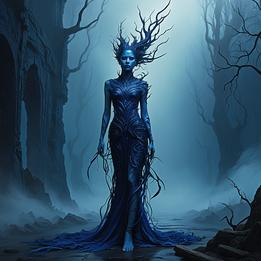
Asymmetrical
Represents imbalance, uniqueness, or a departure from expected harmony, often signaling tension between order and chaos.
Asymmetrical Dream Meaning
Represents imbalance, uniqueness, or a departure from expected harmony, often signaling tension between order and chaos.
Interpretive Themes
Mythological Resonance
Wabi-sabi
JapaneseThe aesthetic philosophy celebrating imperfection, asymmetry, and natural irregularity as expressions of transience and authenticity.
Dionysus
GreekGod of ecstasy, wine, and chaos who represents the necessary asymmetry that breaks Apollonian order to allow for transformation.
Cultural Lenses
Jungian Perspective
View Context →Symbolizes the tension between conscious and unconscious, or the shadow self, urging integration of opposing aspects for wholeness and individuation in modern psychology.
Freudian Perspective
View Context →May represent sexual symbolism or repressed desires, with asymmetry hinting at unresolved conflicts from childhood, interpreted through psychoanalytic theory.
Gestalt Perspective
View Context →Highlights unfinished business or unmet needs, with asymmetry prompting awareness of gaps in perception for holistic resolution in therapeutic contexts.
Cognitive Perspective
View Context →Reflects mental schemas or cognitive dissonance, where asymmetry disrupts expected patterns, processed through memory and problem-solving in brain function.
Evolutionary Perspective
View Context →Linked to survival instincts, asymmetry may signal environmental threats or mating advantages, rooted in biological adaptation and natural selection.
East Asian Perspective
View Context →In Taoism and Zen, asymmetry (like wabi-sabi) embodies impermanence and beauty in imperfection, historically in art and modern aesthetics.
European Perspective
View Context →Historically seen as disorder or evil in medieval symbolism, now often associated with artistic modernism and individualism in contemporary culture.
African Perspective
View Context →In many traditions, asymmetry represents dynamic balance in nature or community, with ritual uses in masks and artifacts for spiritual harmony.
Middle Eastern Perspective
View Context →In Islamic art, asymmetry is avoided in sacred geometry for divine perfection, but appears in folklore as a sign of mystery or chaos.
South Asian Perspective
View Context →In Hinduism and Buddhism, asymmetry can symbolize the illusion of Maya or the uneven path to enlightenment, with modern yoga embracing balance.
Latin American Perspective
View Context →Reflects cultural syncretism and resilience, with asymmetry in festivals and art showing blend of indigenous and colonial influences.
Global/Universal Perspective
View Context →A cross-cultural symbol of natural irregularity, from biological asymmetry in organisms to universal themes of uniqueness and imbalance in human experience.
Historical Authorities
Want a deeper analysis?
Get a personalized interpretation of your entire dream including this symbol.
Interpret My DreamThe Oracle's Prediction
Combine multiple symbolsAn unconventional approach will lead to breakthrough recognition.
Timeframe
Lunation (~29 Days)
Intensity
Deep
You will discover profound meaning in what others consider flaws or irregularities.
Timeframe
Immediate (Next 48h)
Intensity
Deep
Common Appearances & Contexts
| Context | Emotion | Interpretation |
|---|---|---|
| Context Facial asymmetry | Emotion Anxiety | Interpretation Identity or self-image concerns. |
| Context Building leaning | Emotion Fear | Interpretation Instability in life foundations. |
| Context Uneven scales | Emotion Guilt | Interpretation Moral or justice imbalance. |
| Context Lopsided artwork | Emotion Frustration | Interpretation Creative or effort dissatisfaction. |
| Context Asymmetrical dance | Emotion Joy | Interpretation Embracing unique expression. |
| Context Crooked path | Emotion Confusion | Interpretation Unclear life direction. |
| Context Mismatched objects | Emotion Amusement | Interpretation Finding humor in chaos. |
| Context Body asymmetry | Emotion Shame | Interpretation Physical self-consciousness. |
| Context Uneven terrain | Emotion Determination | Interpretation Overcoming life obstacles. |
| Context Asymmetrical conflict | Emotion Anger | Interpretation Perceived unfairness or inequality. |
| Context Irregular heartbeat | Emotion Panic | Interpretation Health or emotional distress. |
| Context Unbalanced relationship | Emotion Sadness | Interpretation Emotional give-and-take issues. |
Interpret Your Full Dream
Beyond this symbol, every dream carries a unique story. Share your dream for a personalized AI-powered interpretation.