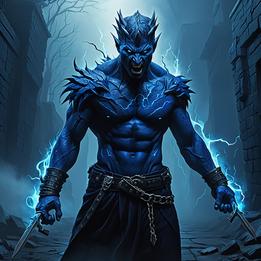
Aggro
A gaming term for aggressive behavior, often representing unexpressed anger, competitive drive, or boundary-pushing in waking life.
Aggro Dream Meaning
A gaming term for aggressive behavior, often representing unexpressed anger, competitive drive, or boundary-pushing in waking life.
Interpretive Themes
Mythological Resonance
Berserker
NorseWarriors who entered battle frenzies, drawing all enemy attention through overwhelming aggression, representing both unstoppable force and the danger of uncontrolled rage.
Ares
GreekThe god of war who embodies not just battle but the raw, confrontational energy that tests limits and reveals true strength through conflict.
Cultural Lenses
Jungian Perspective
View Context →Represents the Shadow archetype—unconscious aggressive impulses seeking integration. Historically seen in warrior myths; modernly manifests as competitive drive needing conscious acknowledgment for wholeness.
Freudian Perspective
View Context →Symbolizes Thanatos (death drive) or repressed id impulses. Historically linked to primal aggression; modernly appears as sublimated hostility in competitive activities or unresolved childhood conflicts.
Gestalt Perspective
View Context →Represents unfinished business or unmet needs. Historically viewed as energy blockage; modernly interpreted as parts of self (aggressive persona) needing dialogue for integration and closure.
Cognitive Perspective
View Context →Reflects maladaptive thought patterns like catastrophizing or hostile attribution bias. Historically tied to threat perception; modernly seen as cognitive distortions requiring restructuring for emotional regulation.
Evolutionary Perspective
View Context →Rooted in survival mechanisms—territorial defense or resource competition. Historically essential for protection; modernly manifests as adaptive aggression in social hierarchies or stress responses.
Global/Universal Perspective
View Context →Cross-cultural symbol of conflict, power, and assertion. Historically present in warrior traditions worldwide; modernly universal in sports, politics, and digital interactions as controlled aggression.
East Asian Perspective
View Context →Often seen as disruptive to harmony (wa). Historically channeled through martial arts discipline; modernly viewed as needing balance through Confucian restraint or Taoist yielding for social cohesion.
South Asian Perspective
View Context →Linked to rajas guna (passion) in Ayurveda. Historically ritualized in warrior castes; modernly interpreted as energy requiring yogic or meditative channeling to avoid karmic entanglement.
Middle Eastern Perspective
View Context →Historically valorized in epic poetry and tribal honor codes. Modernly balanced through Islamic concepts of just anger (ghadab) and patience (sabr), often contextualized as righteous defense.
European Perspective
View Context →Historically romanticized in chivalry and dueling cultures. Modernly framed through psychological theories (e.g., Adler's striving) or sportive sublimation, with emphasis on controlled expression.
African Perspective
View Context →Often viewed as vital energy (ase or ntoro). Historically ritualized in initiation ceremonies; modernly seen as communal force requiring ancestral guidance or drum/dance channeling for positive use.
North American Perspective
View Context →Historically shaped by frontier individualism and competitive capitalism. Modernly glorified in sports/media, yet pathologized in psychology; reflects tension between assertion and social conformity.
Historical Authorities
Want a deeper analysis?
Get a personalized interpretation of your entire dream including this symbol.
Interpret My DreamThe Oracle's Prediction
Combine multiple symbolsA confrontation that leads to clarified boundaries or authority.
Timeframe
Immediate (Next 48h)
Intensity
Deep
Unnecessary conflict arising from misdirected frustration.
Timeframe
Immediate (Next 48h)
Intensity
Deep
Common Appearances & Contexts
| Context | Emotion | Interpretation |
|---|---|---|
| Context Losing a game | Emotion Frustration | Interpretation Fear of failure. |
| Context Winning aggressively | Emotion Triumph | Interpretation Overcoming obstacles. |
| Context Being attacked | Emotion Fear | Interpretation Feeling threatened. |
| Context Starting a fight | Emotion Anger | Interpretation Unresolved conflict. |
| Context Team conflict | Emotion Anxiety | Interpretation Social tension. |
| Context Breaking rules | Emotion Defiance | Interpretation Rebelling against norms. |
| Context Protecting others | Emotion Determination | Interpretation Defensive aggression. |
| Context Chasing enemies | Emotion Hostility | Interpretation Pursuing adversaries. |
| Context Being chased | Emotion Panic | Interpretation Avoiding confrontation. |
| Context Calming aggression | Emotion Relief | Interpretation Resolving tension. |
| Context Training aggression | Emotion Focus | Interpretation Controlled expression. |
| Context Uncontrollable rage | Emotion Terror | Interpretation Lost control. |
Interpret Your Full Dream
Beyond this symbol, every dream carries a unique story. Share your dream for a personalized AI-powered interpretation.