Ziggurat Myth Meaning & Symbolism
A sacred mountain of baked earth, a ladder for the gods, built by human hands to bridge the chasm between the mundane world and the celestial divine.
The Tale of Ziggurat
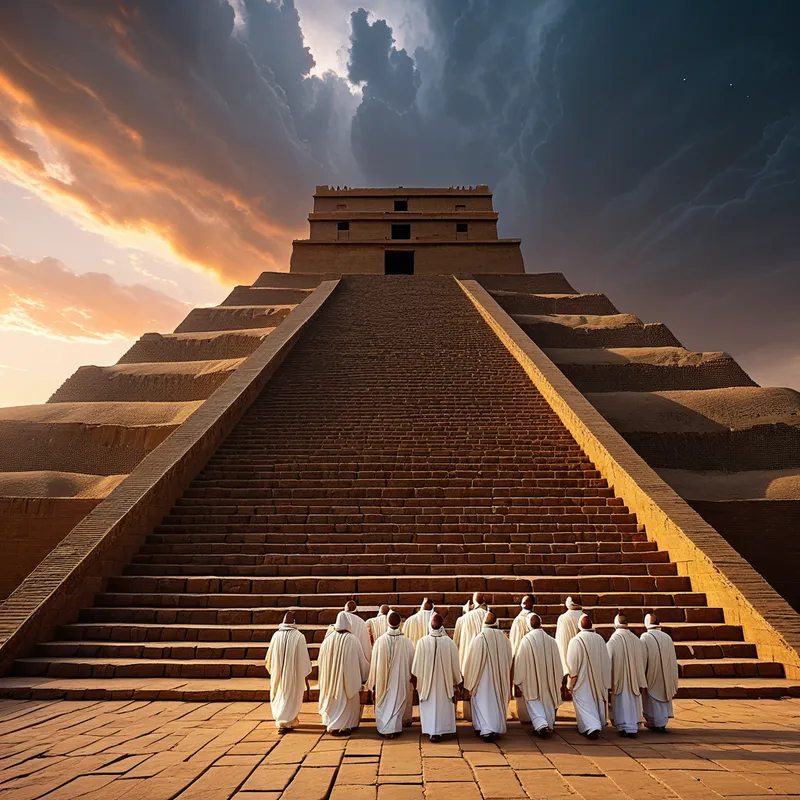
Hear now the tale of the Mountain That Was Not a Mountain, born from the flat, silent womb of the alluvial plain. In the beginning, there was only earth and sky, and a great chasm of air between them where the whispers of the gods grew faint, lost in the winds that swept the reeds. Humanity toiled in the mud, their eyes cast down, their prayers rising no higher than the smoke of their cooking fires.
Then a king, his heart heavy with the silence of the heavens, received a vision in the depths of the night. Anu himself showed him a shape: a colossal, stepped mountain, its sides sheer and precise, its peak brushing the belly of the clouds. “Build me a stair,” the god’s voice thrummed, “a bond between the Ki and the An. Let your hands fashion [the earth](/myths/the-earth “Myth from Hindu culture.”/) into a vessel for my descent.”
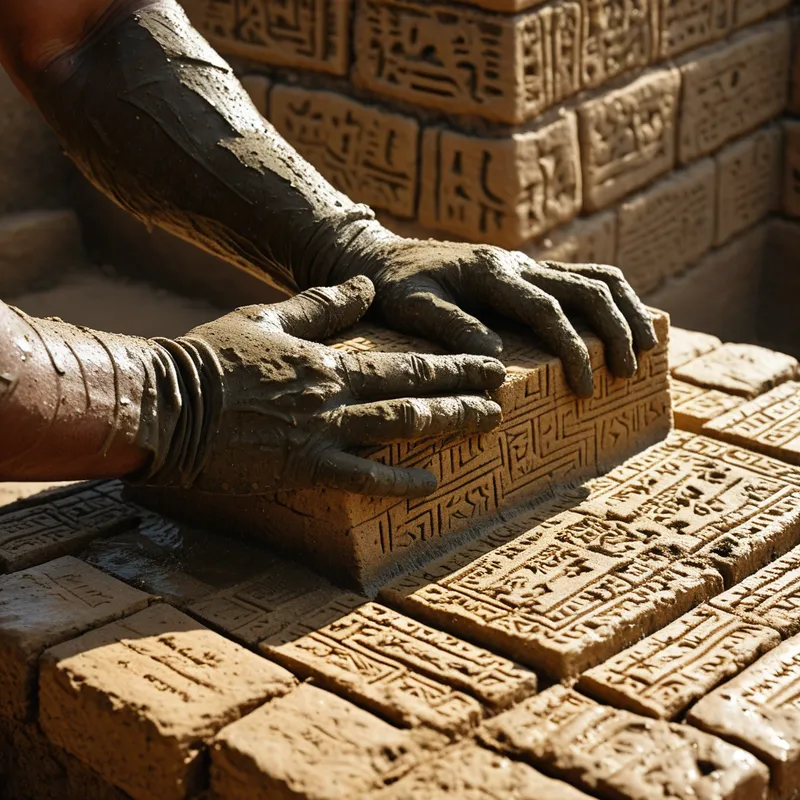
At dawn, the king summoned the people. From every city, from every field, they came—not with weapons, but with baskets. For years, the air rang with the sound of countless feet tamping earth, with the groan of ropes hauling bricks baked in a thousand fires. They mixed the clay not just with [water](/myths/water “Myth from Chinese culture.”/), but with bitumen from the far north and with crushed, fragrant resins. Into each brick, a priest pressed a cuneiform tablet, a whispered name of a god, a plea for favor, sealing the prayer into the very bones of the structure.
[The ziggurat](/myths/the-ziggurat “Myth from Mesopotamian culture.”/) rose, tier by tier, a geometric defiance against the flat horizon. Its sides were the color of sun-baked flesh, its staircases—one for the god, one for the king, one for the priests—carved a path of impossible steepness towards the zenith. At its base, the city hummed with mundane life: the smell of bread, the cries of merchants, the dust of streets. But as one ascended, the sounds faded, replaced by the sigh of the high wind and the palpable weight of the sacred.
On the day of consecration, the king, purified and anointed, began the ascent. His muscles burned; the sun scorched his back. With each step, [the world](/myths/the-world “Myth from Tarot culture.”/) below transformed—[the river](/myths/the-river “Myth from Buddhist culture.”/) became a thread of silver, the people, specks of dust. He crossed [the threshold](/myths/the-threshold “Myth from Folklore culture.”/) of the first terrace, then the second, leaving behind the realm of the common. The air grew thin, charged with ozone. Finally, he reached [the summit](/myths/the-summit “Myth from Taoist culture.”/), the Ésagila, a small, dark chamber of cedar and lapis lazuli.
Inside, in the incense-thick silence, he waited. He poured libations. He chanted the names. And then, it came—not a form, but a presence, a pressure in the air that made [the temple](/myths/the-temple “Myth from Jewish culture.”/) stones hum. The god had descended the ladder. The connection was made. The divine will flowed down the staircases like water, bringing order to the laws, fertility to the fields, and legitimacy to the king’s rule. The mountain of human effort had become the throne of divine attention, and for a moment, the chasm was bridged.
Cultural Origins & Context
The ziggurat was not merely a temple; it was the axis of the Mesopotamian cosmos, a physical manifestation of a core theological and political idea. These structures, emerging in the Sumerian period and perfected by the Babylonians and Assyrians, were the central landmarks of city-states like Ur, Uruk, and Babylon. The myth of the ziggurat was not a single narrative but an enacted, architectural story, performed every day through ritual and annually in great festivals like the Akitu.
Priests and kings were the primary storytellers of this myth, their authority derived from their role as the sole intermediaries who could ascend the sacred staircase. The myth’s function was multifaceted: it cosmologically justified the social order (the king at the top, closest to the gods; the masses below), it served as a divine mandate for royal authority, and it was a profound act of communal magic—an attempt to stabilize a precarious world by literally building a conduit to the powers that governed flood, drought, and fortune.
Symbolic Architecture
The [ziggurat](/symbols/ziggurat “Symbol: A ziggurat symbolizes a connection between humanity and the divine, representing a structured path to spiritual elevation and cultural legacy.”/) is a supreme [symbol](/symbols/symbol “Symbol: A symbol can represent an idea, concept, or belief, serving as a powerful tool for communication and understanding.”/) of the [human](/symbols/human “Symbol: The symbol of a human represents individuality, complexity of emotions, and social relationships.”/) [psyche](/myths/psyche “Myth from Greek culture.”/)’s innate drive to create order from [chaos](/symbols/chaos “Symbol: In Arts & Music, chaos represents raw creative potential, uncontrolled expression, and the breakdown of order to forge new artistic forms.”/) and to seek [connection](/symbols/connection “Symbol: Connection symbolizes relationships, communication, and bonds among individuals.”/) with that which is greater than itself. It is a [monument](/symbols/monument “Symbol: A structure built to commemorate a person, event, or idea, often representing legacy, memory, and cultural identity.”/) of conscious [intention](/symbols/intention “Symbol: Intention represents the clarity of purpose and direction in one’s life and can symbolize motivation and commitment within a dream context.”/) erected upon the unconscious, muddy plains of instinct and matter.
The ziggurat is the psyche’s own scaffolding, a deliberate structure built to invite a visitation from the transcendent.
Its stepped form is a [mandala](/symbols/mandala “Symbol: A sacred geometric circle representing wholeness, the cosmos, and the journey toward spiritual integration.”/) of [ascent](/symbols/ascent “Symbol: Symbolizes upward movement, progress, spiritual elevation, or striving toward higher goals, often representing personal growth or transcendence.”/). Each terrace represents a level of [consciousness](/symbols/consciousness “Symbol: Consciousness represents the state of awareness and perception, encompassing thoughts, feelings, and experiences.”/) achieved, a [layer](/symbols/layer “Symbol: Layers often symbolize complexity, depth, and protection in dreams, representing the various aspects of the self or situations.”/) of the personal or [collective unconscious](/symbols/collective-unconscious “Symbol: The Collective Unconscious refers to the part of the unconscious mind shared among beings of the same species, embodying universal experiences and archetypes.”/) integrated and given form. The climb is arduous, requiring the sacrifice of the easy, horizontal [life](/symbols/life “Symbol: The symbol of ‘Life’ represents a journey of growth, interconnectedness, and existential meaning, encompassing both the joys and challenges that define human experience.”/) of the plain. The [temple](/symbols/temple “Symbol: A temple often symbolizes spirituality, sanctuary, and a deep connection to the sacred aspects of life.”/) at the [summit](/symbols/summit “Symbol: The highest point of a mountain, representing achievement, perspective, and the culmination of effort.”/) is the Self, the sacred inner [chamber](/symbols/chamber “Symbol: A private, enclosed space representing the inner self, hidden aspects, or a specific stage in life’s journey.”/) where [the ego](/myths/the-ego “Myth from Jungian culture.”/), having made the difficult [journey](/symbols/journey “Symbol: A journey in dreams typically signifies adventure, growth, or a significant life transition.”/), can finally encounter the numinous, the numina. The entire [structure](/symbols/structure “Symbol: Structure in dreams often symbolizes stability, organization, and the framework of one’s life, reflecting how one perceives their environment and personal life.”/) is a bridge between opposites: [earth](/symbols/earth “Symbol: The symbol of Earth often represents grounding, stability, and the physical realm, embodying a connection to nature and the innate support it provides.”/) and sky, human and divine, chaos and Me, matter and [spirit](/symbols/spirit “Symbol: Spirit symbolizes the essence of life, vitality, and the spiritual journey of the individual.”/).
The Dreamer’s Resonance
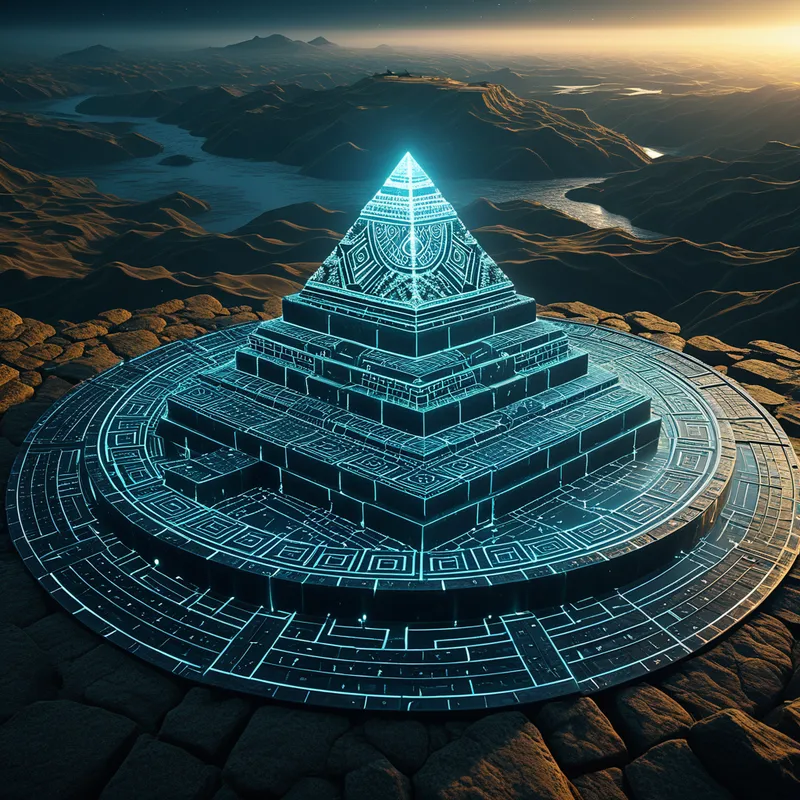
To dream of a ziggurat is to dream of a psychic structure in the making or in need of repair. The dreamer may be at a point in life where a conscious, disciplined effort is required to build something lasting—a career, a relationship, a spiritual practice—from the raw materials of their experience.
If one dreams of climbing the ziggurat, it often signifies an active process of psychological or spiritual ascent. The somatic feeling may be one of strain in the legs and lungs, reflecting the real effort of integration. If the stairs crumble or the summit recedes, it speaks to feelings of futility or the fear that one’s efforts will not reach the divine, will not result in the longed-for meaning or order. Dreaming of being at the base, looking up, can indicate a yearning for connection with one’s own higher potential or inner authority, felt as a distant, imposing ideal. A dream of a ruined or overgrown ziggurat may point to a neglected inner spiritual center, a sacred space within that has been abandoned to the chaos of the unconscious.
Alchemical Translation
The alchemical process mirrored in the ziggurat myth is that of Coagulatio. It is the work of taking [the prima materia](/myths/the-prima-materia “Myth from Alchemical culture.”/)—the formless mud of the unconscious, our instincts, traumas, and potentials—and through the fire of focused will and repeated ritual (the making of each brick, the laying of each course), creating a solid, enduring structure for the soul.
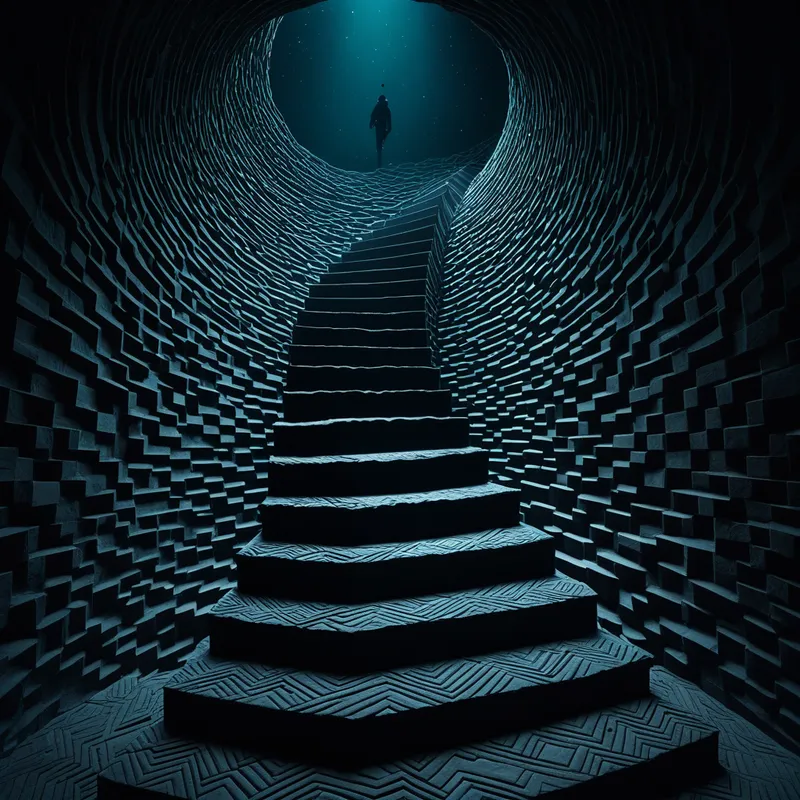
The modern individual’s journey of individuation is this very construction. We begin in the [Nigredo](/myths/nigredo “Myth from Alchemical culture.”/), the blackness of undifferentiated life on the plain, feeling separate and unmoored. The call to build is the call to consciousness. Each brick we lay is a conscious choice, a hard-won insight, a disciplined habit, a boundary set. The ascent is the often lonely and arduous work of therapy, reflection, and shadow integration, leaving behind older, simpler identities.
The goal is not to become a god, but to build a temple sturdy enough for the god to inhabit.
The final stage is not a permanent residence at the summit—that is inflation, the mistake of believing you are the god. Rather, it is the capacity for moments of true connection, where the ego, having built [the vessel](/myths/the-vessel “Myth from Alchemical culture.”/), can step aside and experience the influx of meaning from [the Self](/myths/the-self “Myth from Jungian culture.”/). Then, one must descend, carrying that ordering principle back into the mundane world, governing one’s inner city with a little more wisdom, a little more of the sacred Me. The ziggurat stands as a permanent testament: wholeness is not found, but built, brick by painful, prayerful brick.
Associated Symbols
Explore related symbols from the CaleaDream lexicon: