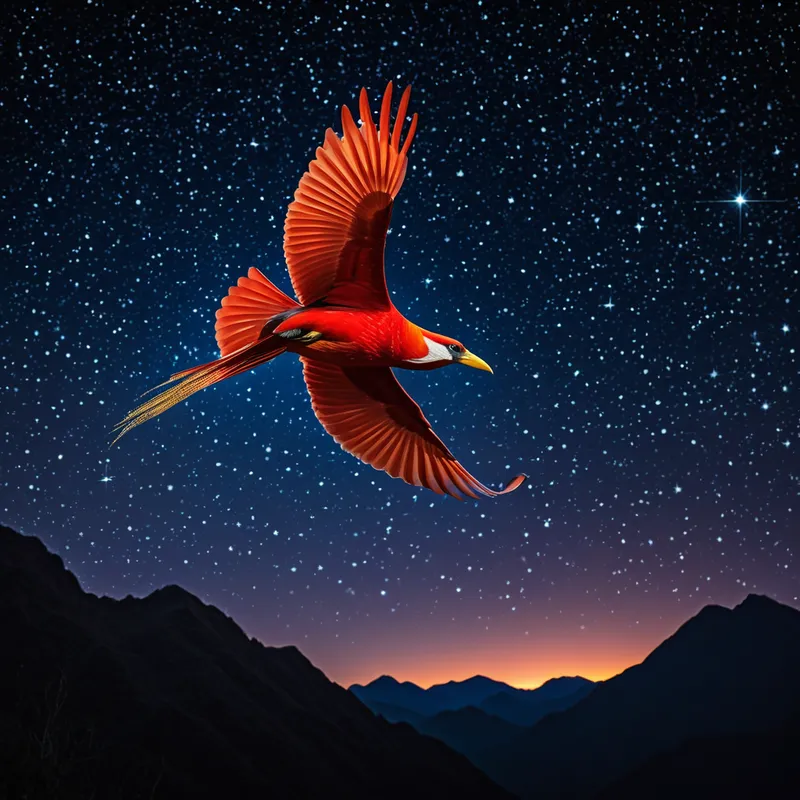
Zhuque Myth Meaning & Symbolism
The Vermilion Bird of the South, a celestial guardian born of primordial fire, whose cyclical death and rebirth governs the seasons and the soul's alchemy.
The Tale of Zhuque
In the time before time, when [the sky](/myths/the-sky “Myth from Persian culture.”/) was a raw canvas of chaos and [the earth](/myths/the-earth “Myth from Hindu culture.”/) a formless dream, the Dao stirred. From its silent depths, the Four Symbols were conceived to bring order to the directions, and to the seasons. And for the fiery realm of the South, the Qi gathered, not as [water](/myths/water “Myth from Chinese culture.”/) or stone, but as pure, unmanifested potential for light and heat.
It gathered in the Celestial Southern Palace, a realm of eternal summer twilight. There was no bird, only a longing—a searing, silent cry for form. Then, from the heart of a star that fell into the palace’s central furnace, the first spark took wing. It was not born; it ignited. Crimson plumes unfurled from the flame, each feather a captured sunset. Talons of polished obsidian formed to grasp the [threads of fate](/myths/threads-of-fate “Myth from Greek culture.”/), and eyes like molten suns opened, seeing not just space, but time. This was Zhuque, the Vermilion Bird, the Sovereign of Fire.
His first cry was not a sound, but a wave of warmth that rolled across the heavens, commanding the season of Summer to begin its reign on earth. He did not merely fly; he painted the southern quadrant of the sky with his passage, his long, elegant tail feathers streaming like the banners of a divine emperor. His duty was sacred and severe: to guard the border between the ordered world and the lingering chaos, to ensure the sun’s journey reached its zenith and then gracefully declined, and to govern all creatures of feather and flame.
But sovereignty is a cycle, not a permanent state. As the sun began its southward retreat, a heaviness would settle in Zhuque’s brilliant bones. The fire that was his essence would burn low, growing dense and inward. His radiant plumage would dim to a dull, smoldering crimson. This was not weakness, but the deep, necessary turn of the cosmic wheel. With a final, resonant call that shook the pillars of his palace, Zhuque would return to the very furnace of his origin.
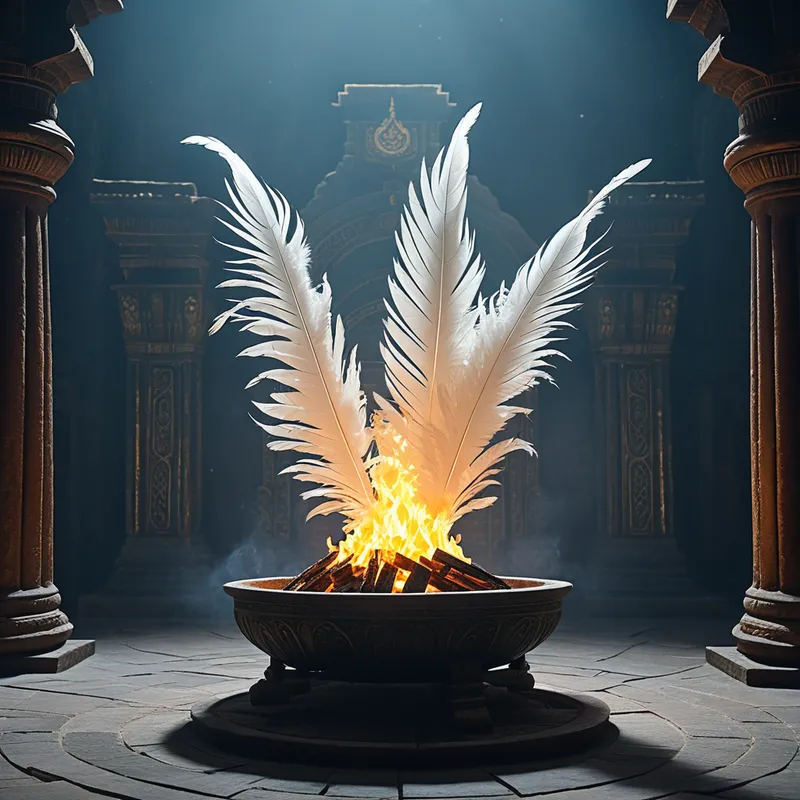
There, in a silence so profound it was a kind of music, he would submit to the flame. His form would dissolve—not into nothingness, but into its purest essence: a single, spinning orb of vermilion light and a pile of sacred, warm ash. For nine times nine nights, the palace would hold its breath. Then, from the ash, a new spark would tremble. It would draw the scattered light back into itself, weaving a new, more resplendent body. With a burst of glory that announced the promise of summer’s return, Zhuque would rise again, his renewal ensuring [the world](/myths/the-world “Myth from Tarot culture.”/)’s continuity. His death was his most solemn duty; his rebirth, his most triumphant decree.
Cultural Origins & Context
The myth of Zhuque is not a singular story with a plot, but a foundational piece of a vast cosmological system. Its origins are woven into the earliest strands of Chinese thought, emerging from the Yijing ([I Ching](/myths/i-ching “Myth from Chinese culture.”/)) and the school of [Yin-Yang](/myths/yin-yang “Myth from Taoist culture.”/) Wuxing. Zhuque, or the Vermilion Bird, is one of the Si Xiang (Four Symbols), specifically governing the South, the season of Summer, the element of Fire, and the color red.
This myth was passed down not by bards around a fire, but by astronomers, diviners, and state philosophers. It was inscribed on bronze ritual vessels, charted on astrological maps, and embedded in the architecture of palaces and tombs—the direction of the main gate often aligning with celestial symbolism. Its primary function was explanatory and regulatory. It provided a sacred, animating model for the natural world’s cycles and, by extension, for the <abbr title=“The Chinese concept of the “Mandate of Heaven,” the divine right to rule”>Tianming (Mandate of Heaven) and the orderly functioning of the state. The emperor, as the Son of Heaven, mirrored Zhuque’s role as the sovereign of his southern domain. The myth’s power lies in its impersonal, cyclical grandeur; it is about the pattern of the cosmos, with Zhuque as both the agent and the embodiment of that pattern.
Symbolic Architecture
Zhuque is far more than a colorful [bird](/symbols/bird “Symbol: Birds symbolize freedom, perspective, and the connection between the earthly and spiritual realms, often representing the soul’s aspirations or personal growth.”/). It is a complex [symbol](/symbols/symbol “Symbol: A symbol can represent an idea, concept, or belief, serving as a powerful tool for communication and understanding.”/) of transformative fire. Unlike the destructive, wild fire of calamity, Zhuque’s fire is celestial, sacrificial, and renewing. It represents the necessary, purifying intensity that precedes creation.
The phoenix in the West rises from its own end; Zhuque arises from its own essence. The ash is not a grave, but a womb of potential.
Psychologically, Zhuque embodies [the principle](/symbols/the-principle “Symbol: A fundamental truth, law, or doctrine that serves as a foundation for a system of belief, behavior, or reasoning, often representing moral or ethical standards.”/) of conscious, willed transformation. The fire is the heat of intense focus, [passion](/symbols/passion “Symbol: Intense emotional or physical desire, often linked to love, creativity, or purpose. Represents life force and deep engagement.”/), or [crisis](/symbols/crisis “Symbol: A crisis symbolizes turmoil, urgent challenges, and the need for immediate resolution or change.”/) that forces a consolidation of [the self](/myths/the-self “Myth from Jungian culture.”/). The [flight](/symbols/flight “Symbol: Flight symbolizes freedom, escape, and the pursuit of one’s aspirations, reflecting a desire to transcend limitations.”/) represents sovereignty—the [ability](/symbols/ability “Symbol: In dreams, ‘ability’ often denotes a recognition of skills or potential that one possesses, whether acknowledged or suppressed.”/) to survey one’s inner [landscape](/symbols/landscape “Symbol: Landscapes in dreams are powerful symbols representing the dreamer’s emotional state, personal journey, and the broader context of life situations.”/) (the South as the [realm](/symbols/realm “Symbol: The symbol of ‘Realm’ often signifies the boundaries of one’s consciousness, experiences, or emotional states, suggesting aspects of reality that are either explored or ignored.”/) of [passion](/symbols/passion “Symbol: Intense emotional or physical desire, often linked to love, creativity, or purpose. Represents life force and deep engagement.”/), fame, and the [heart](/symbols/heart “Symbol: The heart symbolizes love, emotion, and the core of one’s existence, representing deep connections with others and self.”/)) from a higher, ordered [perspective](/symbols/perspective “Symbol: Perspective in dreams reflects one’s viewpoints, attitudes, and how one interprets experiences.”/). The most profound symbol is the return to the [furnace](/symbols/furnace “Symbol: A furnace represents transformation through intense heat, purification, and the containment of powerful energy. It symbolizes both creative potential and destructive force.”/). This is [the ego](/myths/the-ego “Myth from Jungian culture.”/)’s submission to a process greater than itself. It is the burnout that is not an end, but a prerequisite for renewal. The ego-[structure](/symbols/structure “Symbol: Structure in dreams often symbolizes stability, organization, and the framework of one’s life, reflecting how one perceives their environment and personal life.”/), with all its brilliant “plumage,” must dissolve back into the core Self so that a more authentic, integrated form can coalesce.
The Dreamer’s Resonance
When the archetype of Zhuque stirs in the modern unconscious, it often manifests in dreams of intense, fiery transition. One might dream of a magnificent red bird that seems wise but distant, or of a beloved house or forest burning down in a clean, almost ceremonial fire. There is fear, but also a strange sense of rightness.
Somatically, this can correlate with periods of “burnout,” fever, or inflammation—the body’s literal fire. Psychologically, the dreamer is undergoing the “Southern” trial: a confrontation with their own passions, ambitions, and heart’s desires. The old way of being, the old identity that once shone brightly, has reached its zenith and is now heavy, spent, and ready to be surrendered. The dream is the [psyche](/myths/psyche “Myth from Greek culture.”/)’s announcement that a sacred, if terrifying, cycle of death and rebirth has been initiated. The feeling is not of being destroyed by an external force, but of being refined by an internal, cosmic law.
Alchemical Translation
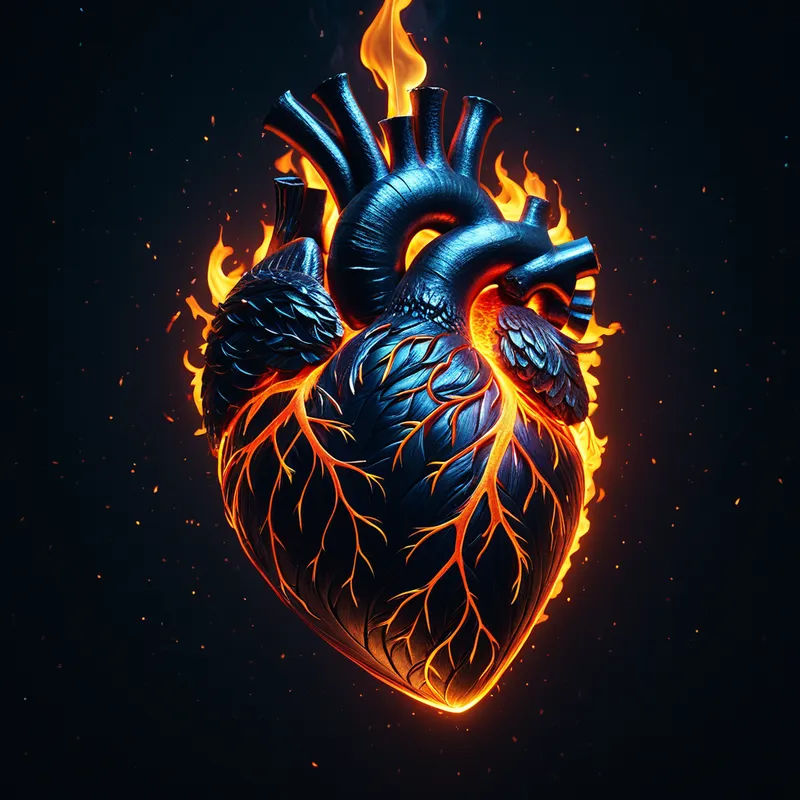
The myth of Zhuque provides a master blueprint for the alchemical stage of Calcinatio—the burning by fire. In the journey of individuation, we all must journey to our personal “South,” the domain of our most potent affects and complexes. Here, we achieve a kind of success, a brilliant expression of ourselves. But to stagnate here is to become a fixed, burning statue, eventually consumed by our own unyielding flame.
Zhuque’s lesson is that true sovereignty requires the courage of sacrificial return. The modern individual must learn to willingly enter their own “furnace”—the liminal space of therapy, meditation, creative block, or deep crisis—and allow the current form of their personality to be reduced to its essence. This is not nihilism.
The goal is not to become ash, but to discover what is ash-proof. The fire does not create the gold; it merely reveals it by burning away all that is not gold.
The rebirth is not a return to the old self, but the emergence of a self that has integrated the fire. It carries the warmth and light without being destroyed by it. The cyclical ordeal transforms raw, unconscious passion (Fire as destructive element) into conscious, guiding vitality (Fire as illuminating spirit). One becomes, in a sense, the guardian of one own’s southern borders, able to command the fires of the heart with wisdom, and to renew oneself from the core when the seasons of the soul demand it.
Associated Symbols
Explore related symbols from the CaleaDream lexicon: