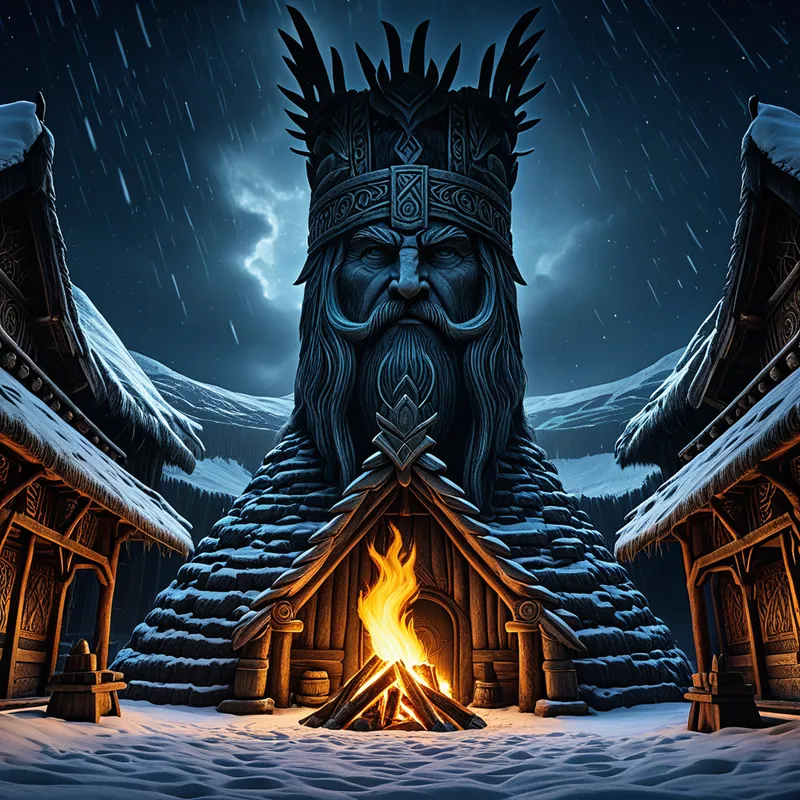
Yule Festival Myth Meaning & Symbolism
A mythic battle against endless winter, where gods and mortals kindle the sun's return through sacrifice, feasting, and the defiant light of the Yule log.
The Tale of the Yule Festival
Hark, and listen to the tale of the dying sun.
The world was a wolf’s jaw, clamped in the iron cold of Ginnungagap. The sky, a lid of leaden grey, pressed down upon the shoulders of the land. Sól, in her chariot, grew weak and pale, chased ever closer by the ravenous wolf Sköll. Her light was a memory, a thin, gold thread fraying at the edge of the world. In Asgard, a silence fell, deeper than the snow piling high against the walls of Valhalla. The mead-halls of men were tombs of frost, the breath of the living a fleeting ghost in the air.
This was the Jól-tide, the hinge of the year where the wheel of time itself seemed to freeze. The Allfather, Odin, the Wild Huntsman, rode the storm-charged winds, his single eye seeing the fear in every hearth. His son, Thor, found his mighty hammer Mjölnir cold to the touch, its lightning sleeping deep within the iron. The earth mother, Frigg, sat weaving not the threads of fate, but a shroud of stillness.
But in the heart of this death, a defiance was kindled. It began not with a shout, but with a gathering. From the high seat of the godi, the chieftain-priest, the call went out. Through the howling gales, the people came. They hauled from the deep forest the chosen one: the Jól-log, an oak of immense girth, its bark etched with the scars of centuries. It was not mere wood; it was the captured spirit of the summer forest, the embodied memory of the sun.
The log was dragged across the frozen earth, a solemn procession into the great hall. The doors were sealed against the night. Inside, the air was thick with the scent of pine, blood from the blót-boar, and the sweet, heavy promise of fermented mead. The chieftain raised a horn, its rim carved with serpents that bit their own tails. He poured the first libation to Odin, for wisdom in the darkness. The second to Freyr, for the hope of a returning spring. The third to the alfar and the landvættir, the unseen ones who slept beneath the snow.
Then, with sparks struck from flint and steel—a tiny, newborn sun—the Jól-log was lit. The flame caught, hesitant at first, licking at the resinous bark. Then it roared to life, a torrent of gold and crimson that climbed the wood, banishing the shadows to the corners of the roof. In that fire, they saw the chariot of Sól, reborn. They saw the promise that Sköll would be held at bay, that the wheel would turn. For twelve nights, the log would burn, fed and tended, a vigil against the outer dark. They feasted on the flesh of the sacred boar, made oaths upon its bristles, and drank deep, their voices rising in songs older than the gods themselves—songs that did not plead for the sun’s return, but commanded it, conjuring it back from the edge of the abyss with the sheer, stubborn will of life itself.
Cultural Origins & Context
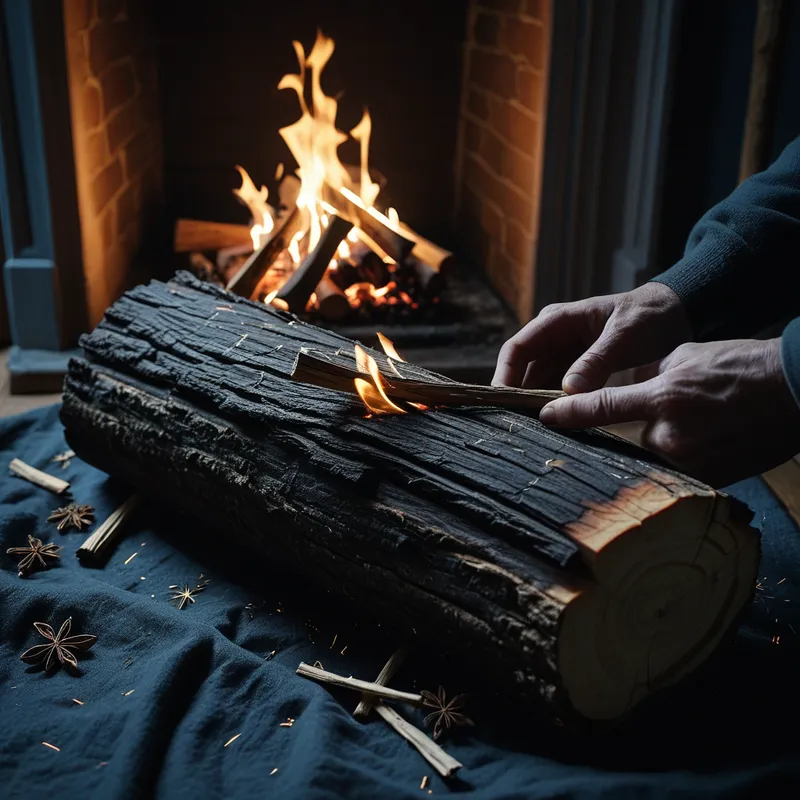
The mythic heart of Yule, or Jól, beats within the practical, brutal reality of the Scandinavian winter. This was not a mere calendar event but a profound communal survival ritual. The primary sources are fragmentary, filtered through later Christian chroniclers like the 13th-century Snorri Sturluson, yet they paint a vivid picture of a festival central to the annual cycle. It was a time when the boundaries between worlds grew thin. The dead, the dísir, were thought to ride close to the homes of their descendants, and Odin’s Wild Hunt swept across the sky, a spectral warning and a reminder of cosmic forces.
The telling of the “myth” was not a single narrative recited by a bard, but an enacted drama. The story was told through the rituals themselves: the selection of the log (the sun captured), the lighting (the sun reborn), the feasting (the communion of community and gods), and the oaths sworn on the bristles of the Gullinbursti (the binding of fate for the coming year). Its societal function was threefold: psychological, to combat the despair of the mørketid; social, to reaffirm kinship and hierarchy through shared sacrifice and gift-giving; and cosmological, to actively participate in the turning of the great wheel, ensuring the sun’s return and the fertility of land and herd.
Symbolic Architecture
At its core, the Yule myth is an alchemical drama of the psyche confronting the absolute reality of dissolution. The dying sun is not an external astronomical event, but the symbolic death of conscious light—our ego, our vitality, our sense of purpose and direction. The endless winter represents the psychic state of depression, stagnation, and meaninglessness, where all forward momentum ceases.
The true fire is not the one that banishes the dark, but the one that is kindled because of the dark. It is an act of defiance, not of denial.
The Jól-log is the central symbol of preserved essence. It is the core of the Self, the accumulated wisdom, strength, and memory of the past year (and all years prior) that must be sacrificed—burned—to generate the heat and light needed to survive the inner winter. The act of saving a piece to light next year’s fire is a profound symbol of psychic continuity, the eternal kernel of identity that survives every cycle of death and rebirth. The gods invoked—Odin for insight, Freyr for fertile potential—represent the internal capacities we must call upon: ruthless introspection and hopeful creativity.
The Dreamer’s Resonance
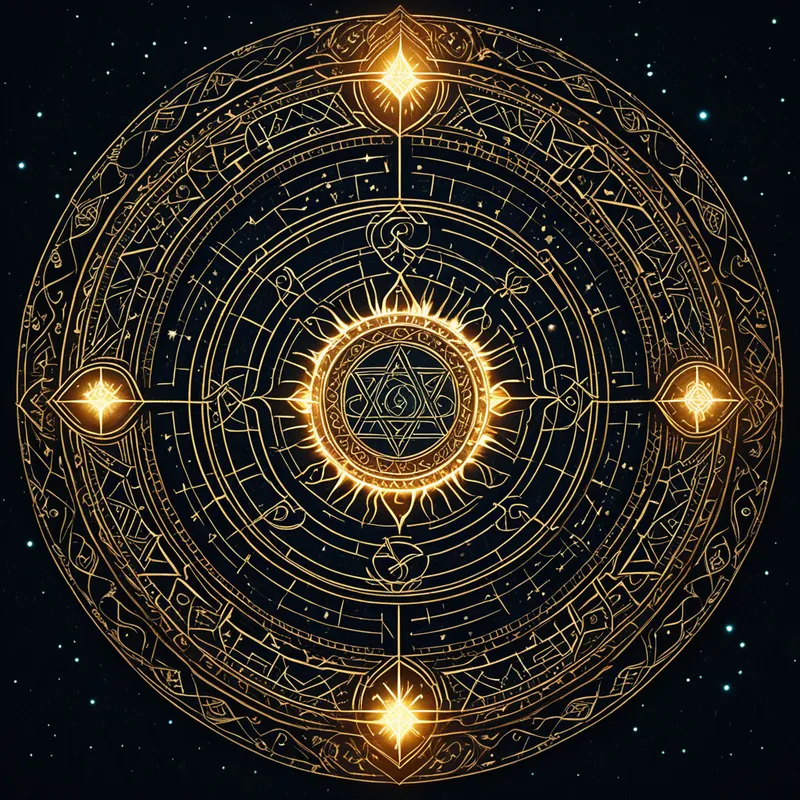
When this myth stirs in the modern unconscious, it often manifests in dreams of profound cold, stillness, or being lost in a featureless, snow-blanketed landscape. One may dream of a house where the furnace has gone out, or of trying in vain to light a fire with damp wood. These are somatic echoes of a psychological “wintering”—a period of burnout, grief, creative block, or depression where the inner light seems to have fled.
The appearance of a specific, large piece of wood, a tree that needs to be felled, or a stubborn, smoldering ember in a dream points directly to the Yule complex. The dream-ego is being confronted with the necessity of the blót, the sacrifice. What old identity, spent project, or comforting narrative must be ritually “killed” and offered to the inner hearth to fuel a transformation? The dream may present a feast where the dreamer is both guest and sacrificial boar, indicating a process where nourishing the Self requires surrendering a part of the Self.
Alchemical Translation
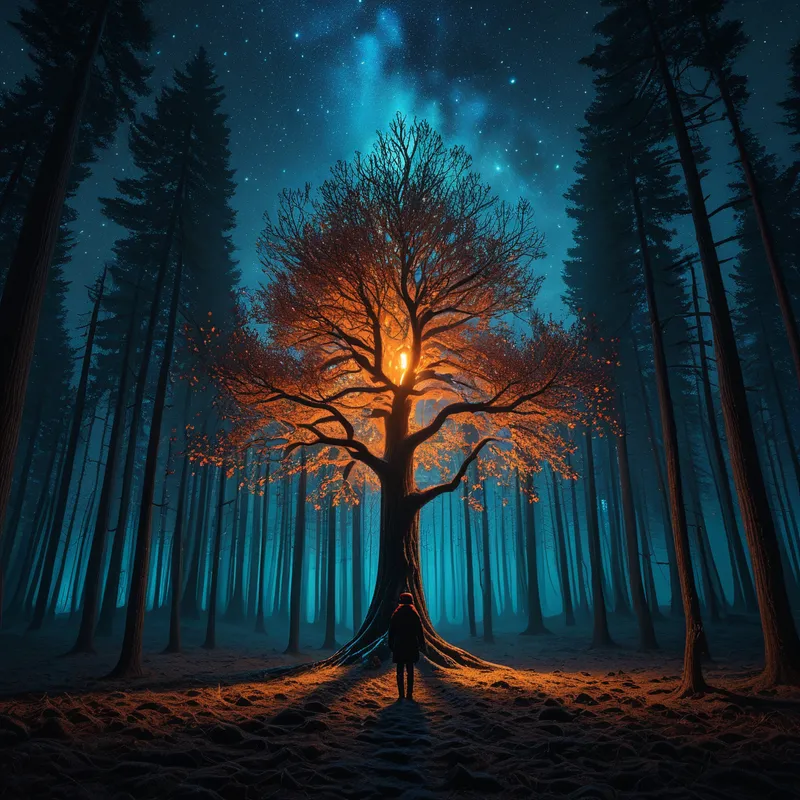
The Yule myth provides a precise model for the process of psychic transmutation, or individuation, during life’s inevitable winters. The first stage is Recognizing the Mørketid: the conscious acceptance of the depressive or fallow period, not as a failure, but as a necessary phase in the cycle. Fighting it as an enemy only exhausts the soul.
The second is the Gathering of the Log: This is the introspective work of identifying what within us is still vital, what core truth, talent, or memory holds the stored energy of our past suns. This is not the ego’s achievements, but the deeper, older wood of the Self.
Individuation is not a journey toward perpetual summer, but the cultivation of the skill to kindle a sustainable fire in the heart of December.
The third and crucial stage is the Lighting of the Vigil Fire: This is the active, willed decision to engage in a practice—however small—that symbolizes hope and continuity. It is writing one sentence, taking one walk, maintaining one ritual. It is feeding the flame with conscious attention, protecting it from the winds of doubt and distraction for a sacred period (the twelve nights).
The final stage is the Feasting and Oath-Making: As the inner light stabilizes, it nourishes a new clarity. This is the time to integrate the insights gained in the darkness, to “feast” on new understandings, and to swear oaths to the future Self—not grandiose resolutions, but concrete promises born from the wisdom of having survived the dark. In this way, the individual does not merely wait for an external spring, but becomes the crucible in which the personal sun is ritually, relentlessly reborn.
Associated Symbols
Explore related symbols from the CaleaDream lexicon: