
Yuki-onna Snow Woman
A spectral woman of Japanese folklore who appears in snowstorms, embodying both beauty and terror as she tests or claims the lives of travelers.
The Tale of Yuki-onna Snow Woman
In the deep heart of winter, when [the world](/myths/the-world “Myth from Tarot culture.”/) is hushed beneath a blanket of white and [the wind](/myths/the-wind “Myth from Various culture.”/) sings a mournful song through the pines, she walks. She is [Yuki-onna](/myths/yuki-onna “Myth from Japanese culture.”/), the Snow Woman. Her form is of such unearthly beauty it steals the breath—skin pale as the first snow, robes white as a frozen waterfall, eyes dark and deep as a moonless midnight. Yet her touch is the kiss of the grave, a cold so absolute it stills the heart in an instant.
One classic tale tells of two woodcutters, a master named Mosaku and his young apprentice, Minokichi. Caught in a savage blizzard on their return from the mountains, they sought shelter in a deserted hut. In the dead of night, a gust of wind tore the door open, and in drifted a woman of breathtaking, chilling beauty. She glided to the sleeping Mosaku and breathed upon him—a long, silent, icy breath—and his life fled his body, leaving him a frozen corpse. She then turned to Minokichi. But seeing his youth and handsome face, she hesitated. She warned him in a voice like wind over ice: speak of this night to anyone, especially a woman, and she would return to claim him. Then she vanished into the swirling snow.
The years passed. Minokichi met a beautiful, modest woman named Yuki. They married, and she was a dutiful wife, bearing him many children. Yet she retained a peculiar, unearthly quality—a coolness to her touch, a sadness in her eyes when the first snow fell. One evening, after many years, Minokichi, gazing at his wife sewing by the lamplight, was struck by a memory of that long-ago terror. He recounted the tale of the ghost in the hut, of her impossible beauty and her deadly breath. “She looked,” he mused aloud, “much like you, Yuki.”
At his words, his wife’s serene expression shattered. Her face grew pale, her eyes wide and dark. “That was I!” she cried, her voice now the familiar wind-over-ice. “I was that Yuki-onna! I spared you for your youth and beauty, and for the love that grew in my cold heart, I lived as your wife. But you have broken your vow.” As she spoke, her body began to grow faint and translucent, like mist. “Now I must go. Yet for the sake of our children, I will spare you again. Care for them, or know my wrath.” And with a final, mournful sigh, she dissolved into a cold mist that drifted out the window, leaving only the chill of a winter night and a husband’s shattered world.
Cultural Origins & Context
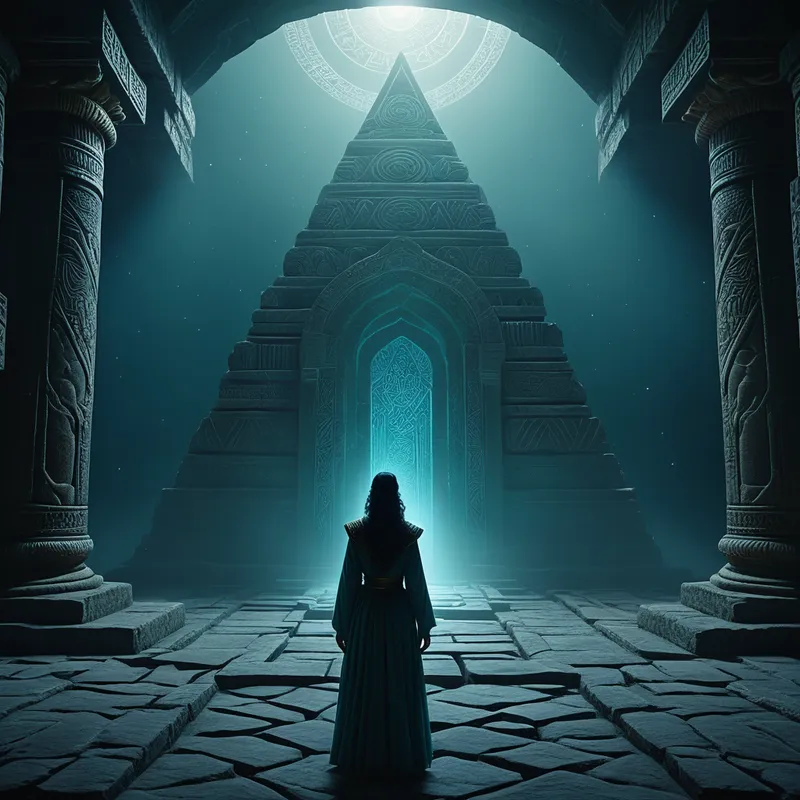
Yuki-onna emerges from the animistic heart of Shinto belief, where every natural force and phenomenon possesses a spirit, or kami. The snowstorm is not merely weather; it is a manifestation of a powerful, capricious, and often dangerous presence. She belongs to the broad category of yōkai (specters) and [yūrei](/myths/yrei “Myth from Japanese culture.”/) (ghosts), entities that inhabit the liminal spaces between the human and spirit worlds. Her specific character is forged in the harsh, isolating winters of Japan’s mountainous regions, where a blizzard was not an inconvenience but a genuine encounter with the lethal majesty of nature.
Scholars note her tales often carry the weight of regional folktales (mukashibanashi), told around hearths to explain the mysterious deaths that befell travelers in winter. Yet, she transcends simple cautionary lore. She is a nature kami given a human, feminine form—a personification of winter’s dual nature. She is the beautiful, silent snowfall that blankets the land in peace, and she is the blinding, suffocating blizzard that claims lives without remorse. This duality places her at [the crossroads](/myths/the-crossroads “Myth from Celtic culture.”/) of awe and terror, reverence and fear, which is the very essence of encountering the sacred (kami) in its raw, untamed form.
Symbolic Architecture
[Yuki-onna](/symbols/yuki-onna “Symbol: A Japanese snow spirit or ghost, often depicted as a beautiful woman who appears in snowstorms, representing both danger and ethereal beauty.”/) is not a [monster](/symbols/monster “Symbol: Monsters in dreams often symbolize fears, anxieties, or challenges that feel overwhelming.”/), but a [symbol](/symbols/symbol “Symbol: A symbol can represent an idea, concept, or belief, serving as a powerful tool for communication and understanding.”/) of profound psychological and environmental truths. She is the face of the sublime in [nature](/symbols/nature “Symbol: Nature symbolizes growth, connectivity, and the primal forces of existence.”/)—a [beauty](/symbols/beauty “Symbol: This symbol embodies aesthetics, harmony, and the appreciation of life’s finer qualities.”/) so overwhelming it contains an element of [terror](/symbols/terror “Symbol: An overwhelming, primal fear that paralyzes and signals extreme threat, often linked to survival instincts or deep psychological trauma.”/). Her narratives explore the thin, permeable [boundary](/symbols/boundary “Symbol: A conceptual or physical limit defining separation, protection, or identity between entities, spaces, or states of being.”/) between [life](/symbols/life “Symbol: The symbol of ‘Life’ represents a journey of growth, interconnectedness, and existential meaning, encompassing both the joys and challenges that define human experience.”/) and [death](/symbols/death “Symbol: Symbolizes transformation, endings, and new beginnings; often associated with fear of the unknown.”/), a boundary made physically manifest by the freezing cold, which can preserve form while extinguishing [life](/symbols/life “Symbol: The symbol of ‘Life’ represents a journey of growth, interconnectedness, and existential meaning, encompassing both the joys and challenges that define human experience.”/).
She represents the ultimate orphan archetype—a spirit utterly disconnected from the warm, generative web of human community and continuity. She exists in eternal winter, a state of suspended animation and emotional ice, longing for the warmth she can perceive but never truly possess without destroying it.
Her interactions with men, particularly in tales like Minokichi’s, are profound psychological dramas. She is the frozen [aspect](/symbols/aspect “Symbol: A distinct feature, quality, or perspective of something, often representing a partial view of a larger whole.”/) of the [anima](/symbols/anima “Symbol: The feminine archetype within the male unconscious, representing soul, creativity, and connection to the inner world.”/), the inner feminine that can be a guide to [soul](/symbols/soul “Symbol: The soul represents the essence of a person, encompassing their spirit, identity, and connection to the universe.”/) or a [psychopomp](/myths/psychopomp “Myth from Greek culture.”/) to [death](/myths/death “Myth from Tarot culture.”/). To encounter her is to confront one’s own [relationship](/symbols/relationship “Symbol: A representation of connections we have with others in our lives, often reflecting our emotional state.”/) with the cold, silent, and potentially lethal [depths](/symbols/depths “Symbol: Represents the subconscious, hidden emotions, or foundational aspects of the self, often linked to primal fears or profound truths.”/) of the unconscious. Her [marriage](/symbols/marriage “Symbol: Marriage symbolizes commitment, partnership, and the merging of two identities, often reflecting one’s feelings about relationships and social obligations.”/) to Minokichi symbolizes a fragile, conscious [integration](/symbols/integration “Symbol: The process of unifying disparate parts of the self or experience into a cohesive whole, often representing psychological wholeness or resolution of internal conflict.”/) of this numinous, dangerous [energy](/symbols/energy “Symbol: Energy symbolizes vitality, motivation, and the drive that fuels actions and ambitions.”/)—an integration forever threatened by the [human](/symbols/human “Symbol: The symbol of a human represents individuality, complexity of emotions, and social relationships.”/) tendency to forget sacred vows and speak the unspeakable.
The Dreamer’s Resonance
To dream of Yuki-onna is to stand at [the threshold](/myths/the-threshold “Myth from Folklore culture.”/) of a profound inner climate shift. She appears when the [psyche](/myths/psyche “Myth from Greek culture.”/)’s landscape has grown cold, when emotional warmth has receded, and a certain beautiful sterility has taken hold. She may signal a period of emotional isolation, a “winter of the soul,” where feelings seem frozen and distant. Her terrifying beauty can mirror a captivating but lifeless ideal—a perfect career, a flawless self-image, a relationship without heat—that ultimately leaves the dreamer frozen in place.
Yet, her presence is not merely a warning. As a figure who both kills and spares, who claims and yet shows mercy for the sake of children (symbols of potential and future life), she embodies a complex call. She asks the dreamer: What have you frozen within yourself? What vow to your own depths have you broken? What beautiful, chilling truth are you avoiding? Engaging with her in the dream requires immense courage, for it means facing the parts of oneself that feel inhumanly cold, isolated, and potentially destructive, and finding the spark of life—the memory of love, the care for one’s own “children” (creations, potentials)—that can begin a thaw.
Alchemical Translation
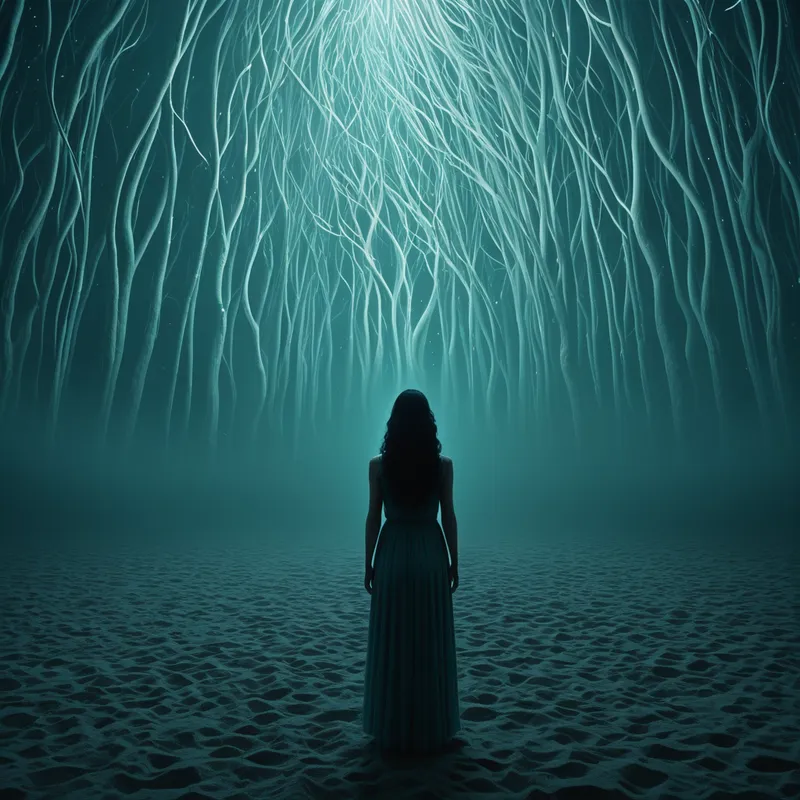
The alchemical process mirrored in Yuki-onna’s myth is mortificatio—the necessary death, the freezing, the reduction to a base, white state. She is the agent of this frigid dissolution. The warm, living body of the traveler (the unrefined psyche) is returned to a pristine, white stillness. This is not a final end, but a stage. The snow, while deadly, also purifies and blankets, creating a [tabula rasa](/myths/tabula-rasa “Myth from Alchemical culture.”/).
Her tale with Minokichi illustrates a failed coniunctio (sacred marriage). The cold feminine (Yuki-onna) and the warm masculine (Minokichi) unite, creating life (children), but the union is built on an unintegrated secret. When the secret is spoken—when the unconscious content is thrust prematurely into consciousness without integration—the union dissolves. The “silver” of the moonlit snow cannot hold the “gold” of lasting, conscious relationship.
The promise, however, lies in the snowmelt. Yuki-onna’s final mercy, tied to the care of the children, is the seed of [albedo](/myths/albedo “Myth from Alchemical culture.”/) turning toward citrinitas. The frozen state must eventually yield. The love for what has been created (the children) becomes the sun that initiates the thaw, suggesting that even the most frozen trauma or isolation contains, within it, the potential for future growth and flowing life, if its terms are honored.
Associated Symbols
Explore related symbols from the CaleaDream lexicon:
- Snow — The primary substance of Yuki-onna, representing both beautiful stillness and lethal cold, a state of purification and suspended animation.
- Death — The inevitable breath of the Snow Woman, symbolizing not just physical end but the necessary freezing or ending of a psychic state.
- Spirit — She is a yūrei or nature kami, an embodiment of the animated, conscious force within the natural world.
- Nature — In her raw, untamed, wintry aspect, demonstrating both sublime beauty and absolute, impersonal power.
- Mother — In her paradoxical role as the bearer of children and a force of mercy, hinting at a generative potential beneath the ice.
- Mirror — She reflects the frozen, beautiful, and terrifying aspects of [the self](/myths/the-self “Myth from Jungian culture.”/) that one encounters in isolation or deep introspection.
- Door — The threshold of the hut, the boundary between the warm human world and the cold spiritual one, which she crosses effortlessly.
- Journey — The traveler’s path through the mountain blizzard, representing the perilous journey through a frozen period of life or psyche.
- Dream — Her realm is akin to a dreamscape—beautiful, logical in its own way, emotionally potent, and potentially transformative upon waking.
- Love — The fragile, impossible warmth that grows in her cold heart, [the force](/myths/the-force “Myth from Science Fiction culture.”/) that stays her hand and complicates her nature.
- Grief — The profound sorrow that may underpin her eternal winter, the loss that turned a woman into a spirit of ice.
- Snowmelt — The crucial, implied symbol of transformation and hope, the promise that no winter, however deep, lasts forever.