
Xiwangmu Garden of Immortality
The mythical garden of Xiwangmu where peaches of immortality grow, representing Taoist ideals of eternal life, harmony, and cosmic balance.
The Tale of Xiwangmu Garden of Immortality
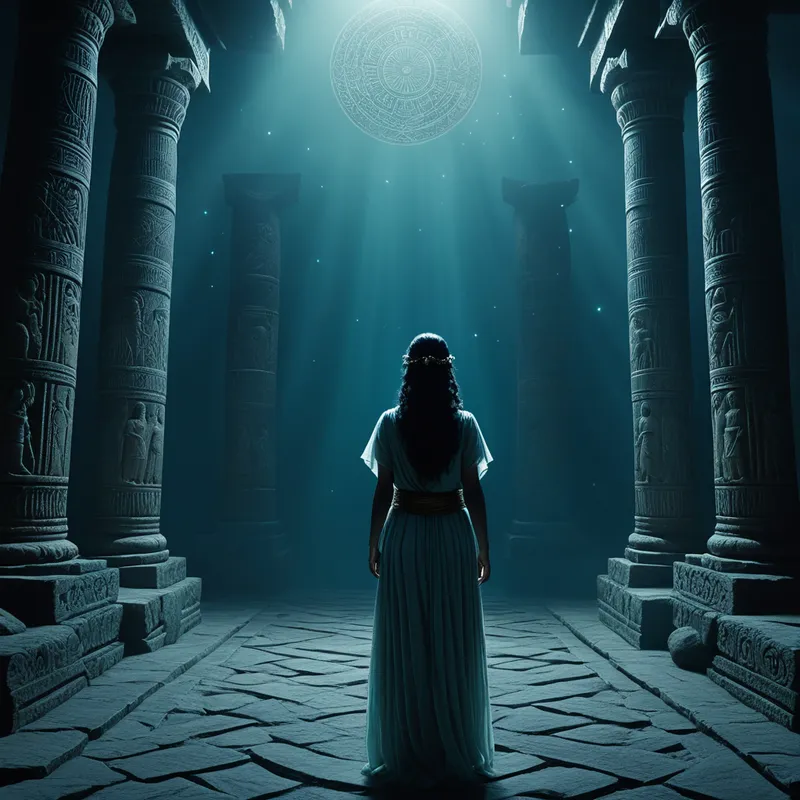
Beyond the ninefold clouds and the jasper ramparts of the Kunlun Mountains, where the breath of [the world](/myths/the-world “Myth from Tarot culture.”/) becomes pure qi, lies the garden that is not a garden. It is the celestial court of Xiwangmu, [the Queen Mother of the West](/myths/the-queen-mother-of-the-west “Myth from Taoist culture.”/), a primordial goddess whose visage shifts between the nurturing mother and the awe-inspiring keeper of cosmic secrets. Her dominion is not one of walls and gates in the earthly sense, but a realm woven from the very fabric of Dao—a landscape where time pools like mountain mist and the stars are low-hanging fruit.
At the heart of this realm grows the singular wonder: the Peach Tree of Immortality. This is no ordinary orchard. Its roots drink from the springs of [chaos](/myths/chaos “Myth from Greek culture.”/) before form, and its branches hold up the vault of heaven. The tree does not bear fruit according to the seasons of men, but in a great celestial cycle of three thousand years. When the peaches ripen, they glow with an [inner light](/myths/inner-light “Myth from Buddhist culture.”/), their flesh a distillation of celestial harmony, their skin holding the blush of the first dawn. To partake is not merely to extend life, but to step outside its linear current, to become one with the eternal, cyclical breath of the cosmos.
The garden itself is a living tapestry. Jade maidens with voices like wind chimes and the qilin, the benevolent omen-beast, roam its groves. The air hums with the music of unseen flutes, a sound that arranges the soul into peaceful patterns. Yet, this paradise is guarded. A three-legged celestial crow keeps watch from the branches, and the very geography—the perilous peaks and mystical rivers one must cross to reach it—serves as the first and most profound test. The garden is not a place one stumbles upon; it is a state one earns, a destination revealed only to those whose inner cultivation mirrors its outer perfection. It is the ultimate reward for the sage, the perfected being who has aligned their microcosm with the macrocosm.
Cultural Origins & Context
Xiwangmu’s origins are shrouded in the mists of China’s earliest spiritual imaginings, predating organized Taoist religion. She appears in oracle bone inscriptions and ancient texts as a wild, shamanic figure associated with plague and punishment, a tiger-toothed, leopard-tailed mistress of spirits. Over centuries, through the lens of Taoist philosophy and the imperial quest for longevity, her image was refined and integrated into a grand cosmological system. She transformed from a fearsome western spirit into the benevolent, yet still formidable, bestower of immortality and keeper of the registers of life and [death](/myths/death “Myth from Tarot culture.”/).
Her garden on Mount Kunlun became the archetypal Penglai, the paradise of the immortals (xian). This was not an escapist fantasy, but a central tenet of Taoist soteriology. The physical journey to Kunlun mirrored the internal alchemical journey of [the adept](/myths/the-adept “Myth from Alchemical culture.”/). The garden represented the achieved state of [wu wei](/myths/wu-wei “Myth from Taoist culture.”/) (effortless action) and perfect balance, where one’s personal qi circulates in harmony with the Wuji and the Taiji. It was [the promised land](/myths/the-promised-land “Myth from Biblical culture.”/) for those who practiced breath cultivation, dietary regimens, sexual yoga, and ethical living—the full spectrum of Taoist self-perfection.
Symbolic Architecture
The garden is a master [symbol](/symbols/symbol “Symbol: A symbol can represent an idea, concept, or belief, serving as a powerful tool for communication and understanding.”/) of achieved [integration](/symbols/integration “Symbol: The process of unifying disparate parts of the self or experience into a cohesive whole, often representing psychological wholeness or resolution of internal conflict.”/). Every element is a facet of the perfected self and the harmonized [universe](/symbols/universe “Symbol: The universe symbolizes vastness, interconnectedness, and the mysteries of existence beyond the individual self.”/).
The Peach of Immortality is not a fruit that stops death, but one that digests it. It represents the complete assimilation of life’s cyclical nature—growth, decay, and rebirth—into a conscious, eternal present. To eat it is to fully metabolize one’s own mortality, transforming its poison into the nectar of timeless awareness.
The three-thousand-[year](/symbols/year “Symbol: A unit of time measuring cycles, growth, and passage. Represents life stages, progress, and mortality.”/) flowering cycle reflects the vast, patient timescales of cosmic and spiritual processes, utterly [alien](/symbols/alien “Symbol: Represents the unknown, otherness, and the exploration of new ideas or experiences.”/) to [human](/symbols/human “Symbol: The symbol of a human represents individuality, complexity of emotions, and social relationships.”/) impatience. The celestial guardians—the crow, the qilin, the [terrain](/symbols/terrain “Symbol: Terrain in dreams often represents the landscape of one’s life, including challenges, opportunities, and feelings about one’s current circumstances.”/) itself—symbolize the inner defenses and tests of the spiritual [path](/symbols/path “Symbol: The ‘path’ symbolizes a journey, choices, and the direction one’s life is taking, often representing individual growth and exploration.”/): [distraction](/symbols/distraction “Symbol: A state of diverted attention from a primary focus, often representing avoidance, fragmentation, or competing priorities in consciousness.”/), ego, and ignorance must be overcome before one can enter the sanctuary of the true self.
The garden’s [location](/symbols/location “Symbol: The symbol of ‘Location’ signifies a sense of place, context, and the environment in which experiences unfold.”/) in the West is profoundly significant. In [Chinese](/symbols/chinese “Symbol: Chinese symbolism represents a rich tapestry of culture, traditions, and philosophical beliefs originating from China.”/) cosmology, the West is the [direction](/symbols/direction “Symbol: Direction in dreams often relates to life choices, guidance, and the path one is following, emphasizing the importance of navigation in personal journeys.”/) of [autumn](/symbols/autumn “Symbol: A season symbolizing transition, harvest, and decay, representing life’s cycles between abundance and decline.”/), of [metal](/symbols/metal “Symbol: Metal in dreams often signifies strength, transformation, and the qualities of resilience or coldness.”/), of [contraction](/symbols/contraction “Symbol: A symbolic process of compression, reduction, or inward movement, often representing preparation, transition, or the tension between opposing forces.”/), and of the white [tiger](/symbols/tiger “Symbol: The tiger symbolizes power, courage, and primal instincts, often representing untamed energy and aggression.”/). It is the [realm](/symbols/realm “Symbol: The symbol of ‘Realm’ often signifies the boundaries of one’s consciousness, experiences, or emotional states, suggesting aspects of reality that are either explored or ignored.”/) of endings and harvest. Xiwangmu’s garden thus transforms the archetypal place of decline into the [site](/symbols/site “Symbol: The concept of a ‘site’ in dreams often represents a specific location associated with personal memories, emotional experiences, or stages in one’s life.”/) of ultimate renewal. It teaches that immortality is not found in avoiding the [autumn](/symbols/autumn “Symbol: A season symbolizing transition, harvest, and decay, representing life’s cycles between abundance and decline.”/), but in making one’s home within its deep, refining essence.
The Dreamer’s Resonance
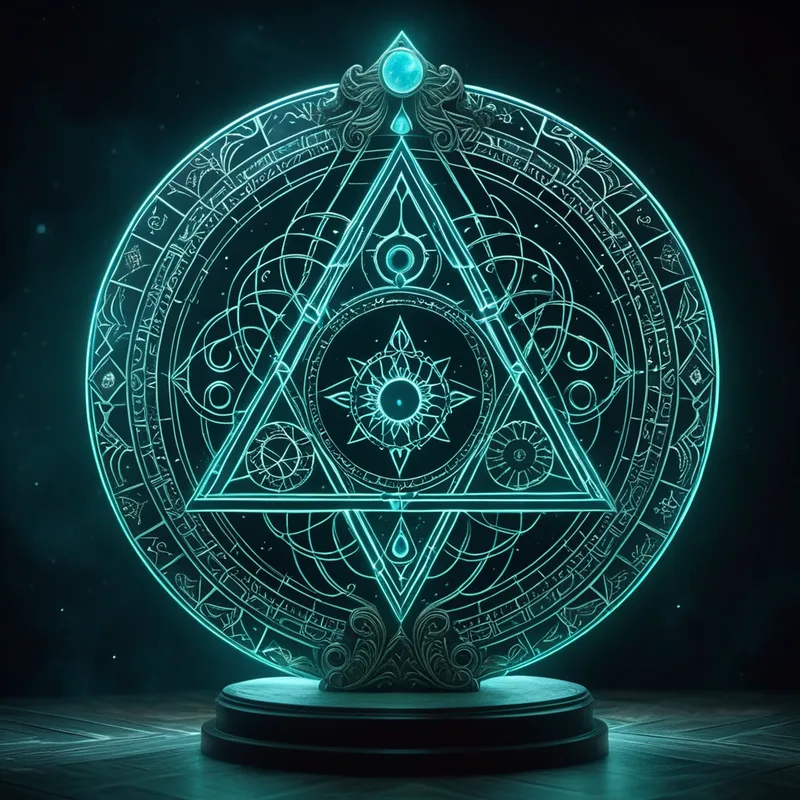
To dream of Xiwangmu’s garden is to touch the deepest stratum of the [psyche](/myths/psyche “Myth from Greek culture.”/) where [the Self](/myths/the-self “Myth from Jungian culture.”/), in the Jungian sense, resides as a complete and timeless entity. It is an encounter with the inner paradisum, the sanctuary of psychic wholeness that feels both intimately personal and cosmically vast. The archetype of the Caregiver here is not merely nurturing but transformative; she offers not comfort food, but the food of [transfiguration](/myths/transfiguration “Myth from Christian culture.”/).
The dream-garden appeals to the universal human longing to transcend fragmentation—the fragmentation of time into past and future, of the self into [persona](/myths/persona “Myth from Greek culture.”/) and shadow, of life into suffering and joy. It represents the soul’s desire to find a center that holds, a place of eternal, nourishing order amidst the chaos of existence. The yearning for this garden is the yearning for psychological integration, where all opposites (the tiger-toothed and the benevolent mother, the guarded and the giving) are held in a dynamic, fruitful tension. It is the destination of the individuation process, where one becomes [the immortal](/myths/the-immortal “Myth from Taoist culture.”/) caretaker of one’s own soul.
Alchemical Translation
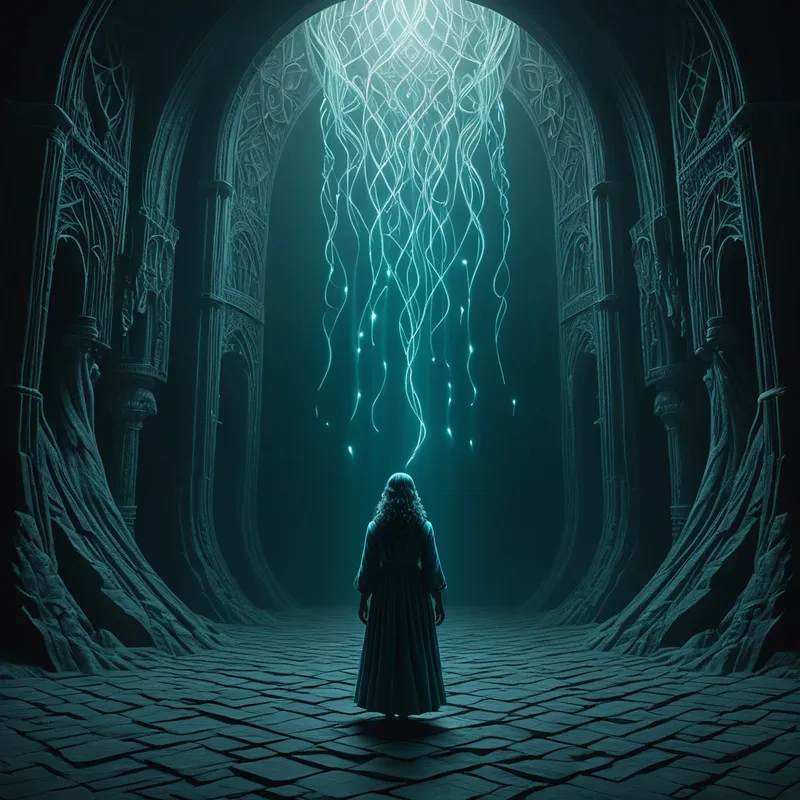
In the internal alchemy (neidan) of Taoism, the garden is not a location but the fully realized body-mind of the adept. Mount Kunlun becomes the cranial cavity or the spine, the axis of the inner universe. The peaches are the crystallized shen, or spirit, produced through the meticulous refinement of jing (essence) and qi (vital energy).
The journey to the garden is the circulation of the qi through the microcosmic orbit, overcoming the inner “passes” and “gates” of the body’s energy centers. The feast of immortality is the moment of “golden elixir” formation, when the practitioner’s consciousness permanently unites with the Dao, achieving liberation from the cycle of birth and death (samsara) while still in the flesh.
The guardians of the garden are the internal obstacles: stray thoughts, emotional attachments, and sensory desires that must be pacified and transformed. To cultivate the inner garden is to tend to one’s own life force with the discipline of a celestial gardener, weeding out the corrupting influences and nurturing the seeds of primordial purity until they bear the immortal fruit of awakened spirit.
Associated Symbols
Explore related symbols from the CaleaDream lexicon:
- Garden — The fundamental symbol of cultivation, where wild nature is guided into a state of purposeful, harmonious beauty, reflecting the human endeavor to nurture growth within defined boundaries.
- Celestial Garden — A paradise that exists beyond the earthly realm, representing a state of perfection, eternal peace, and divine order achieved through spiritual alignment.
- Secret Garden — A hidden, inner sanctuary of the soul, representing the private, vulnerable, and fertile core of the self that requires protection and careful tending to bloom.
- Peach — A fruit of immortality and vitality in Eastern traditions, symbolizing longevity, divine favor, and the sweet reward of spiritual cultivation.
- Mountain — The axis between heaven and earth, representing spiritual ascent, enduring stability, and the challenging journey toward enlightenment or transcendence.
- Mother — The primordial source of life, nourishment, and unconditional care, embodying the generative, protective, and sometimes fearsome power of creation.
- Harmony — The state of perfect balance and resonant agreement between opposing forces, representing the ideal condition of the cosmos, society, and the individual soul.
- Immortality — The transcendence of death and temporal limits, representing the ultimate goal of spiritual alchemy: the liberation of consciousness into an eternal, perfected state.
- Circle — A symbol of wholeness, eternity, and cyclical return, representing the seamless, endless nature of the Dao and the completed process of inner alchemy.
- Elixir — The concentrated essence or perfected substance that confers transformation, healing, or immortality, representing the tangible goal of both chemical and spiritual refinement.
- Journey — The archetypal passage through trials and transformations, representing the necessary process of seeking, overcoming, and evolving to reach a destined state of being.
- Rebirth — The emergence into a new, higher state of existence, representing the core promise of the immortal peach: not a cessation of life, but its perpetual renewal in a refined form.