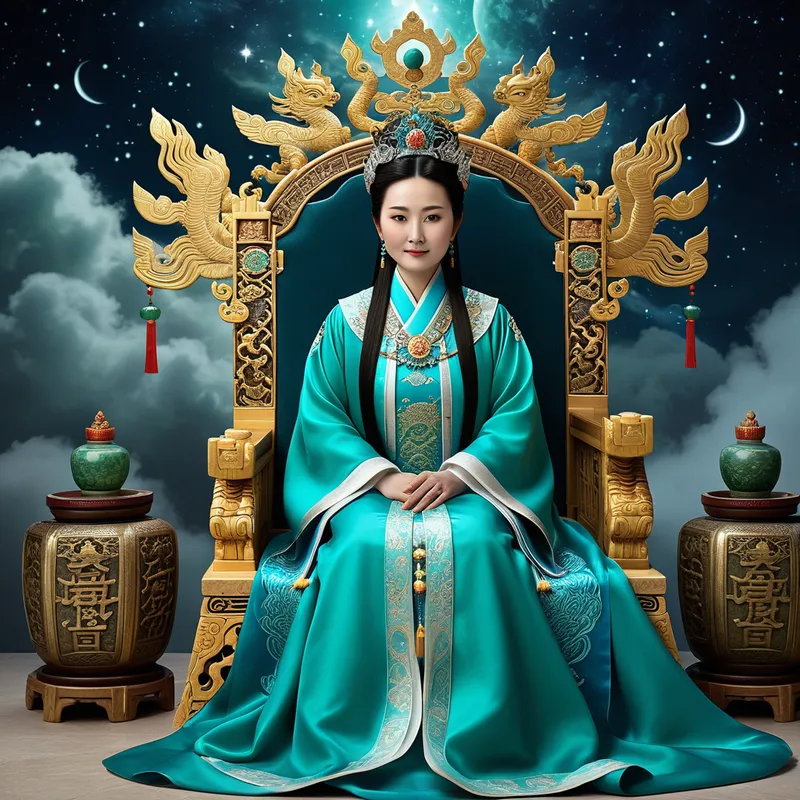
Xi Wangmu Myth Meaning & Symbolism
The myth of Xi Wangmu, the Queen Mother of the West, guardian of the peaches of immortality in her jade mountain paradise, a profound symbol of the sacred feminine and the quest for wholeness.
The Tale of Xi Wangmu
Listen, and let the mists of time part. Far to the west, beyond the known world, where the earth meets the sky in a tangle of impossible peaks, lies the sacred mountain of Kunlun. Its slopes are not of common stone, but of jade and crystal, and its heights are veiled by clouds that never dissipate. Here, in a palace carved from the mountain’s living heart, dwells the sovereign of this wild, divine realm: Xi Wangmu.
Her hair is like a storm cloud, pinned with a crown that holds a single star. Her robes are the deep blue of midnight, embroidered with the constellations that wheel above her domain. She is attended not by timid maidens, but by the fierce grace of tigers and the elegant flight of blue phoenixes. The air in her halls tastes of ozone and cold stone, and the only music is the wind singing through the mountain passes and the distant cry of the qingniao, her three celestial messengers.
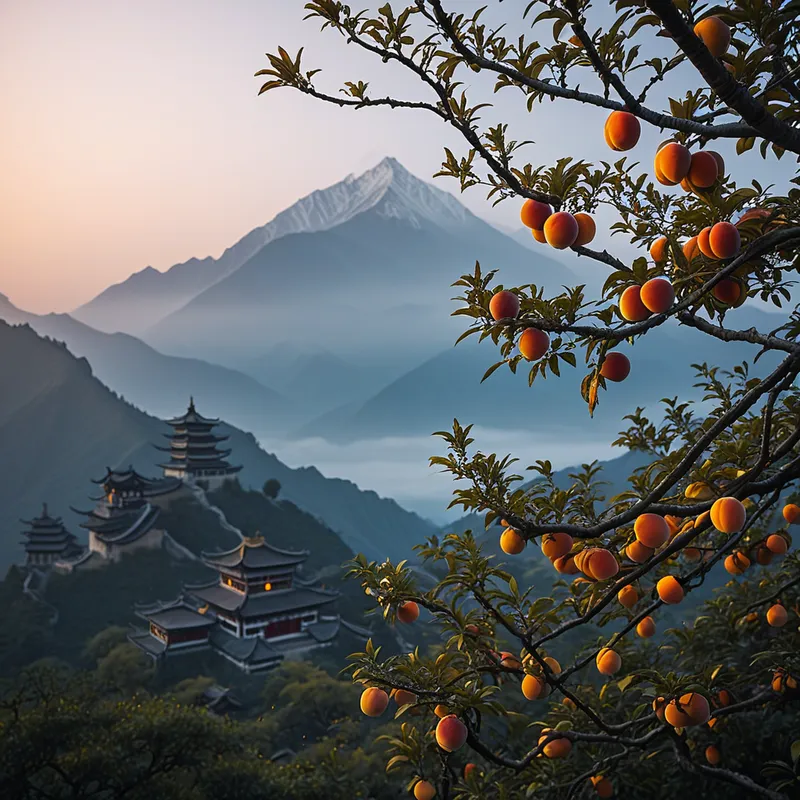
At the heart of her gardens grows the source of her profound power: the Pantao. This is no ordinary tree. Its roots drink from subterranean springs of life, and its branches, heavy with leaves of jade green, bear fruit only once every three millennia. When the peaches ripen, they glow with an inner light, a soft gold that promises not mere longevity, but a transformation of essence—immortality itself.
The great conflict is not one of clashing armies, but of cosmic order and mortal yearning. The peaches are not for the taking. They are a sacred trust, a distillation of time and heaven’s grace. Yet the longing for them echoes across the mortal world. The most virtuous emperors, the most dedicated sages, undertake perilous journeys, guided by portents and dreams, seeking the western paradise. They cross burning deserts and frozen wastes, their spirits tested by the very land that guards the goddess.
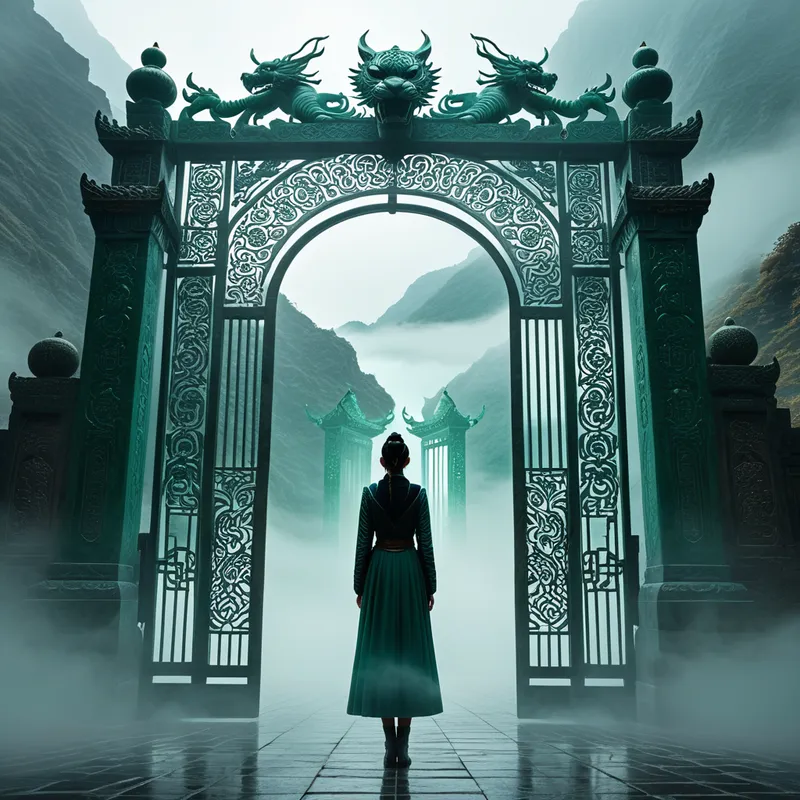
One such seeker was the Mu, Son of Heaven. After ruling with wisdom for fifty-five years, a vision compelled him westward. His journey was an epic of perseverance. When he finally stood before the jade gates of Kunlun, he was not met with immediate welcome, but with the awe-inspiring presence of the Queen Mother herself. The resolution was not a gift, but a sacred audience. On the shores of the Yaochi, beneath a sky alive with strange stars, she received him. She shared not the peach—for its time was not yet—but celestial melodies and teachings of the Dao. She bestowed upon him a map of the stars and cryptic wisdom, affirming his virtuous rule before sending him back to his kingdom, transformed not in body, but in spirit. He had not conquered the mountain, but had been received by it, fulfilling the myth’s true resolution: a communion between the highest mortal aspiration and the timeless, nurturing source of all life.
Cultural Origins & Context
The figure of Xi Wangmu is ancient, her origins shrouded in the dawn of Chinese spiritual thought. She appears in oracle bone inscriptions and early texts like the Classic of Mountains and Seas (Shanhaijing), where she is initially described with shamanic and fearsome traits—a deity of plague and punishment, with the teeth of a tiger and the tail of a leopard. This reflects her primordial nature as a ruler of the wild, untamed west, a direction associated with autumn, metal, and the white tiger.
Over centuries, through the Warring States period and into the Han dynasty, her image underwent a profound alchemy. Daoist seekers and fangshi (master craftsmen) alchemists, in their quest for physical and spiritual immortality, transformed her mountain, Kunlun, into the ultimate paradise and laboratory of the soul. She evolved from a bestial spirit into the benevolent guardian of the secrets of eternal life. By the Tang dynasty, she was fully established as a majestic, maternal empress of the heavens, a central figure in a celestial bureaucracy that mirrored the imperial court. Her myth was passed down not by a single bard, but through a tapestry of sources: state cults seeking legitimacy, Daoist monastic traditions, and popular folklore that saw in her a granter of blessings, longevity, and protection.
Symbolic Architecture
Xi Wangmu is not merely a goddess; she is a complete symbolic universe. Her mountain, Kunlun, represents the axis mundi, the point where heaven, earth, and the underworld connect. It is the psychic center of the self, the inaccessible yet magnetic core of our being where opposites are held in tension.
The Queen Mother does not give immortality; she is the condition under which it becomes possible. She is the vessel that contains the transformation.
Her dual nature—once fearsome, now benevolent—symbolizes the integrated Self in Jungian psychology. She embodies the powerful, often feared aspects of the unconscious (the tiger, the wild west) that must be encountered and respected to access their nurturing, transformative potential (the peach, the palace). The Pantao are the fruit of this integration—the hard-won treasure of psychological wholeness, which matures not in linear time, but in the cyclical, sacred time of the psyche. The arduous journey to her court is the path of individuation, where the ego (the seeking emperor) must undertake a perilous descent into the unknown to petition the sovereign of the deeper Self.
The Dreamer’s Resonance
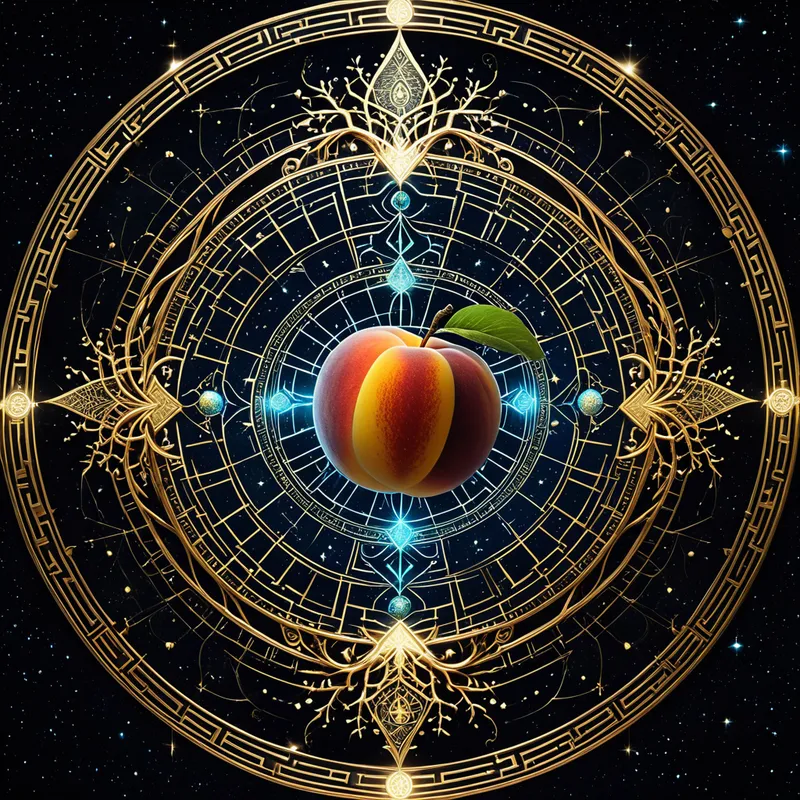
When the archetype of Xi Wangmu stirs in the modern dreamer, it signals a profound encounter with the inner matrix of life, death, and renewal. To dream of a majestic, unapproachable feminine figure in a high, fortified place is to feel the call of the Self. The dreamer may experience somatic sensations of awe, chilling cold, or a sublime stillness—the body registering the numinous quality of this inner center.
Psychologically, this dream pattern often emerges during life transitions that involve a confrontation with limits: aging, the end of a major life chapter, or a crisis of meaning. The dreamer is not necessarily seeking literal immortality, but a sense of enduring value, legacy, or inner truth that transcends their current ego-identity. The figure may feel intimidating, a representation of the ultimate authority of the psyche that demands respect and proper preparation. The dream is an invitation to cease wandering and to begin the intentional, often solitary, work of approaching one’s own inner Kunlun—to petition for the nourishment only the deepest Self can provide.
Alchemical Translation
The myth of Xi Wangmu models the alchemical opus of individuation with precise elegance. The seeker’s journey westward is the initial stage of nigredo—a confronting of the shadowy, arid landscapes of the personal unconscious. Arrival at the mountain is the albedo, a cleansing and awakening at the threshold of the Self.
The peach of immortality is not eaten; it is assimilated. The transformation is not an acquisition, but a becoming consonant with the rhythm of the mountain itself.
The audience with the Queen Mother is the crucial coniunctio—the sacred marriage of the conscious ego with the animating principle of the unconscious (the anima in its ultimate, sovereign form). She does not hand over her treasure lightly. The “gift” is the interaction itself: the sharing of celestial music (the harmony of the psyche’s parts) and cryptic wisdom (the symbolic language of dreams). The seeker is not given immortality but is shown the law of its maturation. For the modern individual, this translates to the process of holding one’s life experiences within the vessel of a greater perspective. It is the alchemy of turning the base metal of daily strife and mortal anxiety into the gold of meaning, by placing it in relation to the timeless, nurturing, and fiercely protective center of one’s own being—the inner Xi Wangmu who guards the sacred, slow-ripening fruit of a life made whole.
Associated Symbols
Explore related symbols from the CaleaDream lexicon: