Wiraqocha's Tears Become the Stars
An Incan creation myth where the tears of the god Wiraqocha fall to become the stars, revealing a story of divine emotion shaping the night sky.
The Tale of Wiraqocha’s Tears Become the Stars
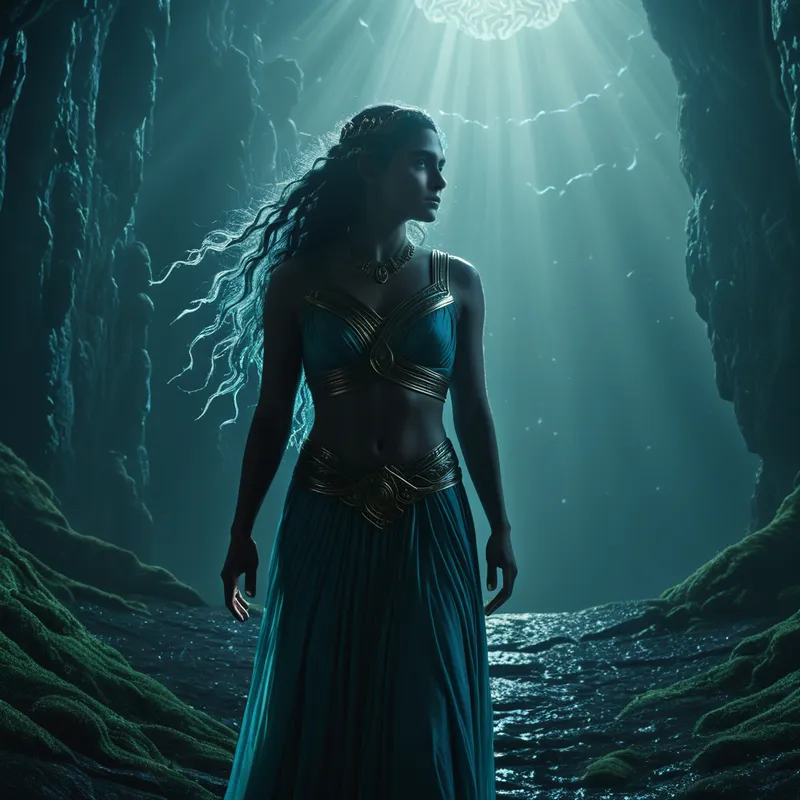
In the time before time, when [the world](/myths/the-world “Myth from Tarot culture.”/) was a formless, silent sea of primordial darkness, the great Wiraqocha emerged from the depths of Lake Titicaca. He was [the architect](/myths/the-architect “Myth from Various culture.”/) of existence, the weaver of worlds. With a word, he commanded the light to rise, and the sun, Inti, was born. With a gesture, he sculpted the mountains from the clay of [the earth](/myths/the-earth “Myth from Hindu culture.”/) and set them as the bones of the land. He breathed life into stone, and the first humans, flawed and ungrateful, stumbled into being.
Yet, his creation was incomplete. The vast dome of [the sky](/myths/the-sky “Myth from Persian culture.”/), once the sun had journeyed to its rest, remained an empty, terrifying void—a Pacha without its nocturnal half. Wiraqocha walked among his newborn peoples, the runakuna, teaching them the arts of civilization: agriculture, weaving, and law. But they feared the darkness. They huddled in their nascent villages, their eyes wide with terror at [the abyss](/myths/the-abyss “Myth from Kabbalistic culture.”/) above, unable to comprehend the grandeur of his design. They saw only absence where he saw potential.
A profound sorrow, heavy and cold as a mountain glacier, settled in the heart of the creator. This was not the rage of a thwarted tyrant, but the grief of a parent whose children cannot see the love woven into their very existence. His sorrow was for their fear, for the chasm between his vision and their perception. Standing upon the high plateau, under the boundless black sky, Wiraqocha wept.
His tears were not of [water](/myths/water “Myth from Chinese culture.”/) alone. They were liquid light, distilled sorrow, and unfulfilled intention. They fell not as rain, but as a slow, deliberate constellation of grief released into the heavens. Each tear, a droplet of divine essence, caught upon the velvet fabric of the night. Where they landed, they ignited—not with the fierce, consuming fire of the sun, but with a gentle, enduring incandescence. One by one, then in shimmering streams, his tears became the stars. He wept the Mayu, the great celestial river, across the vault of the sky. He wept the Yana Phuyu, the dark [constellations](/myths/constellations “Myth from Various culture.”/) that swim within it. He wept the scattered brilliance that would become guides for travelers, markers for seasons, and stories for generations.
The people, peering from their huts, beheld the transformation. [The void](/myths/the-void “Myth from Buddhist culture.”/) was now a tapestry of gentle lights. The terrifying darkness had been given a map of luminous tears. In that moment, their fear did not vanish, but it was transfigured. It mingled with awe. They understood, not intellectually, but in their souls, that the god who shaped them had also shared his sadness with them, making it beautiful. The stars were a testament that even divine creation is born of profound feeling, and that the cosmos itself could hold the imprint of a god’s weeping.
Cultural Origins & Context
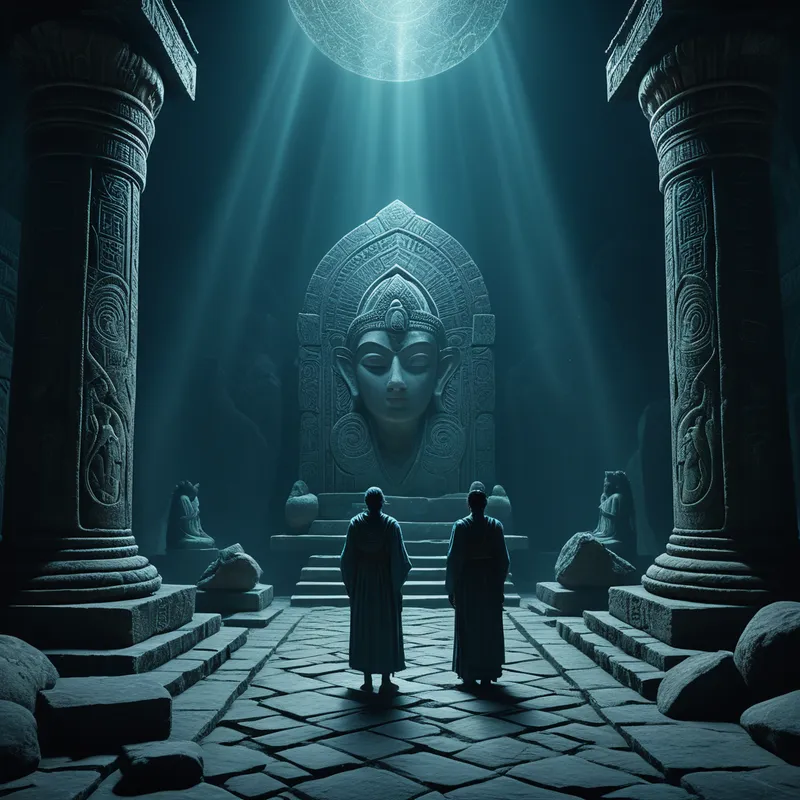
This myth finds its roots in the Andean highlands, primarily preserved through post-conquest chroniclers like Bernabé Cobo and the mestizo writer Garcilaso de la Vega. It belongs to the late pre-colonial and early colonial Incan cosmology, where Wiraqocha evolved from a local deity of the Tiwanaku region into the transcendent, somewhat distant supreme creator of the Inca state religion.
The narrative is deeply embedded in the Andean principle of yanantin and the tripartite view of the cosmos: Hanan Pacha (the upper world of celestial beings), Kay Pacha (this world), and Uku Pacha (the inner world of the dead and origins). The starless night represented a dangerous imbalance, an unbridled Uku Pacha leaking into Kay Pacha. Wiraqocha’s act restores cosmological order, but through an emotional, rather than purely authoritative, gesture. It reflects a worldview where the natural and supernatural are a continuous whole, and divine emotional states are directly manifest in the physical environment. The stars, therefore, are not accidental celestial bodies but intentional, sacred inscriptions of a divine psychological event, forever linking human fate to the emotional history of the creator.
Symbolic Architecture
The myth constructs a profound symbolic bridge between internal [emotion](/symbols/emotion “Symbol: Emotion symbolizes our inner feelings and responses to experiences, often guiding our actions and choices.”/) and external [cosmos](/symbols/cosmos “Symbol: The entire universe as an ordered, harmonious system, often representing the totality of existence, spiritual connection, and the unknown.”/). Wiraqocha’s [grief](/symbols/grief “Symbol: A profound emotional response to loss, often manifesting as deep sorrow, yearning, and a sense of emptiness.”/) is not a private failing but the raw [material](/symbols/material “Symbol: Material signifies the tangible aspects of life, often representing physical resources, desires, and the physical world’s influence on our existence.”/) of creation. The empty [night](/symbols/night “Symbol: Night often symbolizes the unconscious, mystery, and the unknown, representing the realm of dreams and intuition.”/) sky symbolizes the unconscious—the unseen, feared potential of the [psyche](/myths/psyche “Myth from Greek culture.”/). His tears represent the [alchemical process](/symbols/alchemical-process “Symbol: A symbolic transformation of base materials into spiritual gold, representing inner purification, integration, and the journey toward wholeness.”/) where unprocessed, painful [emotion](/symbols/emotion “Symbol: Emotion symbolizes our inner feelings and responses to experiences, often guiding our actions and choices.”/) is consciously acknowledged and released, transforming into a guiding, illuminating [structure](/symbols/structure “Symbol: Structure in dreams often symbolizes stability, organization, and the framework of one’s life, reflecting how one perceives their environment and personal life.”/).
The stars are the crystallized grief of the god, proving that the most profound darkness can only be navigated by the light of acknowledged sorrow.
The act subverts a typical [creator](/symbols/creator “Symbol: A figure representing ultimate origin, divine power, or profound authorship. Often embodies the source of existence, innovation, or personal destiny.”/) narrative. Order is not imposed through willpower alone, but emerges from [vulnerability](/symbols/vulnerability “Symbol: A state of emotional or physical exposure, often involving risk of harm, that reveals authentic self beneath protective layers.”/). The stars are a gift born of divine disappointment, making the sky not a command, but an empathetic [response](/symbols/response “Symbol: Response in dreams symbolizes how one reacts to situations, often reflecting the subconscious mind’s processing of events.”/). This establishes a cosmology where the divine is emotionally participatory, and the [human](/symbols/human “Symbol: The symbol of a human represents individuality, complexity of emotions, and social relationships.”/) experience of [loneliness](/symbols/loneliness “Symbol: A profound emotional state of perceived isolation, often signaling a need for connection or self-reflection.”/) and fear under the night sky is met with a celestial mirror of a god’s own lament.
The Dreamer’s Resonance
For the modern dreamer or psyche, this myth speaks to the transformative power of emotional honesty. Wiraqocha’s initial creation—the sun, the land, the people—represents [the ego](/myths/the-ego “Myth from Jungian culture.”/)’s project: building a structured, visible identity. The dark, starless sky is [the shadow](/myths/the-shadow “Myth from Jungian culture.”/), the unresolved emotional material, the depression or anxiety that lingers after our “daylight” achievements. The instinct is to fear this void.
The myth instructs us to do as Wiraqocha did: to stand fully in that sorrow, to weep it out. The tears are not a dissolution but a creative act. In psychological terms, this is the process of integrating the shadow. When we consciously feel our grief, shame, or loneliness—when we allow it expression—it does not vanish. Instead, it transforms into an internal constellation. Our painful experiences become points of light, sources of wisdom, and guides that help us navigate future darkness. They become the stories that give our personal night its meaning and beauty. The starry sky, therefore, is an eternal symbol of the psyche’s ability to transmute suffering into a luminous map of the soul.
Alchemical Translation
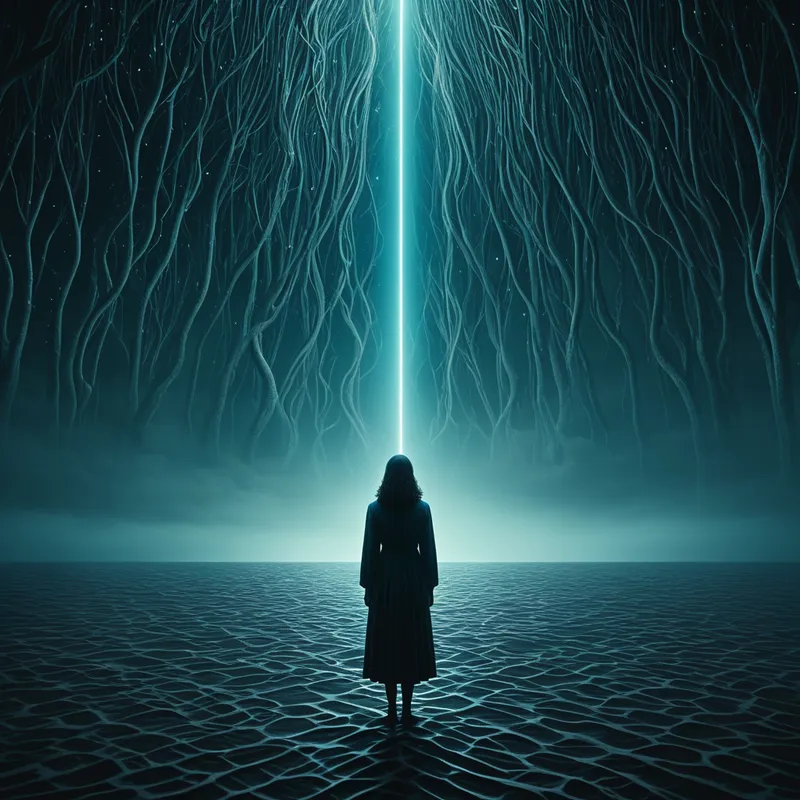
In the alchemical vessel of this myth, the [prima materia](/myths/prima-materia “Myth from Alchemical culture.”/) is the raw, chaotic emotion of divine grief—the [aqua permanens](/myths/aqua-permanens “Myth from Alchemical culture.”/) or eternal water of sorrow. The [nigredo](/myths/nigredo “Myth from Alchemical culture.”/), the blackening, is the empty, terrifying night sky and the creator’s moment of despair. The process of weeping is the [albedo](/myths/albedo “Myth from Alchemical culture.”/), the whitening: the purification and distillation of this dark emotion into droplets of essential meaning.
The furnace is the heart of the god; the transmutation occurs not through heat, but through the sacred release of feeling. The gold produced is not a metal, but the fixed, eternal light of the stars—the lapis philosophorum of the cosmos, turning the leaden weight of sorrow into celestial guidance.
The final stage, the [rubedo](/myths/rubedo “Myth from Alchemical culture.”/), is the dawn where the sun (the conscious ego) rises again to see its work complemented and completed by the starry testament of its own processed night. The cosmos becomes a perfected, balanced whole only after the creator’s inner process is complete and projected onto the universe. It is the ultimate allegory for individuation: [the self](/myths/the-self “Myth from Jungian culture.”/) is not whole until its darkest tears have been acknowledged and set to shine in its inner firmament.
Associated Symbols
Explore related symbols from the CaleaDream lexicon:
- Tears — The alchemical substance of divine emotion, the liquid medium through which inner sorrow is transformed into external, permanent light.
- Star — The crystallized, fixed point of light born from a droplet of sacred grief; a guide and a testament of transformation.
- Sky — The vast canvas of the unconscious and potential, which is rendered meaningful and navigable only when inscribed with the light of processed emotion.
- Water — The primordial, formless medium from which life and creation emerge, here specifically manifest as the generative flow of sorrow.
- Grief — The raw, creative emotion that, when fully felt and released, becomes the architect of beauty and order in the personal and cosmic landscape.
- Transformation Cocoon — The dark, formless night that serves as the necessary container for the metamorphosis of weeping into starlight.
- Light — Not merely the absence of darkness, but the active, enduring illumination that is specifically born from the engagement with darkness.
- Ocean — The collective, boundless source (like Lake Titicaca) from which the creator and all potential forms emerge, symbolizing the unconscious depths.
- Mirror — The night sky that reflects the inner state of the god back to humanity, and humanity’s own sorrow back to itself in a shared, luminous language.
- Journey — The eternal passage across the dark sky, made possible only by the guiding lights that are the markers of past sorrows overcome.
- Dream — The visionary potential of the night, which becomes accessible and meaningful once it is lit by the stars of integrated experience.
- Fires of Creation — The gentle, enduring incandescence of the stars, representing a creative fire kindled not by fury, but by compassionate sorrow.