Winter Bird Myth Meaning & Symbolism
A myth of a bird who trades its song for fire to save a dying world, embodying the sacrifice required for profound renewal.
The Tale of Winter Bird
Listen. [The world](/myths/the-world “Myth from Tarot culture.”/) has grown old and cold. The sun, a pale and distant coin, gives light but no warmth. The rivers are stone, the trees are skeletons, and the breath of every living [thing](/myths/thing “Myth from Norse culture.”/) hangs in the air like a ghost. This is the Long Frost, and in it, all songs have died.
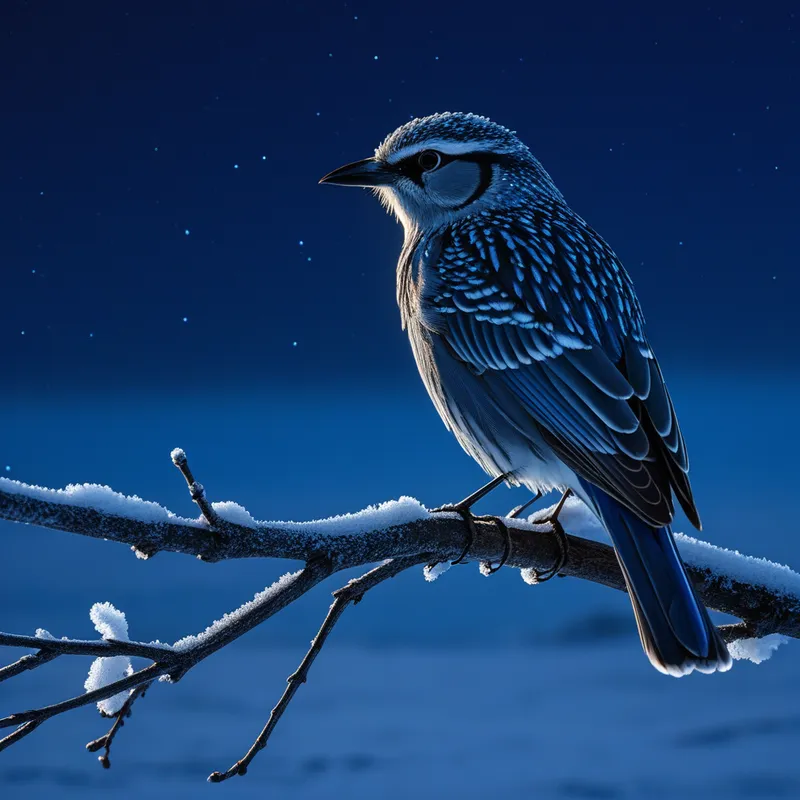
In this silence lived a small bird, the last of its kind. Its feathers were the color of dirty snow and its voice had been stilled by the cold. It did not sing, for what was there to sing of? It only moved from branch to frozen branch, a tiny pulse of life in a vast, white sleep.
One night, as the stars burned with a cruel, sharp light, the bird saw a flicker in the deep woods—a glow that was not ice. Drawn by a memory of warmth it had never known, it flew towards it. There, in a clearing where the snow had melted into a perfect circle, sat an ancient figure cloaked in the bark of the world’s oldest tree. Before them burned a tiny, perfect fire in a hearth of bare earth. This was the Keeper of [the Hearth](/myths/the-hearth “Myth from Norse culture.”/).
“Little pulse,” the Keeper’s voice was the sound of roots shifting deep underground. “You are drawn by a memory your blood still holds. This fire is the last. When it dies, the Long Frost becomes eternal.”
The bird, its heart a frantic drum against its ribs, could only stare at the beautiful, dying flame.
“There is a trade,” the Keeper said, not unkindly. “The fire needs a song to breathe. But the cold has stolen all songs from the world. Except one. The song that has never been sung, the one held in the secret heart of a creature who remembers what warmth means. To give it is to give the voice from your throat and the music from your soul. You will be silent forever. But the fire will live, and from it, all else may live again.”
There was no grand debate, no heroic speech. The small bird looked from the ancient, weary face to the guttering flame, and then to the world of endless white. It thought not of glory, but of the feel of a sun-warmed branch it had never felt. It thought of other birds that might one day be.
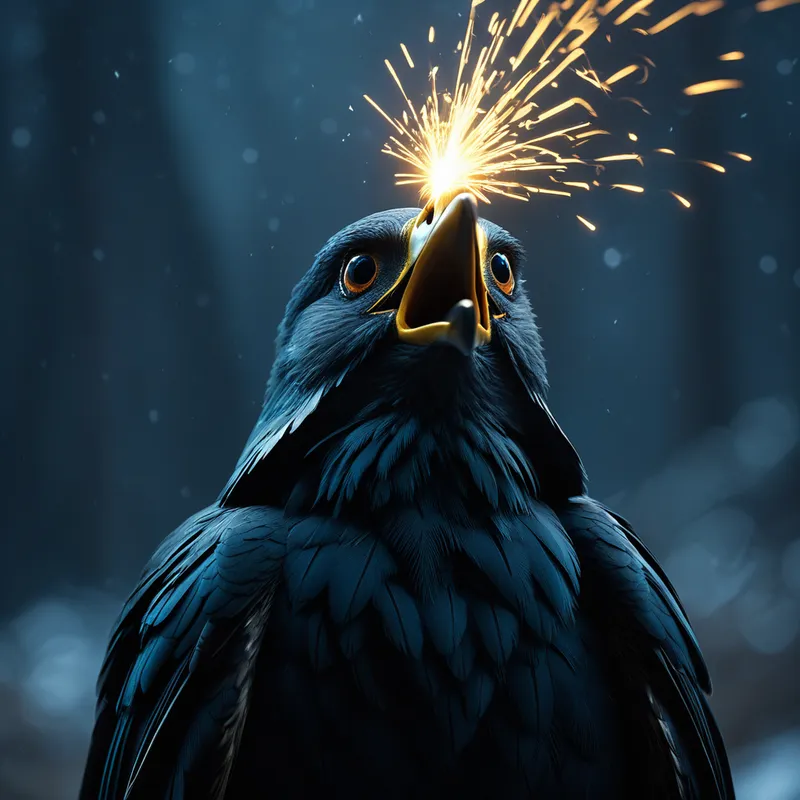
It hopped forward, onto the warm earth of the hearth. It opened its beak. And from within, it did not pull a melody, but its very essence—a shimmering, silvery thread of pure potential, the song of life itself. As the thread left it, the bird trembled, its form seeming to grow faint. The thread touched the flame.
The fire did not roar. It inhaled. The spark swelled, gentle and profound, and light bloomed outward in a slow, warm wave. The snow at the clearing’s edge sighed into [water](/myths/water “Myth from Chinese culture.”/). The air lost its knife’s edge.
The Keeper bowed their head. “It is done. The Heartfire is lit. Go now, silent one. You are the Winter Bird.”
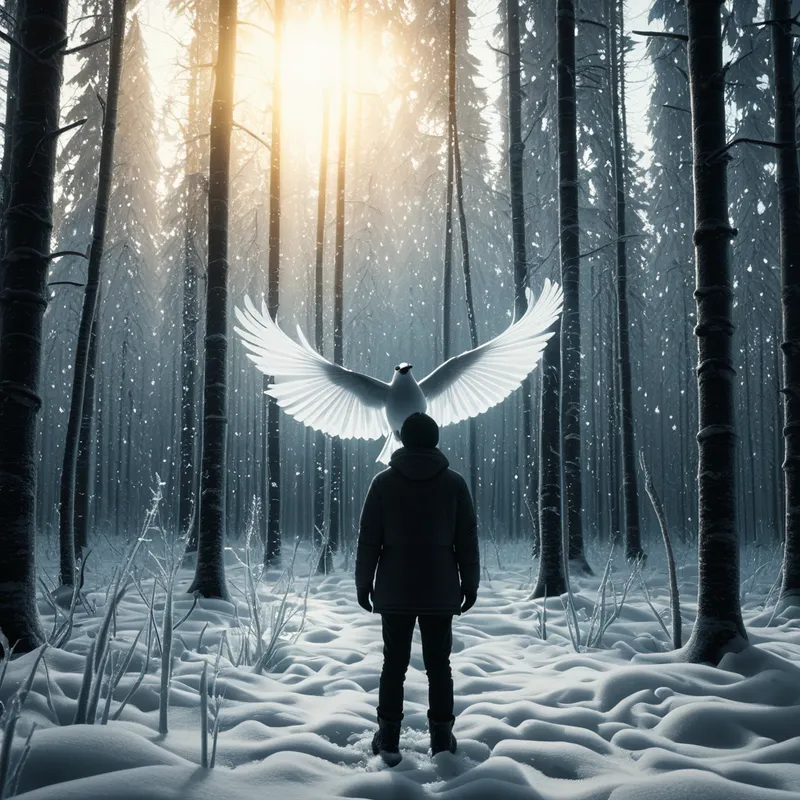
And the bird, now truly a creature of frost and ash, flew away. It had no song. But where it passed, the ice cracked. Where it landed, the hard ground softened. It carried the warmth it had bought, not in its throat, but in its very being.
Cultural Origins & Context
The myth of the Winter Bird is a foundational story found in the oral traditions of countless northern and temperate cultures across Eurasia and North America. It belongs not to one people, but to the human experience of confronting the deep winter. It was not a tale for kings or warriors, but a hearth-tale, told by elders and parents during the darkest months, often around the very fire that symbolized the myth’s central promise.
Its societal function was multifaceted. On a practical level, it was a narrative of hope and endurance, teaching that the deepest cold precedes renewal. On a spiritual level, it codified a core ethic: that the survival of the whole sometimes depends on the silent, profound sacrifice of the one, and that this sacrifice is not a loss, but a transformation into a different kind of potency. The teller of the tale would often gesture to the fire, implicitly linking the story to the communal effort of gathering fuel and tending flames—every log added was a small echo of the Winter Bird’s gift, a collective participation in the mythic act of sustaining life.
Symbolic Architecture
The myth’s power lies in its stark, elegant [symbolism](/symbols/symbolism “Symbol: The use of symbols to represent ideas or qualities, often conveying deeper meanings beyond literal interpretation. In dreams, it’s the language of the unconscious.”/). The Long Frost represents not just [winter](/symbols/winter “Symbol: Winter symbolizes a time of reflection, introspection, and dormancy, often representing challenges or a period of transformation.”/), but any [period](/symbols/period “Symbol: Periods in dreams can symbolize cyclical patterns, renewal, and the associated emotions of loss or change throughout life.”/) of psychic stagnation, depression, or creative barrenness—a time when the inner “song” or vitality is frozen.
The small, nameless [bird](/symbols/bird “Symbol: Birds symbolize freedom, perspective, and the connection between the earthly and spiritual realms, often representing the soul’s aspirations or personal growth.”/) symbolizes the individual ego or conscious self, seemingly insignificant against the vastness of its predicament. Its nondescript [appearance](/symbols/appearance “Symbol: Appearance in dreams relates to self-image, perception, and how you present yourself to the world.”/) highlights that the call to profound transformation often comes not to the glorious [hero](/symbols/hero “Symbol: A hero embodies strength, courage, and the ability to overcome significant challenges.”/), but to the humble, the overlooked, the one simply present in the [moment](/symbols/moment “Symbol: The symbol of a ‘moment’ embodies the significance of transient experiences that encapsulate emotional depth or pivotal transformations in life.”/) of [crisis](/symbols/crisis “Symbol: A crisis symbolizes turmoil, urgent challenges, and the need for immediate resolution or change.”/).
The sacrifice is not of something you have, but of something you are—the potential identity you cling to, traded for the reality the world needs.
The Keeper of the Hearth is the archetypal [guardian](/symbols/guardian “Symbol: A protector figure representing safety, authority, and guidance, often embodying parental, societal, or spiritual oversight.”/) of [the Self](/myths/the-self “Myth from Jungian culture.”/), the deep psychic [structure](/symbols/structure “Symbol: Structure in dreams often symbolizes stability, organization, and the framework of one’s life, reflecting how one perceives their environment and personal life.”/) that holds the potential for renewal (the fire). They do not command the sacrifice but present the [choice](/symbols/choice “Symbol: The concept of choice often embodies decision-making, freedom, and the multitude of paths available in life.”/), representing the impersonal, yet lawful, [nature](/symbols/nature “Symbol: Nature symbolizes growth, connectivity, and the primal forces of existence.”/) of psychological and spiritual transformation.
The central act—trading the “song” for the “spark”—is the alchemical core. The song represents the personal [expression](/symbols/expression “Symbol: Expression represents the act of conveying thoughts, emotions, and individuality, emphasizing personal communication and creativity.”/), the voice, the individual’s unique [melody](/symbols/melody “Symbol: A melody symbolizes emotion, memory, and communication, often representing the subconscious expressing itself through sound.”/) in the world. The spark is impersonal [life](/symbols/life “Symbol: The symbol of ‘Life’ represents a journey of growth, interconnectedness, and existential meaning, encompassing both the joys and challenges that define human experience.”/) force, pure libido or psychic [energy](/symbols/energy “Symbol: Energy symbolizes vitality, motivation, and the drive that fuels actions and ambitions.”/). The myth teaches that to renew a dying world (either outer or inner), one must often surrender the prized personal expression to feed the impersonal, transformative force. The bird becomes the Winter Bird, not by gaining something, but by becoming a [vessel](/symbols/vessel “Symbol: A container or structure that holds, transports, or protects something essential, representing the self, emotions, or life journey.”/) for a process greater than itself.
The Dreamer’s Resonance
When this myth pattern activates in the modern [psyche](/myths/psyche “Myth from Greek culture.”/), it often manifests in dreams of profound, wordless exchanges. A dreamer may find themselves offering a cherished possession—a voice, a heart, a child—to a vast, natural force or a silent, authoritative figure. There is no fanfare, only a deep, somatic knowing that the trade is necessary.
The accompanying feeling is not of heroic [triumph](/myths/triumph “Myth from Roman culture.”/), but of a quiet, devastating, and strangely peaceful hollowing-out. One may dream of being mute in a crucial moment, or of breathing out a glowing substance that leaves them exhausted yet relieved. These dreams signal a critical juncture in what Jung called the individuation process: the sacrifice of [the ego](/myths/the-ego “Myth from Jungian culture.”/)’s central claim to sovereignty. The psyche is preparing to let a cherished self-image, a long-held “song” (perhaps a role, a talent, or a source of pride), die so that a more essential, life-giving energy can be freed. The somatic sensation is often a tightness in the chest or throat releasing into a deep, if weary, calm.
Alchemical Translation
The journey of the Winter Bird is a perfect map for the alchemical stage of [nigredo](/myths/nigredo “Myth from Alchemical culture.”/) transforming into albedo. The Long Frost is [the nigredo](/myths/the-nigredo “Myth from Alchemical culture.”/)—the utter blackness, the depressive state where all seems dead. The bird’s confrontation with the Keeper is the moment of [solutio](/myths/solutio “Myth from Alchemical culture.”/)—dissolution—where the solid form of the ego (its song) must become fluid and be offered up.
The fire is not lit by adding more of yourself, but by giving away the core around which you built yourself.
The transmutation occurs in the silent exchange. The personal “song” (lead) is surrendered and “cooked” in the hearth of the Self, to emerge as the impersonal, warming “spark” (gold). The bird does not get its song back; it becomes the catalyst for renewal. This is the albedo—the whitening. The Winter Bird is no longer a singer of songs but a walker of thresholds, its presence alone now a transformative agent.
For the modern individual, this myth models the process of moving from a life driven by personal expression and achievement (the song) to a life grounded in being a vessel for transpersonal meaning and renewal (the spark). It might look like a parent sacrificing a career for a child’s well-being, an artist destroying their famous style to find a deeper truth, or anyone surrendering a cherished identity to serve a greater need. The triumph is not in being heard, but in becoming the silent, essential condition for life itself to continue. One ceases to sing the melody and becomes the key in which the world’s symphony is written.
Associated Symbols
Explore related symbols from the CaleaDream lexicon: