Will-o'-the-Wisp / Ignis Fatuus Myth Meaning & Symbolism
A spectral light dances over marshes, luring the lost with false promise. It is the myth of the treacherous guide, the soul's encounter with its own seductive folly.
The Tale of Will-o’-the-Wisp / Ignis Fatuus
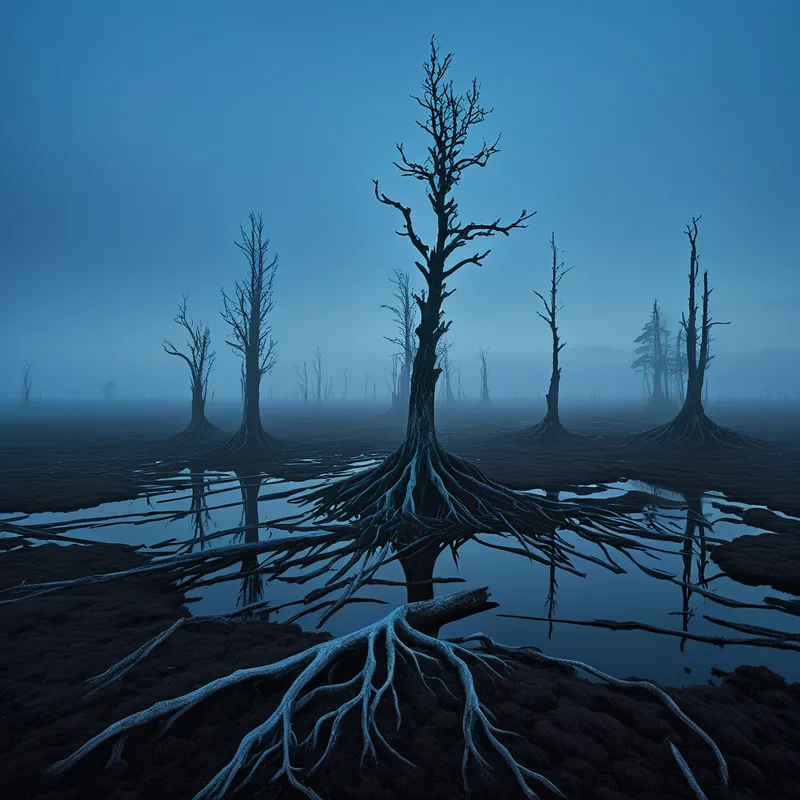
Listen, and let the peat-smoke carry you. There is a place where the solid earth grows weary and gives way to water and memory. A bog, they call it, but it is more a throat—a damp, sighing throat of the world. Here, when the sun drowns and the moon is but a sliver, a new star is born from the breath of the dead.
It begins as a sigh of light. A single, cool flame, no bigger than a child’s fist, detaches itself from the darkness. It is not the warm gold of hearth-fire, but the pallid blue-green of foxfire on rotten wood, the color of a deep bruise or a distant memory. It hovers, patient, over the black water. It is the Puck of the mire, the Domovoy gone wandering. It has no name you can speak, only the names you give it in your fear: Ignis Fatuus, Jack-o’-Lantern, Hinkypunk, Corpse Candle.
It waits for the lost.
Perhaps it is a woodcutter, his path swallowed by a sudden fog. Perhaps it is a lover, fleeing a broken vow. Perhaps it is you, in a story not yet written. You see the light. In the utter black, it is a promise. A cottage window. A guiding torch. Your heart, frantic as a bird in a cage, names it hope. You follow.
The light dances. It leads you on a path that seems firm, a ribbon of darker grass through the sucking mire. It is always just ahead, bobbing, beckoning, a perfect mimic of a lantern carried by a friend. You hurry, your boots sinking, the cold water kissing your ankles, then your knees. The light retreats, playful, taunting. You plunge forward, reason drowned by the desperate song of that single, beautiful flame. The solid world is gone. There is only the light, and the deepening chill, and the hungry pull of the peat.
You do not drown quickly. The bog embraces you, a lover both tender and suffocating. It drinks your warmth and holds your shape for centuries. As the black water closes over your eyes, the last thing you see is that pale, dancing light. It winks once, as if sharing a delicious secret, and then flits away to find another.
Cultural Origins & Context
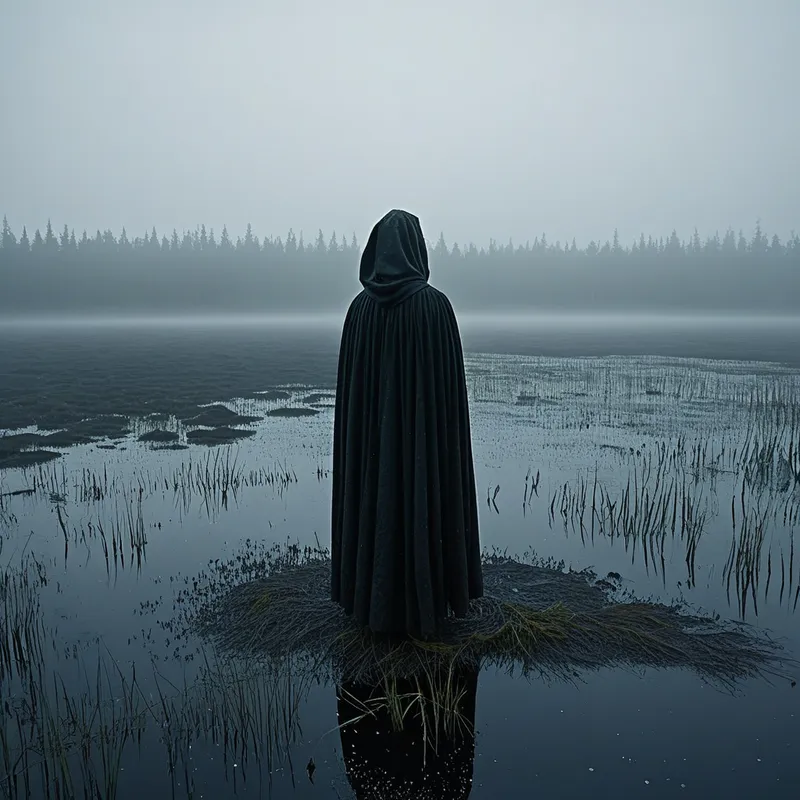
The Will-o’-the-Wisp is a myth without a single homeland; it is a story written in the damp soil of every land where mist gathers over still water. From the bogs of Ireland and Britain to the polders of the Netherlands, from the swamp-forests of Eastern Europe to the Hitodama of Japan, the phenomenon found its explanation in the human psyche long before science named it marsh gas.
It was a story told by the hearth to warn the young and the reckless, a narrative map of very real danger. Travelers, shepherds, and those who worked the liminal spaces between village and wilderness were its primary bearers. The tale served a critical societal function: it personified the lethal, deceptive nature of the wetlands, making the danger memorable. It was often tied to themes of moral transgression; the light was said to be the soul of a sinner, a restless spirit condemned to lure others to their doom, or a mischievous fairy like the Jenny Greenteeth, whose hunger was as cold as the deep water.
Symbolic Architecture
The Will-o’-the-Wisp is not merely a ghost story; it is a perfect symbol of the psyche’s own treacherous landscapes. It represents the ignis fatuus—the foolish fire—of our own desires and projections.
The light you follow is never the light itself, but the meaning you desperately paint upon it.
Psychologically, it is the embodiment of the seductive illusion. It is the promise of quick salvation, the get-rich-quick scheme, the perfect partner who will fix everything, the ideological utopia—any idealized end that justifies a perilous, ungrounded means. The light is compelling precisely because it is born from the swamp of our own unmet needs and unresolved shadows. It dances just ahead of our awareness, promising to fill a void that can only be filled by turning inward, not by chasing outward phantoms.
The bog is the unconscious itself: fertile, preservative, and dangerous to navigate without respect and preparation. The traveler is the ego, convinced of its own direction, yet easily lost when its conscious maps fail. The entire myth models the catastrophe that occurs when one mistakes a psychic symptom (the enticing, distracting light) for a solution.

The Dreamer’s Resonance
When this myth pattern appears in modern dreams, the dreamer is often at a crossroads of desire and deception. The somatic feeling is one of simultaneous hope and dread—a quickening of the pulse toward a goal that feels both vital and strangely hollow.
To dream of chasing a distant, unattainable light through a shifting landscape (a endless hallway, a crumbling city, a featureless plain) signals a confrontation with a psychic lure. The dreamer may be in the grip of an obsession, a compulsive fantasy, or a life path chosen for the approval of others (the illusory light) rather than from authentic self-knowledge. The rising water or crumbling ground is the body’s and soul’s warning: the foundation of this pursuit is unsound. The dream is an urgent missive from the unconscious, stating that the current trajectory leads not to fulfillment, but to being spiritually “bogged down” and consumed.

Alchemical Translation
The alchemical process mirrored in this myth is the nigredo, the blackening, the descent into the primal murk. For the modern individual, the path of individuation is not a straight chase toward light, but first a conscious descent into the personal and collective swamp.
The first step of the true journey is to stop chasing the phantom light, and instead, stand still in the dark bog and ask what within you created it.
The alchemical translation requires a radical inversion of the myth’s narrative. The hero’s task is not to capture the light, but to recognize it as ignis fatuus—the foolish fire of one’s own projected salvation. The triumph is in the moment of stopping, feeling the cold water around one’s ankles, and choosing to turn away from the seductive dance. This act of conscious refusal is the beginning of the albedo. It is the distillation of true will from foolish desire.
The marsh gas—the literal, explainable phenomenon—becomes a potent symbol. It is the volatile spirit (spiritus) trapped in decaying matter (unprocessed trauma, old patterns, ancestral baggage). When integrated, not chased, this spirit can illuminate rather than mislead. The integrated light does not hover ahead, but arises from within the very ground of one’s being, transforming the treacherous bog into a sacred, if still challenging, landscape of the soul. The journey then continues, not as a frantic pursuit, but as a careful navigation by an inner compass, forged in the acknowledgment of the dark water and the seductive, beautiful lies it can sometimes birth.
Associated Symbols
Explore related symbols from the CaleaDream lexicon: