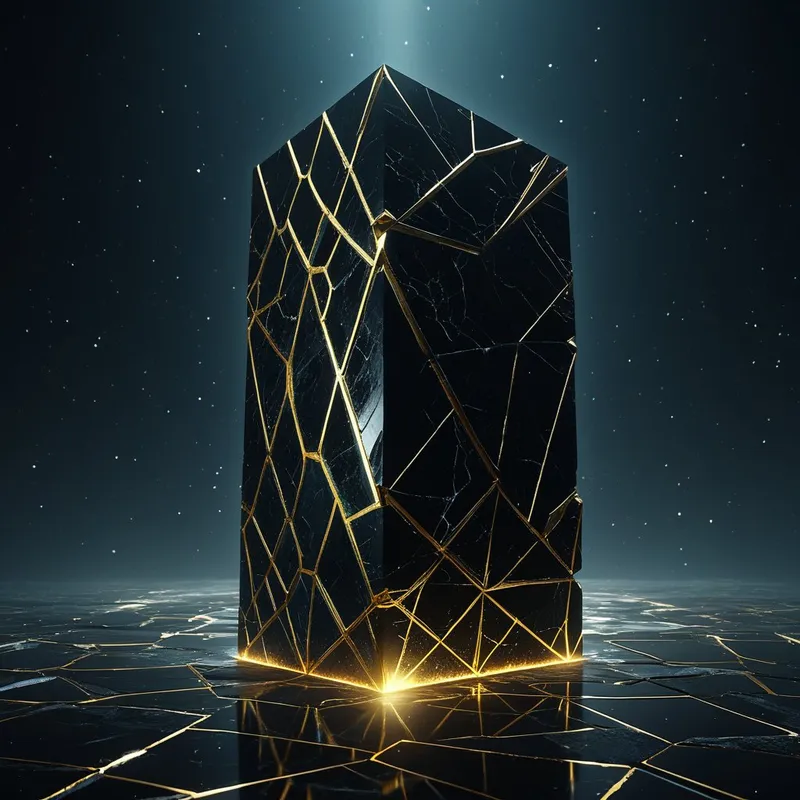
The Alchemy of Danger: When Terror Signals Transformation
The Somatic Echo
It begins not with an image, but with a tremor. A cold wire of adrenaline threaded through the viscera, a heart that hammers against the ribs like a prisoner sensing the collapse of the outer wall. The breath catches, shallow and metallic in the throat. This is the body’s ancient language, speaking a truth the conscious mind has yet to translate: a foundational structure within you is under pressure. The dream of danger is not a narrative about the external world; it is the somatic echo of an internal seismic event. It is the feeling of the psyche’s own ground shifting, the terrifying and necessary loosening of what was once considered solid and safe. Before a single monster appears or a single cliff edge is glimpsed, the body knows. It registers the dissolution of an old identity, the approach of a truth too potent to be integrated in daylight. This visceral dread is the first ingredient in the alchemical vessel—the prima materia of profound change.
The Dreamer's Log
The dreamer stands in a cavernous, abandoned server farm. The air hums with a low, sub-audible frequency that vibrates in the teeth. Rows of monolithic black server racks stretch into darkness, each one pulsing with a faint, sickly red light from within. A single terminal screen flickers with cascading lines of corrupted, glyph-like code. The dreamer knows, with absolute certainty, that this code is rewriting something fundamental—not in the machines, but in the very fabric of their memory and identity. A profound, chilling dread roots them to the spot, not of physical harm, but of irreversible psychic alteration.
The alchemical interpretation: The corrupted code is the psyche’s own shadow language, forcibly overwriting the obsolete and limiting operating system of the conscious personality.

The False Lead
To interpret a danger dream as a literal premonition of external threat is to mistake the map for the territory. It is a false lead, a distraction offered by a mind terrified of its own depths. This theme is not about bad luck, impending accidents, or the malice of others. Those are surface stories. The true danger is always interior: the risk of staying the same when every fiber of your being is being called to evolve. It is the danger of a soul confronting the dissolution of its own familiar borders, the terrifying freedom that comes when the walls of a well-constructed life begin to show cracks of a larger, truer world wanting to break through. The dream is not warning you of what is outside; it is initiating you into what is erupting within.
Psychological Architecture
This is the architecture of the Shadow’s final assault, not as an enemy, but as a demolitions expert. The part of you that has been exiled, denied, or labeled “too much”—your rage, your wild creativity, your boundless grief, your unapologetic power—has gathered its strength in the dark. It can no longer be contained in the basement of your awareness. The dream of danger is the sound of it pounding on the door to the main house. This is deep Shadow work in its most visceral form: not an intellectual exercise, but a felt, somatic uprising. The process of individuation demands this confrontation. You cannot become whole by only embracing the light, pleasant rooms of your psyche. You must, with terror in your heart, unlock the door and meet what has been sealed away. The danger is real because the encounter will change you. The old “you,” the one that built the locks and told the comfortable stories, must be endangered to die. This is the grief at the core of the terror—the mourning for a self that is no longer viable, even as the larger Self prepares to be born.
Mythic Resonance
We see this universal firmware in the myth of Inanna’s Descent. The Queen of Heaven does not descend into the underworld to fight a monster, but to witness the funeral of her sister-shadow, Ereshkigal. At each of the seven gates, she is stripped—of her crown, her jewels, her royal robes—until she stands naked and bowed before the raw, screaming power of the dark goddess. The danger is total annihilation, the complete unmaking of her celestial identity. Yet, this very unmaking is the prerequisite for her return, wiser and more complete. Similarly, the Norse god Odin hangs himself on the World Tree, Yggdrasil, pierced by his own spear, for nine nights. He willingly endangers his very being, staring into the abyss of non-existence, to gain the runes—the fundamental codes of reality. In both myths, the greatest power is not seized through conquest, but surrendered to in a sacred, terrifying ordeal where the old self is the price of admission.
Symbolic Nodes
- Being Chased: The relentless pressure of an unlived life or unintegrated emotion.
- Falling: The loss of control and the surrender to a process larger than the ego.
- Natural Disasters: The eruption of primal, emotional forces that reshape the psychological landscape.
- Being Trapped or Buried Alive: The feeling of being suffocated by an outdated identity or life structure.
- Corrupted Technology/Machines: The fear of the psyche’s own inner systems failing or being hijacked by unconscious patterns.
- Impenetrable Darkness: Confronting the unknown contents of the personal and collective unconscious.
Archetypal Resonance
The energy at the core of the danger dream is that of The Shadow Hero. This is not the Hero in its shining, questing aspect, but the Hero in its crucible—the one who must face the dragon not in a field of glory, but in the cramped, dark cave of their own deepest fear. The Shadow Hero’s battle is internal; the bully is their own doubt, the mercenary is the part that would betray their depth for superficial safety. The somatic echo of cold dread is the Shadow Hero’s call to arms, the signal that the comfortable village of the known self must be left behind for a journey with no guaranteed return. Its alchemical potential lies precisely in this confrontation: by enduring the terror without fleeing, by meeting the interior dragon, the psyche performs the ultimate heroic act—slaying the tyranny of the small self to reclaim sovereignty for the true Self.
The Alchemical Process
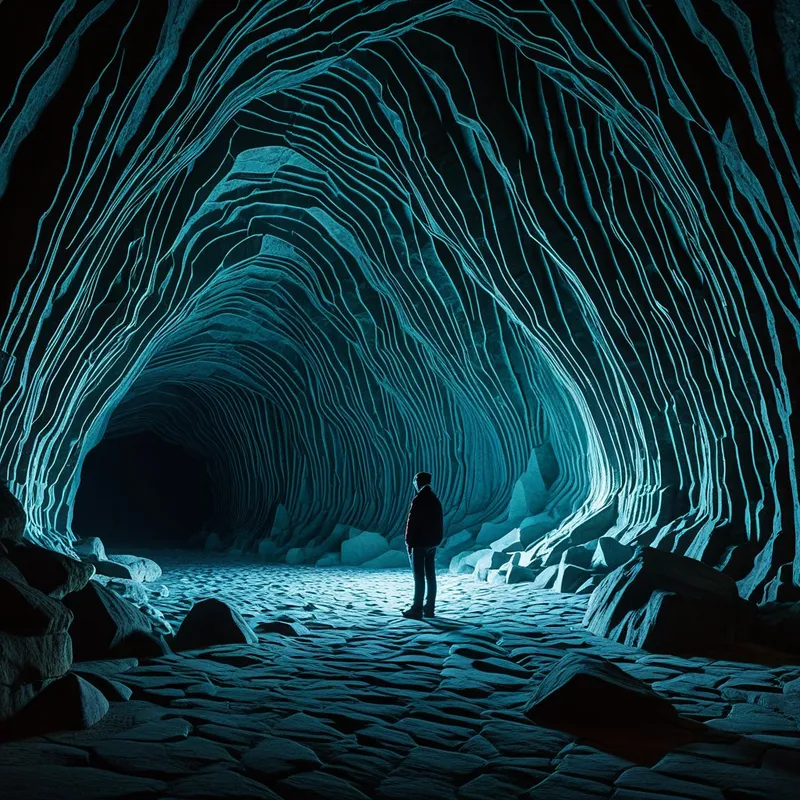
The transmutation here is from terror into sovereignty. The alchemical vessel is the dream itself, and the heat is the unbearable, sustained pressure of the felt danger. You do not transmute the dream by analyzing it from a safe distance. You transmute it by, upon waking, re-entering that somatic echo—the clutch in the gut, the racing heart—and staying. You hold the terror in awareness without narrative, without trying to solve or escape it. This is the nigredo, the blackening, where all forms dissolve in the heat of pure experience. In this heat, the glue that holds the old identity together melts. The grief for that lost self is the dissolving agent. As you consent to feel both the terror and the grief, a separation occurs. The dross—the belief that you are the fragile identity under threat—begins to fall away. What remains, distilled in the fire, is a profound, unshakable witness, a core of being that can observe danger without being annihilated by it. This is the birth of inner sovereignty: the gold forged in the furnace of your own night.
The Integration Protocol
Question 1: When you sit with the somatic echo of the dream—the fear in your body—what old, familiar part of your identity feels most directly endangered or dissolved by that feeling?
Question 2: If the danger in the dream is not an external force, but a part of your own psyche demanding recognition, what might that exiled part need to say or express?
Question 3: What long-held story about who you are, or how you must be to be safe, did this dream threaten to permanently rewrite?
Action 1 (Somatic Anchoring): Upon waking, before the mind spins stories, place a hand where the fear lives in your body (chest, gut, throat). Breathe slowly into that space for three minutes, not to make it go away, but to offer it the simple acknowledgment: “This sensation is here.” Feel the difference between the sensation and the one who feels it.
Action 2 (Unstructured Glyph Writing): Take a blank page and a pen. Without thinking, allow your hand to draw the “corrupted code” or the essence of the pursuing force from your dream. Don’t draw objects; let lines, shapes, and textures emerge. Then, write stream-of-consciousness words around and through the drawing for five minutes. Let the glyph and the words have a conversation you don’t try to understand logically.
Action 3 (Ritual of Sovereignty): Find a small stone. Hold it and name it as the “old self” that felt endangered in the dream. Take it to a natural body of water—a river, the sea, a lake—or a significant crossroads. Speak one sentence aloud releasing that identity (e.g., “I release the one who needed that safety”). Throw the stone into the water or leave it at the crossroads. Walk away without looking back.
Final Validation
The fear is real. The sense of dissolution is not your imagination failing you, but your depth finally communicating in a language too primal to ignore. To have these dreams is not a sign of weakness, but a testament to the courageous, subterranean work your psyche is undertaking. It is brutal, sacred labor. Honor the terror as the fierce guardian of the threshold. It only guards something of immense value—the you that exists beyond all the stories of danger, the you that is being forged, sovereign and unassailable, in the heart of the very fire that seems to threaten your existence.