Volsung Saga Myth Meaning & Symbolism
A dynastic epic of cursed gold, broken oaths, and heroic tragedy, where the sword of fate is pulled from a tree and a dragon's heart is eaten.
The Tale of Volsung Saga
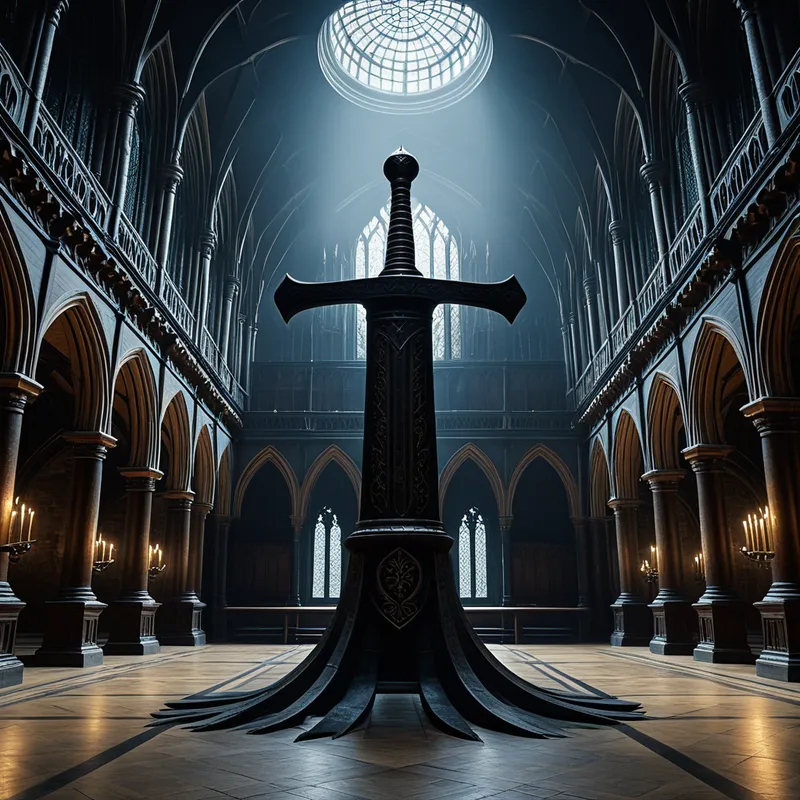
Hear now of a doom woven in gold, a fate sung into the roots of [the world](/myths/the-world “Myth from Tarot culture.”/)-tree itself. It begins not with men, but with gods. Odin, the All-Father, cloaked in grey, enters the hall of King Volsung. In his hand is a gift and a test: a sword of unmatched sharpness, plunged to its hilt in the trunk of the great oak, Branstock, that holds up the roof. “The man who draws this blade,” his voice echoes like distant thunder, “shall own it, and it shall bring him great renown.” One by one, the mightiest warriors strain. The wood groans, but the sword sleeps. Then steps forth Sigmund, Volsung’s son. His fingers close on the hilt. With a sound like a sigh from [the earth](/myths/the-earth “Myth from Hindu culture.”/), the blade slides free, gleaming with a cold, destined light. This is Gram, and its edge will cut the thread of a dynasty.
Years pass. Jealousy, that old serpent, coils in the heart of King Siggeir, husband to Sigmund’s sister, Signy. He invites the Volsungs to a feast in his land, a feast of betrayal. In the dead of night, his men surround the hall. King Volsung falls. His sons are captured and chained in the forest, left for the wolves. Each night, a she-wolf comes, a creature of monstrous hunger, and devends one son. Only Sigmund survives, saved by Signy’s cunning and his own fierce will, living wild in the woods, his heart a forge for vengeance.
From this wolf’s lair, a new lineage is born in secret and sorrow. Signy, consumed by the need for a pure avenger, comes to her brother in disguise. From their union springs Sinfjotli, a boy forged in fury. Father and son become wolves in men’s skin, outlaws who breathe vengeance. They burn Siggeir’s hall, their [justice](/myths/justice “Myth from Tarot culture.”/) a roaring flame. But the saga’s curse is not sated. A potion of forgetting is given, and Sigmund, in a fateful battle, faces a foe whose shield bears the image of a wolf. His own sword, Gram, shatters on the spear of an old man in a wide-brimmed hat—Odin, reclaiming his gift. Sigmund dies, bequeathing the shards to his pregnant wife, Hjordis.
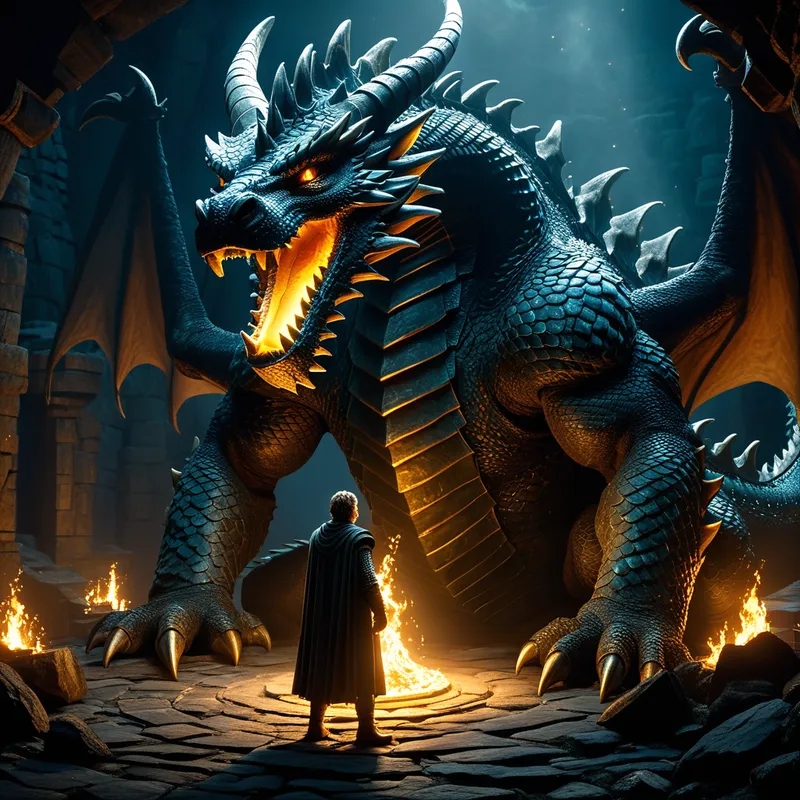
From these shards is born the brightest and darkest star of the tale: [Sigurd](/myths/sigurd “Myth from Norse culture.”/). He is raised by the smith Regin, who whispers of a dragon, Fafnir, who lies upon a hoard of cursed gold—the very gold that began with the killing of an otter, a ransom paid in blood and doom. Regin reforges Gram, and [Sigurd](/myths/sigurd “Myth from Norse culture.”/), the chosen one, seeks [the worm](/myths/the-worm “Myth from Biblical culture.”/). He digs a pit in [the dragon’s path](/myths/the-dragons-path “Myth from Chinese culture.”/). As Fafnir slithers overhead, [Sigurd](/myths/sigurd “Myth from Norse culture.”/) drives Gram upward, piercing the scaled heart. [The dragon](/myths/the-dragon “Myth from Chinese culture.”/)‘s blood burns like molten metal, and when a drop touches [Sigurd](/myths/sigurd “Myth from Norse culture.”/)‘s tongue, he gains the wisdom of birds. They sing of Regin’s intended betrayal. Sigurd acts first, and the gold is his.
But gold is a bed for new sorrows. He finds a [Valkyrie](/myths/valkyrie “Myth from Norse culture.”/), Brynhild, sleeping within a ring of fire, and wakes her with a kiss. They pledge their souls. Yet, fate is a tangled web. Through a potion of forgetfulness—a recurring poison in this tale—Sigurd is tricked, weds another, and helps his friend win Brynhild. When the deception unravels, Brynhild’s love curdles into a vengeance that makes Siggeir’s look pale. She demands Sigurd’s death. The greatest hero falls not to a dragon, but to a spear in his sleep, murdered by a lesser man. Brynhild, upon a pyre of sublime despair, joins him in death, the final, tragic note in a song of glory, gold, and grief.
Cultural Origins & Context
The Volsung Saga is a cornerstone of the Norse legendary cycle, a prose narrative compiled in 13th-century Iceland but drawing from far older continental Germanic traditions. It is the quintessential “family saga” of the heroic age, existing in the liminal space between the mythic time of the gods and the historical time of kings. It was not merely entertainment; it was a cultural repository. Skalds and storytellers would recite these tales in long halls, the firelight dancing on faces as listeners heard the deeds of Sigmund and Sigurd. The saga functioned as a moral and cosmological compass. It illustrated the inexorable nature of ørlög, the tragic cost of broken oaths, and the heroic ideal: to face a doomed fate with unwavering courage, thus achieving immortal fame. It served as a bridge, connecting the audience to their legendary past and reinforcing the values of loyalty, vengeance, and the acceptance of a world governed by forces beyond mortal control.
Symbolic Architecture
At its [heart](/symbols/heart “Symbol: The heart symbolizes love, emotion, and the core of one’s existence, representing deep connections with others and self.”/), the Volsung Saga is a profound [meditation](/symbols/meditation “Symbol: Meditation represents introspection, mental clarity, and the pursuit of inner peace, often providing a pathway for deeper self-awareness and spiritual growth.”/) on the [nature](/symbols/nature “Symbol: Nature symbolizes growth, connectivity, and the primal forces of existence.”/) of inherited [trauma](/symbols/trauma “Symbol: A deeply distressing or disturbing experience that overwhelms the psyche, often manifesting in dreams as unresolved emotional wounds or psychological injury.”/) and the [curse](/symbols/curse “Symbol: A supernatural invocation of harm or misfortune, often representing deep-seated fears, guilt, or perceived external malevolence.”/) of [consciousness](/symbols/consciousness “Symbol: Consciousness represents the state of awareness and perception, encompassing thoughts, feelings, and experiences.”/). The gold, beginning with the [Otter](/symbols/otter “Symbol: A playful, social aquatic mammal symbolizing joy, adaptability, and connection to emotions.”/)‘s Ransom, is not mere [wealth](/symbols/wealth “Symbol: Wealth in dreams often represents abundance, security, or inner resources, but can also symbolize burdens, anxieties, or moral/spiritual values.”/); it is coagulated desire, a psychic poison that amplifies greed, [betrayal](/symbols/betrayal “Symbol: A profound violation of trust in artistic or musical contexts, often representing broken creative partnerships or artistic integrity compromised.”/), and murder. It represents the [shadow](/symbols/shadow “Symbol: The ‘shadow’ embodies the unconscious, repressed aspects of the self and often represents fears or hidden emotions.”/) of the [material](/symbols/material “Symbol: Material signifies the tangible aspects of life, often representing physical resources, desires, and the physical world’s influence on our existence.”/), the “price” that severs natural bonds and corrupts all who touch it.
The sword in the tree is the latent power of the Self, waiting for the consciousness strong enough to claim it and bear its terrible responsibility.
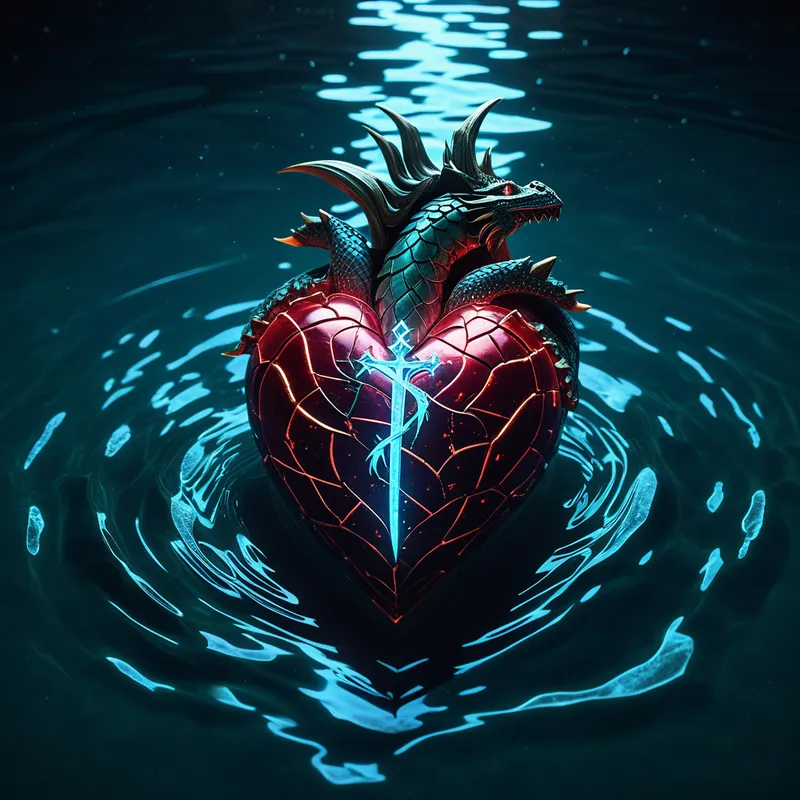
The [dragon](/symbols/dragon “Symbol: Dragons are potent symbols of power, wisdom, and transformation, often embodying the duality of creation and destruction.”/) Fafnir is the ultimate [symbol](/symbols/symbol “Symbol: A symbol can represent an idea, concept, or belief, serving as a powerful tool for communication and understanding.”/) of this corruption. Once a [dwarf](/symbols/dwarf “Symbol: A dwarf often represents hidden potential, undervalued wisdom, or primal instincts. It can symbolize something small but powerful or foundational aspects of the self.”/), his greed literally transformed him into the [monster](/symbols/monster “Symbol: Monsters in dreams often symbolize fears, anxieties, or challenges that feel overwhelming.”/) that guards the hoard. He is the [psyche](/myths/psyche “Myth from Greek culture.”/) utterly identified with its possession, a bloated, isolated ego lying upon its [treasure](/symbols/treasure “Symbol: A hidden or valuable object representing spiritual wealth, inner potential, or divine reward.”/) of unlived [life](/symbols/life “Symbol: The symbol of ‘Life’ represents a journey of growth, interconnectedness, and existential meaning, encompassing both the joys and challenges that define human experience.”/). Sigurd’s slaying of the [dragon](/symbols/dragon “Symbol: Dragons are potent symbols of power, wisdom, and transformation, often embodying the duality of creation and destruction.”/) is the ultimate heroic act of confronting and integrating [the shadow](/myths/the-shadow “Myth from Jungian culture.”/). Yet, the saga is brutally honest: [integration](/symbols/integration “Symbol: The process of unifying disparate parts of the self or experience into a cohesive whole, often representing psychological wholeness or resolution of internal conflict.”/) does not guarantee a happy ending. Eating the [dragon](/symbols/dragon “Symbol: Dragons are potent symbols of power, wisdom, and transformation, often embodying the duality of creation and destruction.”/)‘s heart grants wisdom, but it is a wisdom that isolates, forcing Sigurd to see the betrayals around him. The final tragedy reveals that even the integrated [hero](/symbols/hero “Symbol: A hero embodies strength, courage, and the ability to overcome significant challenges.”/) is not immune to the projections, manipulations, and poisoned love of an unconscious world.
The Dreamer’s Resonance
When this myth stirs in the modern unconscious, it often manifests in dreams of profound familial patterns, cursed inheritances, and transformative encounters. To dream of a magnificent, un-pullable sword in a tree is to feel the call of one’s own undeveloped potential, a destiny felt but not yet claimed. Dreams of being bound, of wolfish hunger, or of familial betrayal speak to the “Volsung” complex: a sense of being trapped in a destructive ancestral script.
The dragon dream is pivotal. It may appear not as a literal beast, but as a suffocating, obsessive presence—a job, a relationship, a pattern of thought that has become a hoarding, isolating force. The act of confronting it in the dream, of digging [the pit](/myths/the-pit “Myth from Christian culture.”/) (preparation) and striking upward (decisive action), marks a critical somatic process: the body-mobilizing for a profound psychic battle. The dream of tasting the dragon’s blood or heart is a powerful symbol of assimilating a difficult, transformative truth about oneself or one’s lineage, leading to a sudden, instinctual clarity.
Alchemical Translation
The journey of the Volsung lineage is a stark map of the individuation process. The saga begins with the [nigredo](/myths/nigredo “Myth from Alchemical culture.”/), the blackening: the betrayal, the wolf, the fragmentation (the shattering of Gram). This is the necessary descent into the chaotic, painful material of the personal and ancestral unconscious.
Sigmund and Sinfjotli’s life as outlaws is the [separatio](/myths/separatio “Myth from Alchemical culture.”/), the conscious differentiation from collective norms to forge a singular identity, however brutal. The reforging of Gram from shards is the coagulatio, the reconstitution of the will and [the ego](/myths/the-ego “Myth from Jungian culture.”/) after a shattering, now with a specific purpose: to confront the dragon.
Slaying the dragon is the solutio—the dissolution of the hardened, inflated ego-structure (the hoard-guarding complex) by the penetrating sword of consciousness.
Sigurd’s subsequent trials—the betrayal by Regin, the love for Brynhild, the trickery and murder—represent the perils of the later stages. The albedo (whitening), the idealized union with the anima (Brynhild), is tragically spoiled by unconsciousness (the potion). This illustrates a crucial psychological truth: a single heroic act does not complete the work. The integrated content must be brought back into relationship with the world, a process fraught with shadow projections and complex moral entanglements. The final death is not a failure, but a mortificatio that leads to a transcendent coniunctio on the funeral pyre. For the modern individual, the saga advises that the work of wholeness is cyclical and costly. It demands claiming your sword, facing your dragon, but also warns that the greatest battles may come after, in navigating the human world with your hard-won, isolating gold. The goal is not a perfect life, but a complete one, etched with [the runes](/myths/the-runes “Myth from Norse culture.”/) of fate, freely chosen.
Associated Symbols
Explore related symbols from the CaleaDream lexicon: