Vishnu's Ananta Myth Meaning & Symbolism
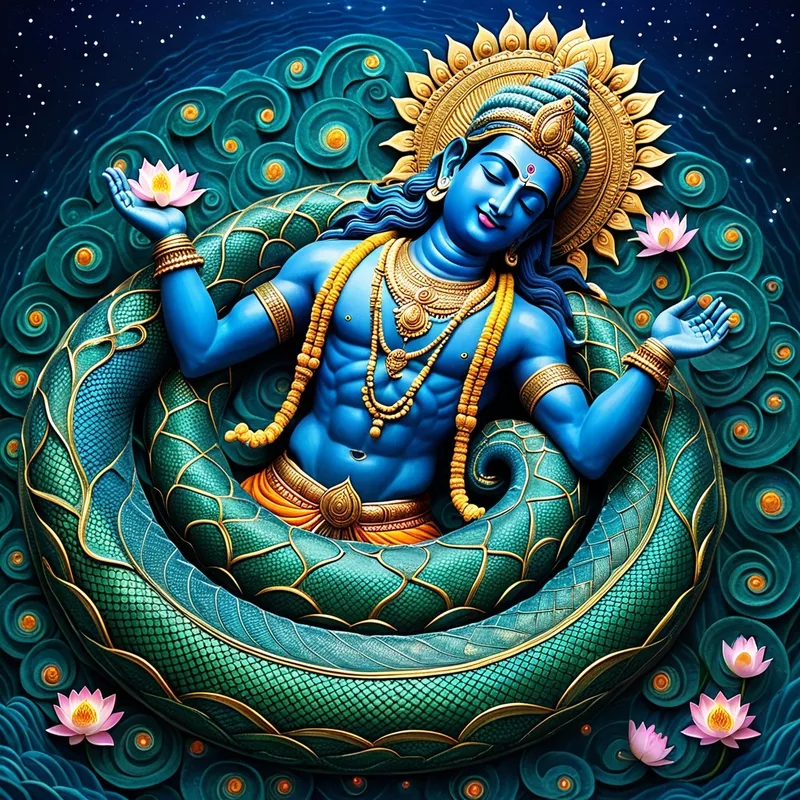
Vishnu sleeps upon the endless serpent Ananta, floating on the cosmic ocean, dreaming the universe into existence between cycles of creation and dissolution.
The Tale of Vishnu's Ananta
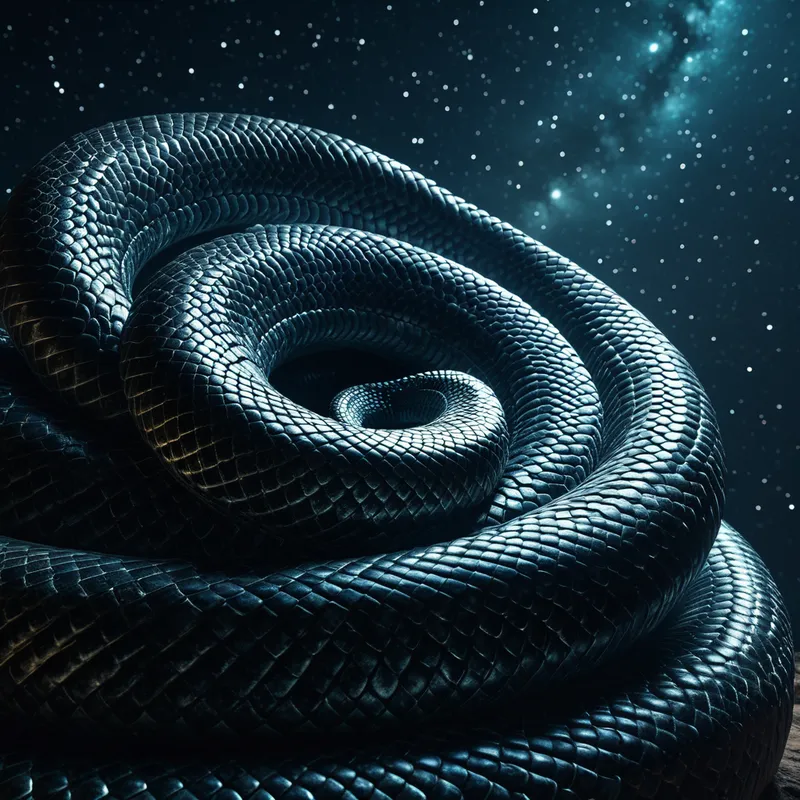
Before time was counted, in the silence between universes, there is only the ocean. Not an ocean of water, but the Mula Prakriti, the dark, boundless, potential sea. Upon this fathomless deep, there drifts a being of impossible scale. It is Ananta Shesha, the great serpent. His body is coiled into a perfect, floating bed of endless loops, a living raft upon the void. His thousand hoods fan out like a celestial canopy, each hood bearing a glittering, watchful jewel that reflects not light, but possibility.
Upon this living throne of coils rests Mahavishnu. His skin is the blue of the deepest sky and the quietest sea. He sleeps. His breath is the soft, rhythmic wind that stirs the formless waters. This is not a sleep of exhaustion, but of profound, creative rest. From his navel, a stem of light grows, and upon it blossoms a radiant lotus. Upon this lotus sits Brahma, who will open his eyes and begin the work of shaping a new cosmos from the dream-stuff of the sleeping preserver.
Ananta does not sleep. He is the unwavering support, the eternal witness. He is the ground that makes the dream possible. His name means "Endless," and his coils are the very fabric of time and space, holding the sleeping god aloft in the infinite. He sings a silent song of sustenance, a hymn of pure being. When the dream of Brahma reaches its conclusion—when stars cool, worlds dissolve, and all returns to the source—the lotus withers. Brahma closes his eyes and is reabsorbed. The universe folds back into the mind of Vishnu. Yet, Ananta remains. Vishnu sleeps again upon his steadfast coils, and the cosmic ocean is still, waiting for the next exhalation, the next dream. The serpent is the constant in the turning wheel, the bed upon which the cycle of creation, preservation, and dissolution eternally rests.
Cultural Origins & Context
The image of Vishnu reclining upon Ananta, often called Sheshashayi Vishnu, is one of the most iconic and philosophically rich in all of Puranic literature. Its most elaborate narrations are found in texts like the Vishnu Purana and the Bhagavata Purana. This was not merely a story for entertainment; it was a cosmological map and a theological anchor.
Told by sages in forest hermitages and illustrated on temple walls from Ellora to Srirangam, the myth served multiple societal functions. It visually explained the cyclic nature of time (Kalpas and Yugas). It established Vishnu's role as the supreme, foundational reality from which the creator Brahma emerges. Most importantly, it provided a potent symbol of stability. In a world perceived as impermanent and ever-changing, the vision of the divine resting on an endless, supportive foundation offered profound comfort. It answered the human yearning for something that does not crumble, a fundamental support that exists even in the dissolution of all things.
Symbolic Architecture
The myth is a profound symbolic architecture for the nature of existence and consciousness. Ananta is not a mere animal or servant; he is an aspect of the divine itself, often considered a manifestation or companion of Vishnu.
Ananta is the supporting ground of being itself, the infinite potential upon which the manifest world temporarily rests.
Vishnu represents the active, preserving principle of consciousness. His sleep is not unconsciousness, but the state of pure, undifferentiated awareness from which the dream of reality—with all its forms, names, and stories—arises. The cosmic ocean is the unmanifest Prakriti, the feminine principle of matter and energy in its potential state.
Thus, the entire scene models a deep truth: all of manifestation is a temporary formation resting upon and emerging from a field of endless, silent support. Ananta symbolizes time (Kala) itself, as well as the remnants of past universes. He is what remains when forms dissolve. Psychologically, Ananta represents the foundational, often unconscious, support structures of the psyche: our inherited instincts, the deep patterns of the collective unconscious, and the basic trust that allows the ego (Brahma, the creator) to operate and build a personal world.
The Dreamer's Resonance
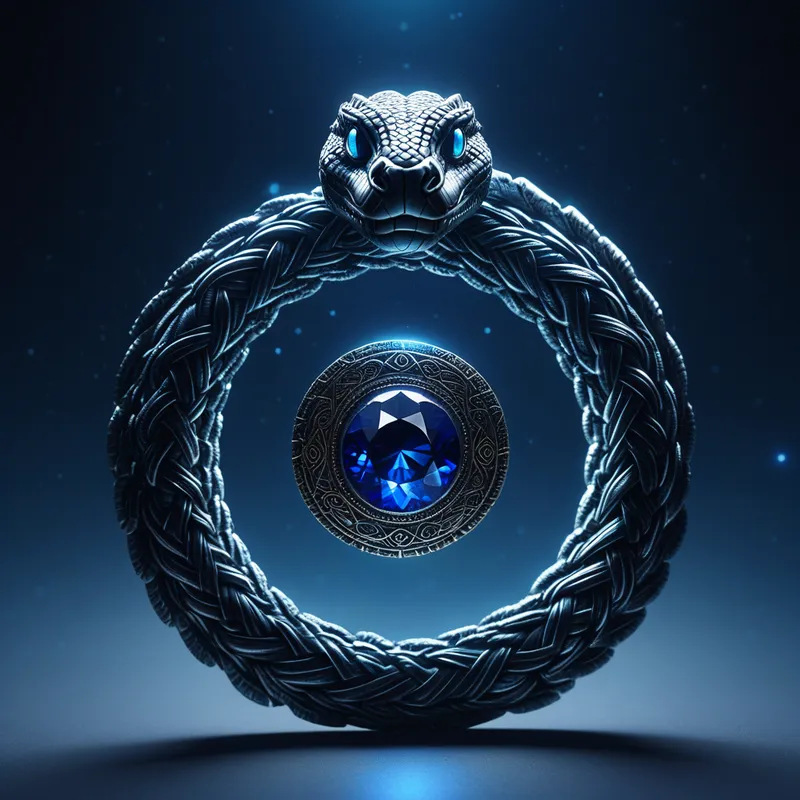
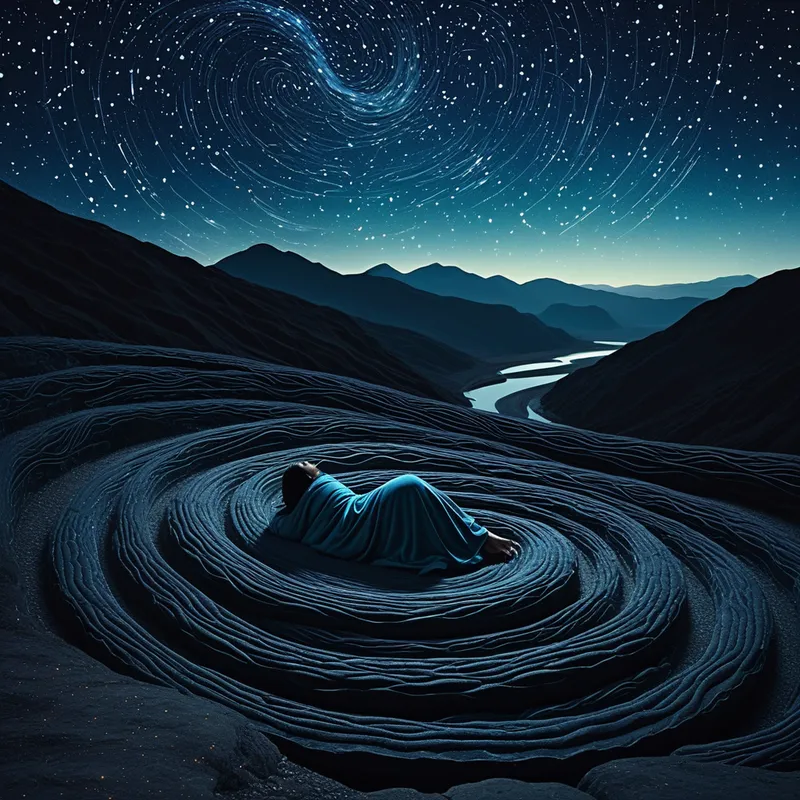
When this myth stirs in the modern unconscious, it often surfaces in dreams not of action, but of profound rest and support. One might dream of sleeping on a vast, warm, living surface that moves gently. Or of floating effortlessly on a dark sea, completely held. The dreamer may encounter a serpent of immense size that evokes awe, not fear—a sense of ancient, knowing presence.
These dreams frequently visit during life transitions: after great exertion, during burnout, at the end of a major chapter (a career, a relationship), or when confronting the dissolution of a long-held identity. The somatic sensation is one of deep, cellular relief. It is the psyche's instinctual correction to a life lived only in the "Brahma" mode of constant doing and creating. The dream is an invitation from the depths to surrender, to lie back upon the infinite support of one's own being, to stop "creating your world" for a moment and simply be held by the larger pattern. It signals a necessary descent into the nourishing waters of the unconscious to be replenished.
Alchemical Translation
The alchemical process modeled here is not one of fiery transformation, but of dissolution into the supportive ground for renewal. The modern individuation journey is often obsessed with the heroic "ascent"—building the ego, achieving, becoming someone. The myth of Ananta and Vishnu teaches the critical, counterbalancing "descent."
The first alchemical step is not to create, but to find the serpentine couch upon which you can rest your striving self.
The "Ananta" within us is the part of the psyche that does not change with our successes or failures. It is the endless thread of being that runs through all our personal dramas. The alchemical work is to consciously identify with this supportive ground, not just with the dreaming culture.") god (our active consciousness) or the creating god (our ego). It means learning to rest in the midst of chaos, to find the unwavering support within when external structures fail.
This is the transmutation of anxiety into trust, of fragmentation into wholeness. By connecting with our inner "Ananta," we gain the capacity to allow life's cycles—of gain and loss, creation and destruction—to unfold without being annihilated by them. We become like Vishnu: able to engage in the dream of life, yet always resting upon the eternal, so that when a dream ends, we do not end with it. We return to the supportive depths, gather strength, and are ready for the next conscious emergence, grounded, whole, and renewed.
Associated Symbols
Explore related symbols from the CaleaDream lexicon: