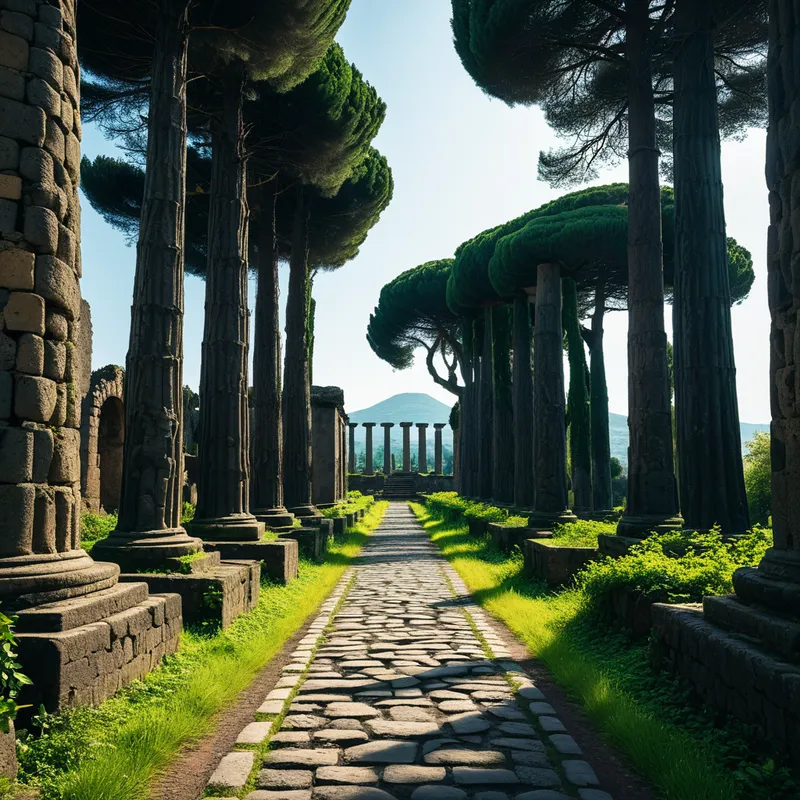
Via Appia Myth Meaning & Symbolism
The myth of the Appian Way, a road of stone and spirit, built by ambition to conquer distance and time, becoming a sacred artery of memory and power.
The Tale of Via Appia
Hear now the tale not of a god, but of a god’s work. Hear the song of the stone serpent that sleeps with one eye open, stretching from the beating heart of the world to the edge of the known earth.
In the days when Rome was a wolf-child, strong-limbed and hungry, her gaze turned south. Between her and the riches of Campania lay a treacherous bog, a land of mud and malarial breath that choked the legions and mocked the carts of grain. The Senate, in its marble coolness, felt this weakness like a fever. And so they called upon Appius Claudius Caecus, a man of iron will whose very name, ‘the Blind’, spoke of a vision that looked inward, to the bones of things.
Appius did not pray to Cardea alone, nor merely to Jupiter for favor. He invoked the genius of the land itself. He commanded the earth to be bound. Legionaries, their swords sheathed, became priests of the level and the plumb line. With picks of iron, they quarried the bones of volcanoes—hard, dark silex. They did not lay a path; they sutured the land. Stone was fitted to stone with a mason’s intimacy, each slab a covenant of order over chaos. They dug deep ditches, draining the swamp’s whispered threats, and raised a causeway high and dry—a spine of civilization.
And so the Road was born. They named it for its maker: Via Appia. It did not meander like a river or twist like a forest trail. It pointed, like a finger of destiny, straight and true. Upon its hard back, the legions marched in thunderous unison, their standards catching the sun. Wealth flowed north—amphorae of oil, sacks of grain, the spoils of conquest. But the Road demanded its tithe. Soon, along its margins, the tombs of the great families rose, ornate houses for the dead, their inscriptions shouting lineage into the silence. And sometimes, upon its verges, the crucified would hang, a grim testament to the price of defiance. The Via Appia drank the sweat of the soldier, the dust of the merchant, the tears of the mourner, and the blood of the rebel. It became the Sacred Way, not to a temple, but to Rome’s own relentless soul.

Cultural Origins & Context
The Via Appia is a rare myth born from documented history, yet it transcended its engineering reports to become a foundational legend of the Roman psyche. Initiated in 312 BC by the censor Appius Claudius Caecus, its construction was a staggering feat of civil engineering and political will. This was not folklore passed down by bards, but a living narrative enacted daily by every citizen who used it, saw it, or heard its name.
Its societal function was multifaceted. Practically, it was the first and greatest of Rome’s consular roads, the regina viarum (queen of roads), a tangible artery of military logistics, economic integration, and administrative control. Culturally, however, it was far more. It was the physical manifestation of Roman virtues: disciplina (discipline), in its unwavering straightness; firmitas (firmness), in its enduring construction; and imperium (command), in its domination of the landscape. The road legally defined a sacred, protected space. The tombs that lined it were not just burial sites but permanent advertisements of familial prestige (dignitas), ensuring a name’s endurance alongside the empire’s backbone. The Via Appia was how Rome wrote its story upon the earth—a story of order, memory, and inexorable power.
Symbolic Architecture
Psychologically, the Via Appia is the archetype of the Directed Will. It represents the conscious mind’s heroic, often brutal, project to carve a straight line through the chaotic, swampy terrain of the unconscious and the external world.
The road is a contract between the present and the future, signed with the blood of the swamp it drains.
Its straightness symbolizes clarity of purpose, strategic thinking, and the suppression of ambiguity. The foundational silex stones are the non-negotiable principles, the core beliefs and disciplines upon which a personality or a civilization is built. The draining of the marshes is the repression of the emotional, formless, and “unclean” aspects of life to ensure safe passage for the ego’s ambitions.
Yet, the symbolism deepens with the road’s concurrent role as a necropolis. This reveals the paradox: the very pathway of life (commerce, travel, conquest) is also the gallery of death. The tombs are the memoria, the undeniable weight of the past, of ancestry, and of all that has been sacrificed to build the present road. The crucified rebels along its edge are the shadow of this directed will—the repressed costs, the brutalized instincts, and the victims of progress, forever haunting the margins of success.
The Dreamer’s Resonance
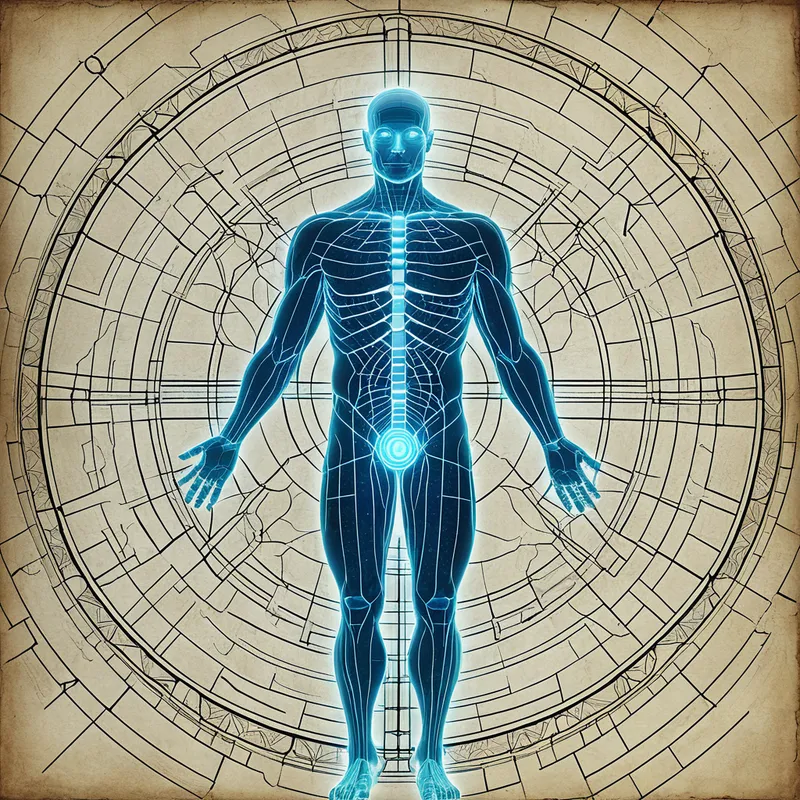
To dream of the Via Appia is to dream of one’s own psychic infrastructure. It often appears in periods of intense focus, ambition, or when one is attempting to “build” something significant—a career, a relationship, a project.
- Dreaming of walking its endless, straight length suggests a somatic experience of directed but potentially lonely purpose. The body may feel rigid, the journey monotonous, reflecting a life path felt as duty-bound but devoid of spontaneity. The dreamer is “on the straight and narrow,” perhaps feeling the weight of their own expectations.
- Dreaming of the crumbling tombs alongside it indicates the past—ancestral patterns, old identities, unresolved grief—impinging on the current path. These are the lares and lemures (household and restless spirits) of one’s personal history, demanding acknowledgment.
- Dreaming of the road being broken, flooded by the swamp, or overgrown signals a rebellion of the unconscious. The repressed, chaotic, and emotional elements are returning, threatening to wash away the carefully constructed ego-pathway. This can be a frightening but necessary dream, heralding a psychological course correction.
The dream is an inquiry: Is your road leading to a living destination, or is it merely a beautiful monument to a will that has forgotten its own heart?

Alchemical Translation
The alchemical journey modeled by the Via Appia is not the circular Magnum Opus of the mystics, but the opus contra naturam—the work against nature, which is the initial, necessary, and perilous phase of individuation. It is the Nigredo made manifest as civil engineering.
The conscious ego (Appius Claudius) identifies a goal (the south) and confronts the primal, undifferentiated muck (the unconscious, instinct, emotion). Its solution is to build over it. This is the creation of the Persona—the solid, presentable, efficient “road” we show the world. This stage is essential. Without this directed will and discipline, no coherent self can emerge from chaos.
Individuation begins not with finding one’s path, but with the terrifying, glorious act of declaring one—knowing full well it will become your mausoleum.
The alchemical danger is to mistake this first, magnificent road for the entire journey. The true transmutation begins when the traveler on that road starts to see the tombs. It begins with the integration of the shadow—the crucified rebels, the forgotten dead, the costs of one’s own ambition. The ultimate goal is not to abandon the Via Appia, but to realize it is only one road on a vast, living continent. The final stage, the Rubedo, might be the moment the traveler finally steps off the pristine stones to feel the wet earth of the reclaimed swamp with bare feet, understanding that the road and the swamp, will and surrender, are two rhythms of the same, eternal journey. The myth of the Via Appia teaches that every foundation stone is also a headstone, and every path of glory must ultimately lead back to the silent, waiting earth from which it came.
Associated Symbols
Explore related symbols from the CaleaDream lexicon: