Vesta's Sacred Fire Myth Meaning & Symbolism
The sacred, undying hearth fire of Rome, tended by priestesses, representing the unbroken center of home, state, and psyche.
The Tale of Vesta’s Sacred Fire
Listen, and hear the story not of conquest, but of preservation. Not of a blade, but of a flame.
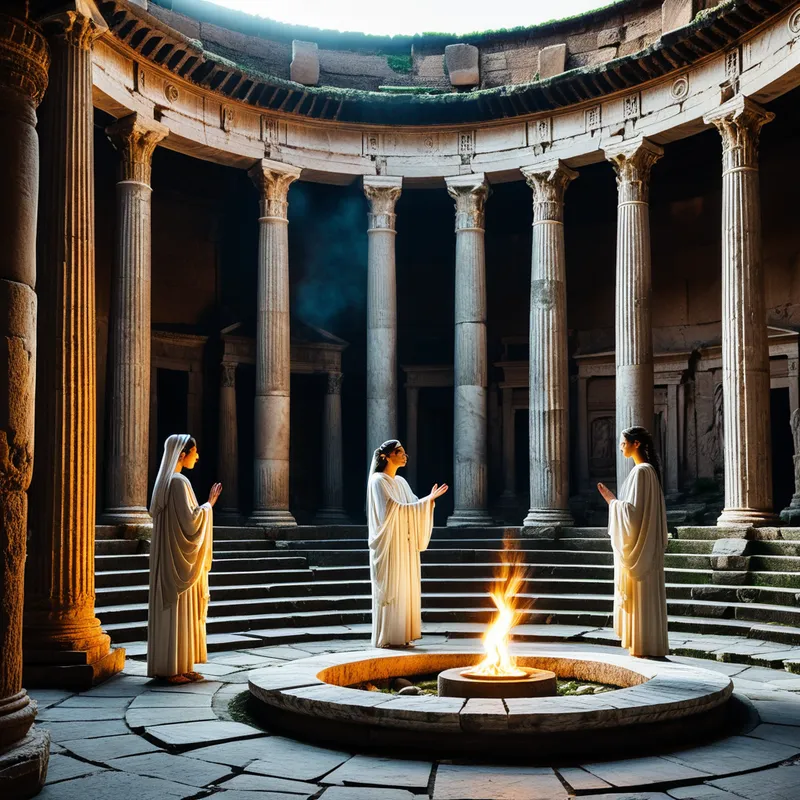
In the heart of the world’s greatest city, where marble gleamed under a relentless sun and the clamor of empire rose like thunder, there existed a circle of silence. It was the aedes Vestae, a temple unlike any other. It was not a house for a statue, but a home for a living presence. For within its circular walls, mirroring the first round hut of the kingdom’s dawn, burned the sacred fire of Vesta.
This was no ordinary flame. It was the breath of the city itself, the warm soul of Rome. Its light was the light of the family meal, its heat the comfort of the common hearth, its endurance the promise of the state’s continuity. To let it die was to let the heart of Rome grow cold and still; it was an omen of utter desolation.
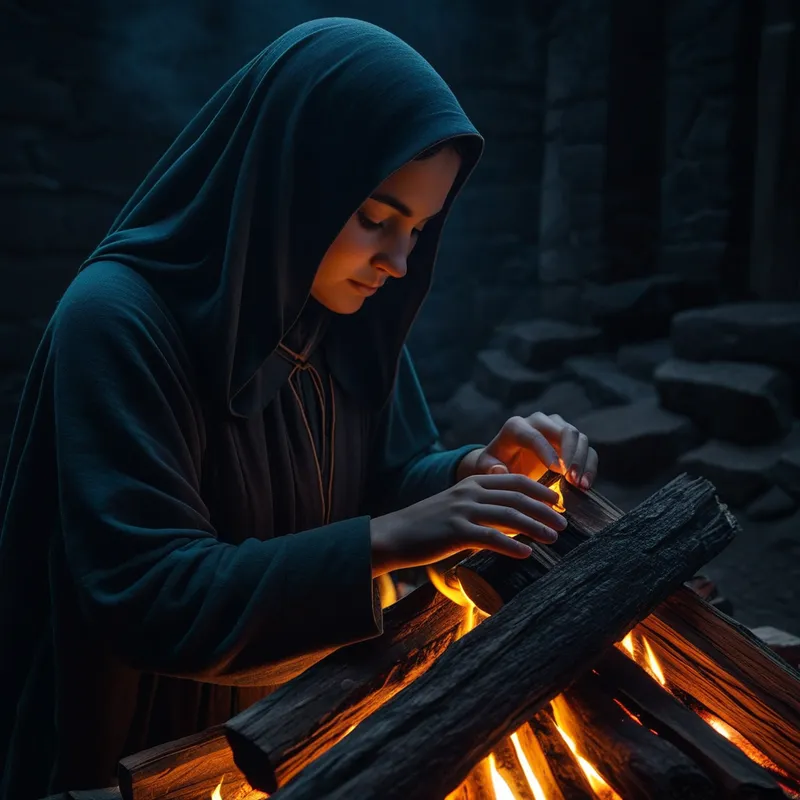
The keepers of this mystery were the Vestal Virgins, chosen as young girls from Rome’s noblest families. For thirty years, they lived within the sacred complex, their lives a symphony of ritual purity. Their white robes were spotless, their minds focused on a single, consuming duty: the fire must not go out. Day and night, in rotating vigils, they fed it with sacred wood. They watched the dance of its light upon the ancient stones, listening to its whisper, which was the whisper of the city’s collective life.
The greatest drama was not in battle, but in a moment of negligence. Imagine the deepest hour of the night, when the world sleeps and even gods might nod. A Vestal, weary from days of prayer, lets her eyelids grow heavy. The vigilant flame, unattended, begins to falter. A log shifts; the vibrant orange core dims to a sullen red, then to grey ash veiling a last, dying ember. The flame vanishes. A chill, deeper than winter, instantly fills the temple. The silence is no longer peaceful, but accusatory and dead.
This was a civic catastrophe, a tear in the fabric of the world. The news would race through the Senate like a cold wind. The offending Vestal, stripped of her sacred ribbons, would face a terrifying, archaic punishment for her broken vow. Yet, the fire itself was the priority. For you could not relight Vesta’s flame with common spark from common wood. That would be a blasphemy, a mere imitation of life.
The Pontifex Maximus himself would lead the priests to a place of pure, untainted origin. They would use the most ancient magic of all: the sun. With a bronze mirror or a specially shaped lens, they would capture a fragment of the sun itself—the original, celestial fire—and focus it onto virgin tinder. From this divine spark, born anew from the heavens, the sacred flame would be painstakingly nurtured back to life in the temple. Only then, with the hearth’s pulse restored, could Rome breathe again. The circle was closed; the center held. The story was not one of a single victory, but of an eternal return to the source.
Cultural Origins & Context
The cult of Vesta was arguably the oldest and most fundamental in Roman religion, predating the grand anthropomorphic gods like Jupiter and Juno. Vesta was not a goddess one pictured in human form; she was the fire. This animistic core points to her origins in the earliest Italic domestic worship, where the hearth was the literal and spiritual center of family life—the source of warmth, light, cooked food, and protection.
By the time of the Kingdom and Republic, this domestic principle was magnified to a state level. The focus publicus in her temple was the hearth of Rome itself. Its perpetual maintenance was the primary religious duty of the state, overseen by the chief priest, the Pontifex Maximus. The Vestals’ celibacy was not a denigration of sexuality, but a ritual separation; their generative power was entirely directed inward, toward the nurturing of the city’s spiritual and physical core. Their person was sacrosanct, and they held unique legal rights and immense social prestige, reflecting the sacredness of their charge.
The myth of the fire’s extinction and relighting was not a singular, legendary event but a recurring ritual drama embedded in the Roman psyche. It modeled the ultimate crisis and the prescribed, sacred solution. The historical records note occasions when the fire did go out, treated with horror and followed by elaborate rites of purification and rekindling. The myth provided the template, assuring the people that even in catastrophe, a return to the primal, pure source was possible.
Symbolic Architecture
At its core, Vesta’s fire is a supreme symbol of the temenos—the sacred, protected, inner sanctuary. It represents the inviolable center that must be maintained amidst the chaos of external life.
The hearth is the first altar, and its fire is the first consciousness. To tend it is to practice the art of attention itself.
The Temple, circular and domed, is a mandala of the Self. Its round shape, with no sharp corners, symbolizes wholeness, containment, and the feminine principle of the vessel. The Fire within is the living spirit, the libido or psychic energy in its most concentrated, creative form. It is not a wild, destructive blaze, but a cultivated flame—domesticated yet divine, requiring constant, conscious fuel.
The Vestal Virgins symbolize the psychological function of devotion. They are the ego-complex in service to the Self, the part of our psyche sworn to protect the inner sacred space from profanation. Their chastity represents a focused, undivided attention, a withholding of energy from external, dissipating attachments to keep it centered on the core.
The Extinction of the Flame is the symbolic death that occurs when consciousness (the vigilant ego) fails. It is burnout, depression, a loss of meaning—the “dark night of the soul” where our inner light gutters and fails. The Punishment of the Vestal is the severe, often cruel, self-recrimination and existential guilt that follows such a failure of our sacred duty to ourselves.
The Re-kindling from the Sun is the profound alchemical truth at the myth’s heart. We cannot restart our inner fire from the spent embers of old motivations or borrowed passions. We must return to the primordial source—the Self, the inner sun—and draw new energy directly from it. This is a process of radical renewal, not mere repair.
The Dreamer’s Resonance
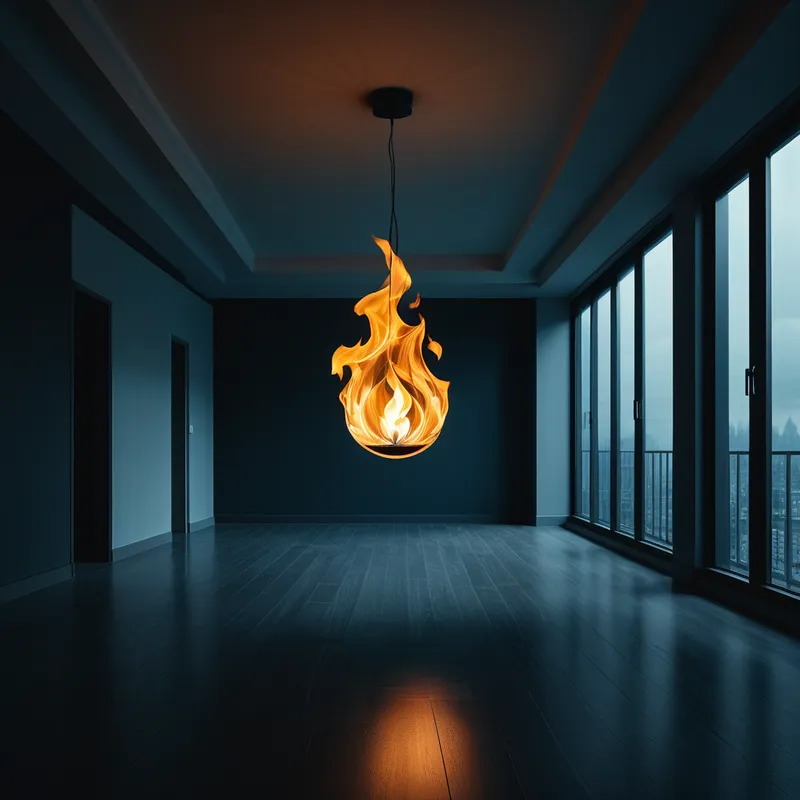
When this myth stirs in the modern unconscious, it often manifests in dreams of central, vulnerable fires. A dreamer may find themselves in a familiar house, but the only source of light is a small, precious fireplace they must constantly feed against a creeping cold. They may dream of being a guardian of a lone candle in a vast, windy hall, their body cupped around it to protect the flame. The somatic sensation is often one of acute anxiety mixed with profound focus—a tightness in the chest, a chill on the skin, paired with an intense, almost meditative concentration on the task.
Psychologically, this signals a process of centering. The ego is being called to its Vestal duty. The dreamer is likely in a life phase where their energy is scattered—pulled by career, relationships, social demands—and their essential core is being neglected. The dream is a compensatory image from the Self, insisting on the necessity of an inner sanctuary. The fear of the flame going out mirrors a very real, often unconscious, fear of psychic death: “If I lose touch with my center, what am I?”
Conversely, a dream of successfully relighting a fire from a pure, brilliant source (like sunlight focused through a lens) can follow a period of burnout or depression, symbolizing the first, fragile spark of genuine renewal, a connection regained not through willpower, but through grace and correct alignment.
Alchemical Translation
The individuation process modeled by Vesta’s myth is not one of heroic questing outward, but of sacred guardianship inward. It is the alchemy of containment and sustained attention.
The first operation is Recognizing the Hearth. One must identify what, within themselves, constitutes their sacred center. Is it a creative practice? A moral compass? A connection to nature? A sense of familial love? This is the temenos that must be ritually established and honored.
The second is the Vestal Vow. This is the conscious commitment to tend that center. It requires creating boundaries (the temple walls) and periods of withdrawal (the Vigil) to fuel the inner flame. It means sacrificing the diffuse, easy distractions of the world to maintain a focused, generative heat at the core of one’s being.
The ultimate alchemical vessel is not the flask, but the attentive mind. The fire transforms nothing but the one who watches it.
The crisis of Extinction is an inevitable part of the process. Life intrudes; vigilance fails. The alchemical translation here is crucial: this death is not a final failure, but a nigredo, a darkening necessary for renewal. The old, exhausted form of one’s devotion must die.
The final, transcendent operation is Solar Rekindling. This is the albedo. The ego, humbled by its failure, cannot fix the problem with its own tools. It must become a passive, polished mirror, aligning itself to reflect the light of the greater Self. The new flame is not a product of effort, but of correct orientation to the source. The fire that returns is the same, yet new—a consciousness reinvigorated from the depths, ensuring the continuity of the individual’s unique and sacred life. One becomes, simultaneously, the temple, the guardian, and the eternal flame.
Associated Symbols
Explore related symbols from the CaleaDream lexicon: