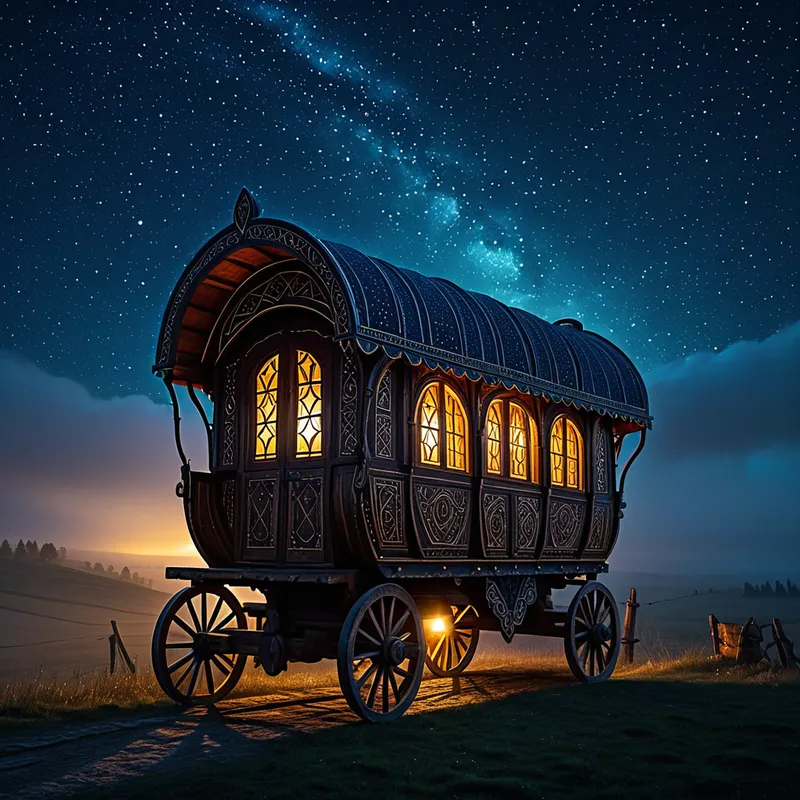
Vardo tradition Myth Meaning & Symbolism
The myth of the Vardo, a sacred wagon that carries the soul of a people, navigating the liminal space between the settled world and the open road.
The Tale of Vardo tradition
Listen, and let the dust of forgotten roads settle on your tongue. Let the scent of woodsmoke and turned earth fill your nostrils. This is not a story of a place, but of the space between places. It begins in the deep, resonant dark before dawn, when the world holds its breath.
In the beginning, there was the Road. It was not a path from here to there, but a living, breathing entity—a great, coiled serpent of possibility sleeping beneath the soil. And the people walked upon its back, but their steps were light, leaving no mark, for they had no vessel for their soul. Their songs scattered on the wind; their stories were swallowed by the rain. They were ghosts in their own lives, forever passing through.
Then, from the heart of the oldest forest, where roots remember the first fire, came the whisper. It was not a voice of god or spirit, but the groan of ancient wood, the memory of a tree that had witnessed all journeys. The whisper spoke to the master craftsman, a man whose eyes saw the shape of time in grain and knot. “Build not a house,” it murmured through the rustling leaves, “but a shell for the journey. A seed that carries its own soil. A Vardo.”
The craftsman worked with a fever dream in his bones. He did not cut wood; he persuaded it. He shaped the bowed roof like the vault of the sky they slept under. He carved the sides with stories of the fox and the moon, of the clever horse and the hidden spring. He painted it the color of twilight and dawn. He built a small, iron stove—a portable heart. And when he placed the final, curved step, the Vardo sighed. It was no longer an object, but a being. A Baxt slid into its joints, a protective spirit woven from intention and need.
Now, the people had a center that moved. The Vardo became the wheel around which their world turned. Inside its warm, oil-lit belly, generations were born, elders died, and tales were spun into a golden thread that connected them all. It traveled the hidden lanes, the forest tracks, the edges of settled lands. It knew the secret language of crossroads and the blessings of particular trees. The horse that pulled it was not a slave, but a partner in dialogue with the Road itself.
The great conflict was not with monsters or kings, but with the very concept of stopping. The settled world, with its stone walls and fixed maps, saw the Vardo and felt a deep unease. It was a reminder that not all souls are built for foundations. To them, it was a ghost; to its people, it was the only true home. The drama was in the turning of the wheels each season, the negotiation with borders both visible and invisible, the constant, gentle resistance against being pinned down, defined, and finally, erased.
The resolution is not an ending, for the road has none. It is the quiet moment at dusk, when the Vardo is drawn into a known clearing. The steps are let down, the fire is lit. The world outside may be strange, but inside, the smell of stew and the pattern of the wall-hangings are eternal. The Vardo holds the silence of the forest and the memory of last year’s meadow within its walls. It has translated the chaos of the journey into the poetry of the hearth. It continues, a world unto itself, rolling on through time, carrying its people safely through the long, beautiful night of history.
Cultural Origins & Context
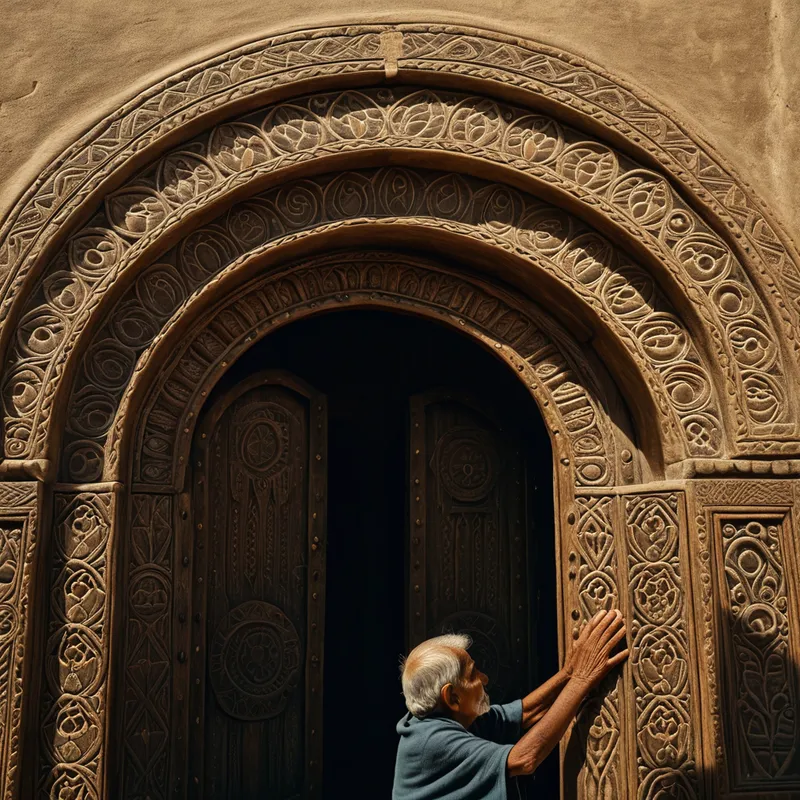
The Vardo is not merely a vehicle from Romani history; it is the central, tangible artifact of a diasporic epic. Its mythos emerged not from a single sacred text, but from the lived, collective experience of the Romani people as they migrated from the Indian subcontinent across Europe and beyond over centuries. The tradition crystallized most iconically in the 19th century in Britain, where the ornate, bow-topped wagon became a symbol of both cultural identity and social separation.
This myth was passed down not in temples, but in the intimate space the Vardo itself provided. Grandparents told stories by its stove, parents taught the rules of the road and the codes of conduct (Romanipen) within its walls. The wagon was the primary classroom and sanctuary. Its societal function was profound: it was a fortress of autonomy in a often-hostile world, a mobile bastion of language, custom, and family integrity. It physically enacted the core Romani values of freedom, adaptability, and the sacredness of the family unit (familia), while simultaneously marking its inhabitants as perpetual outsiders. The myth of the Vardo is thus a myth of resilience—a story about preserving a portable culture in a world that demands settlement and assimilation.
Symbolic Architecture
Psychologically, the Vardo is a supreme symbol of the psyche-in-motion. It represents the integrated Self as a process, not a fixed state.
The true home is not where you stop, but what you carry with you that remains unchanged at the core.
The wagon itself is a perfect image of the conscious ego-structure: a defined, bounded space (the individual personality) that is nonetheless on a journey through the vast, unconscious terrain of life (the open road). Its beautiful, intricate carvings are the persona—the crafted face shown to the world, rich with history and artistry. The sturdy, often hidden undercarriage and the resilient wheels are the strength of the ego, enduring hardship and adapting to changing ground.
The horse that pulls it symbolizes the instinctual, animal energy—the libido or life force—that propels the psyche forward. A well-cared-for horse in partnership with a skilled driver reflects a healthy relationship between our instinctual drives and our conscious direction. The road is the unknown, fate, the collective unconscious, and time itself. The Vardo’s journey is the individuation process: navigating between the opposites of freedom and security, movement and rest, the outer world and the inner sanctum.
The Dreamer’s Resonance
To dream of a Vardo is to dream of the soul’s vehicle. It often appears when one’s life feels either too rootless or too rigidly fixed. A modern dreamer might find themselves meticulously cleaning a dusty, forgotten Vardo in a garage, symbolizing a need to reconnect with a mobile, adventurous, or culturally distinct part of their identity they have neglected. They may dream of desperately trying to repair a broken wheel on a journey, reflecting anxiety about their ability to progress or adapt in waking life.
Conversely, dreaming of being safely inside a moving Vardo while a storm rages outside is a powerful image of maintaining inner integrity and emotional warmth amidst external chaos. The somatic feeling is often one of being gently rocked, a primal memory of safety in transit. If the Vardo in the dream is immobile, stuck, or being dismantled, it points to a profound psychological crisis where one feels their essential mode of being in the world—their way of navigating life—is under threat or has broken down. The dream calls for an inspection of one’s “inner wagon”: what traditions, values, and self-care practices (the stove, the carvings, the sturdy walls) are keeping your soul’s journey viable?
Alchemical Translation
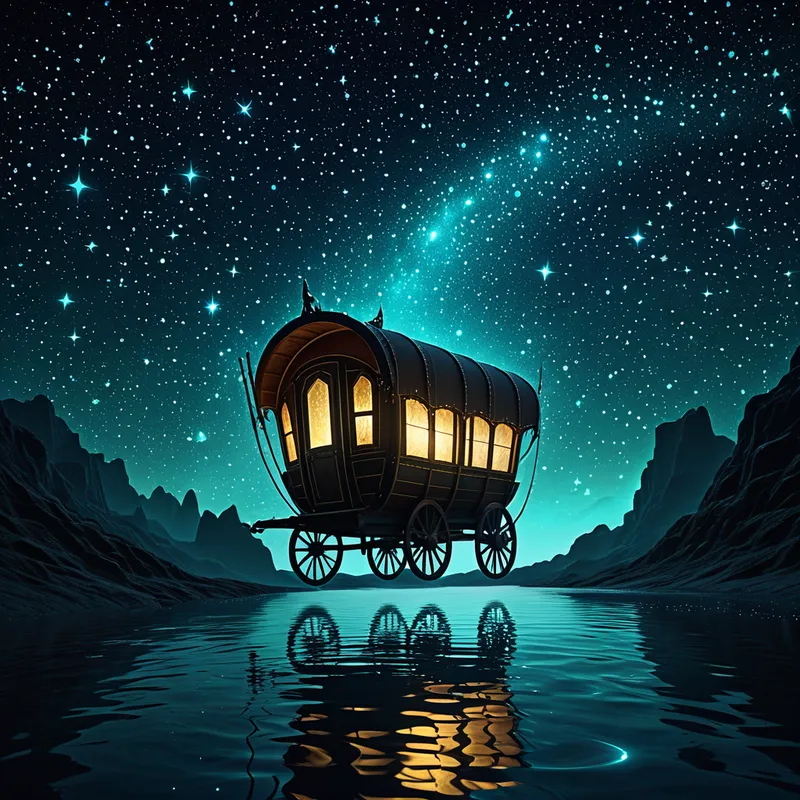
The alchemical work modeled by the Vardo myth is the transmutation of wandering into pilgrimage. It takes the base metal of forced migration, exclusion, and rootlessness and, through the sacred vessel of culture and family, turns it into the gold of purposeful journey, rich identity, and spiritual autonomy.
For the modern individual, the process begins with the construction of the vessel. This is the conscious work of building a resilient, beautiful, and functional psyche—defining your values (the carvings), establishing your boundaries (the walls), and kindling your inner warmth and creativity (the stove). The next stage is the yoking of the instinct. One must learn to harness their raw energy and desire (the horse) with respect and skill, directing it purposefully rather than being driven aimlessly.
The goal is not to reach a destination, but to achieve a state of moving wholeness.
The continual journey represents the acceptance of life as process. Storms (conflicts), beautiful vistas (joys), and tedious stretches (routines) are all part of the road. The alchemical “fixing” occurs not in arrival, but in the daily rituals of maintenance: the care for the wagon, the horse, and the travelers within. The ultimate gold produced is sovereignty—the ability to carry your sense of home, meaning, and law within you, making you authentically yourself regardless of the terrain. You become the craftsman, the driver, and the dweller of your own soul’s Vardo, rolling steadily through the mystery of your own existence, complete in your motion.
Associated Symbols
Explore related symbols from the CaleaDream lexicon: