Valley of the Shadow of Death Myth Meaning & Symbolism
A shepherd's psalm of walking through ultimate darkness, guided by an unshakeable presence, transforming terror into a path of profound trust.
The Tale of Valley of the Shadow of Death
Hear now the song of the walker in the deep places, the one who treads where light is a memory and stone holds its breath.
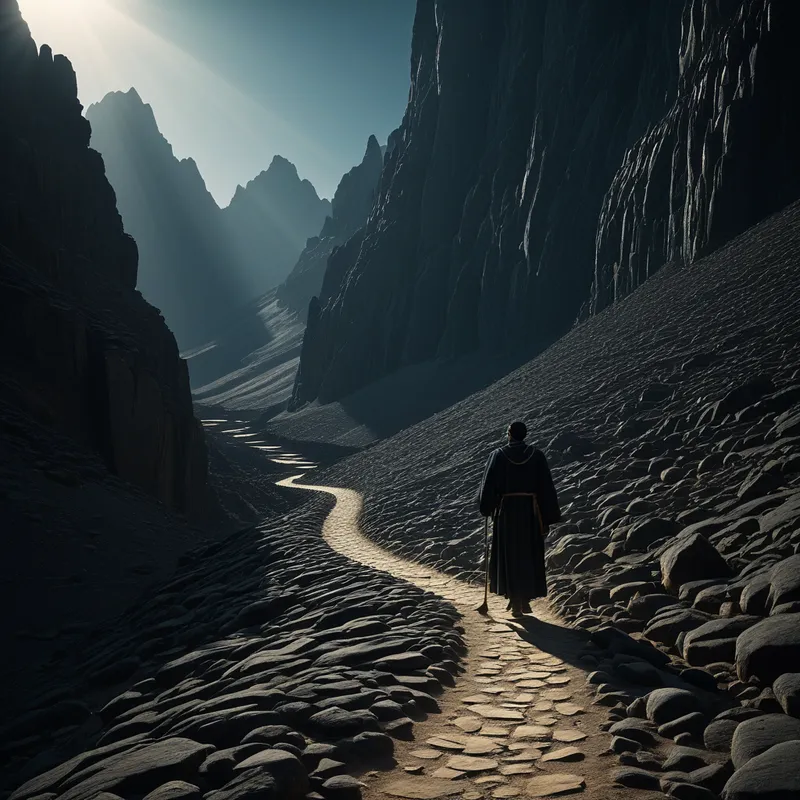
[The world](/myths/the-world “Myth from Tarot culture.”/) is not all green pastures and still waters. There is a place the sun forgets, a rent in [the earth](/myths/the-earth “Myth from Hindu culture.”/) where the mountains turn their backs and [the sky](/myths/the-sky “Myth from Persian culture.”/) is a thin, forgotten thread far above. This is the Valley of [the Shadow](/myths/the-shadow “Myth from Jungian culture.”/) of Death. Its floor is littered with the bones of those who walked alone, picked clean by the silence and the things that move within it. The air is cold, smelling of damp rock and a deeper, more ancient chill—the chill of absence. Shadows here are not mere lack of light; they are substance. They pool in the crevices, they cling to the cliffs like lichen, and they stretch across the path, long and grasping.
Into this place walks the shepherd. He is no armored king, no flashing hero with a named sword. He is a man of dust and flock, his hands familiar with wool and wood. His only weapon is a staff, his only comfort a rod. He does not run. He does not turn back. He walks. The scuff of his sandal on the scree is the only heartbeat in that vast, listening quiet.
The shadows thicken. They take form not of beast or demon, but of what-if and never-again. They whisper of the misstep on the loose stone, the hidden crevice, the ambush waiting in the blind turn. They are the shadow of lack, of abandonment, of an end met in utter loneliness. This is their kingdom, and their name is Terror.
Yet, the shepherd walks. His breath steadies. For he is not alone. A presence walks with him—not before, clearing the path, not behind, driving him on, but beside. It is a companionship so solid it becomes the only reality. The rod, once for directing sheep, now feels like a boundary against the formless dread. The staff, once a leaning post, feels like a promise of support that will not yield. The walker does not cease to see the shadows, to feel their cold breath. But he ceases to be defined by them. He walks through. Not around. Not above. Through.
And as he walks, a terrible and beautiful alchemy occurs. The valley does not change. The shadows do not flee. But the walker’s fear is transmuted, not into fearlessness, but into a profound and active trust. The path is completed. The far side is reached. And the memory of the valley is forever changed, not into a nightmare, but into a testament: I walked through the deepest dark, and I was not consumed.
Cultural Origins & Context
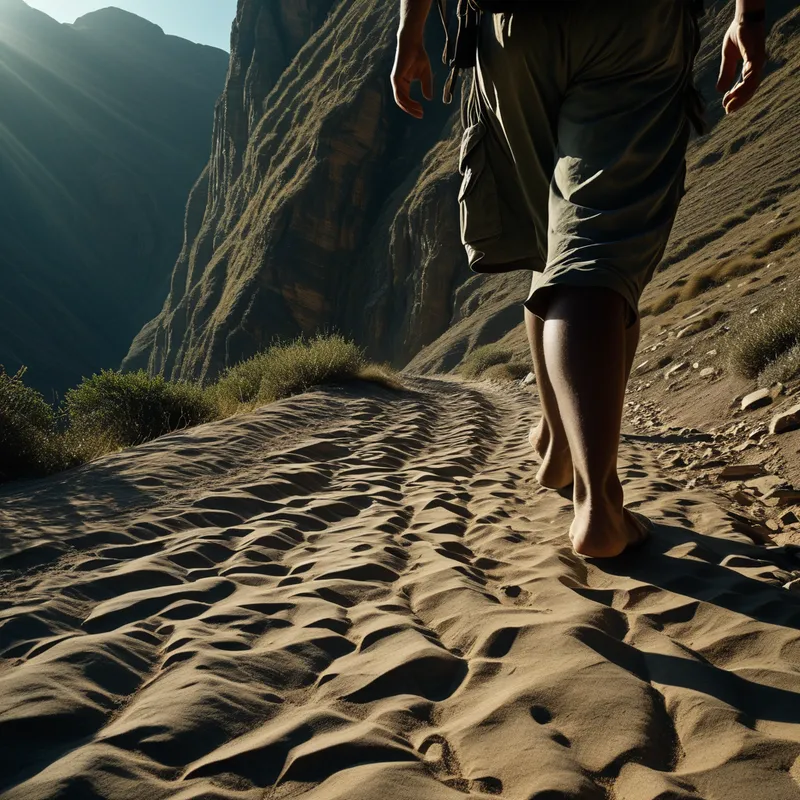
This is not a myth of grand cosmogony, but a psalm—a heart-song—attributed to David, a shepherd-king who knew both the solitude of the hills and the treachery of courts. It emerges from the lived experience of the ancient Near Eastern shepherd, for whom leading flocks through the literal wadis and canyons of Judah was a seasonal necessity fraught with real danger: flash floods, predators, bandits, and desolate, sunless stretches.
Its primary vessel is the Book of Psalms, specifically Psalm 23. It was crafted for oral recitation and musical accompaniment, meant to be sung, chanted, and internalized. Its societal function was multifaceted: it was a liturgical anchor for communal worship, a personal prayer for individuals in distress, and a profound piece of wisdom literature. It served as a cognitive and spiritual map for navigating suffering, teaching that the divine relationship was most powerfully experienced not in the removal of hardship, but in the unwavering companionship through it. It democratized heroism, suggesting that the ultimate trial was not slaying a giant, but walking through one’s own inner valley with trust.
Symbolic Architecture
The [Valley](/symbols/valley “Symbol: A valley often symbolizes a period of transition or a place of respite between two extremes.”/) is the ultimate [symbol](/symbols/symbol “Symbol: A symbol can represent an idea, concept, or belief, serving as a powerful tool for communication and understanding.”/) of the [Shadow](/symbols/shadow “Symbol: The ‘shadow’ embodies the unconscious, repressed aspects of the self and often represents fears or hidden emotions.”/) [realm](/symbols/realm “Symbol: The symbol of ‘Realm’ often signifies the boundaries of one’s consciousness, experiences, or emotional states, suggesting aspects of reality that are either explored or ignored.”/), not as a place of evil, but as a place of unknowns—of [mortality](/symbols/mortality “Symbol: The awareness of life’s finitude, often representing transitions, impermanence, or existential reflection in dreams.”/), [loss](/symbols/loss “Symbol: Loss often symbolizes change, grief, and transformation in dreams, representing the emotional or psychological detachment from something or someone significant.”/), failure, and all we instinctively flee. It is the psychological [terrain](/symbols/terrain “Symbol: Terrain in dreams often represents the landscape of one’s life, including challenges, opportunities, and feelings about one’s current circumstances.”/) of the dark [night](/symbols/night “Symbol: Night often symbolizes the unconscious, mystery, and the unknown, representing the realm of dreams and intuition.”/) of the [soul](/symbols/soul “Symbol: The soul represents the essence of a person, encompassing their spirit, identity, and connection to the universe.”/), depression, existential [crisis](/symbols/crisis “Symbol: A crisis symbolizes turmoil, urgent challenges, and the need for immediate resolution or change.”/), or profound [grief](/symbols/grief “Symbol: A profound emotional response to loss, often manifesting as deep sorrow, yearning, and a sense of emptiness.”/).
The shadow is not what we fear is there; it is the fear itself, given landscape.
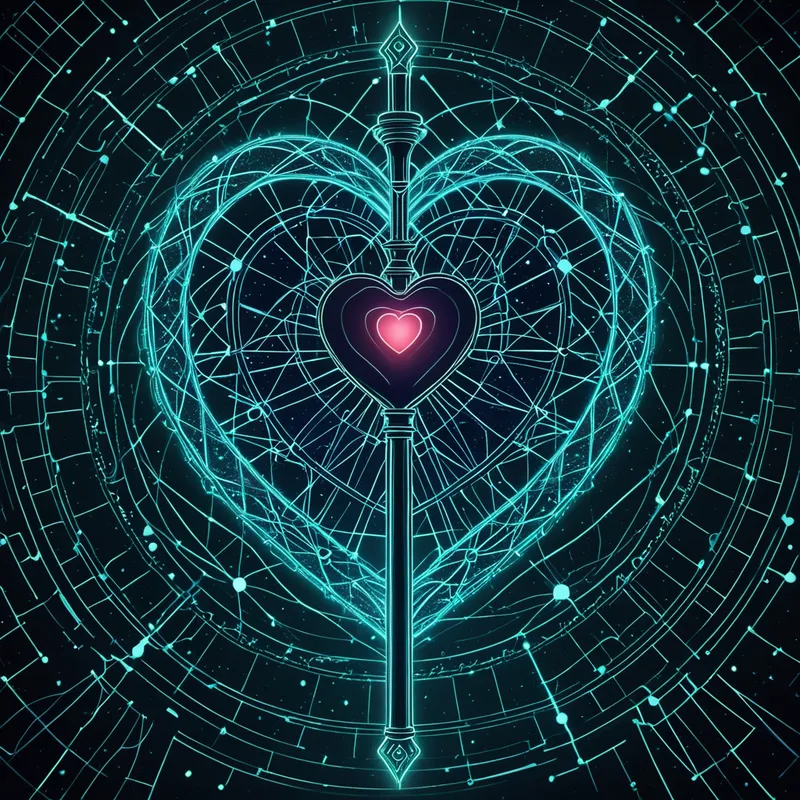
The [Shepherd](/symbols/shepherd “Symbol: A shepherd symbolizes guidance, protection, and the nurturing aspects of leadership, often reflecting the dreamer’s desire for direction or support.”/)/Walker is the conscious ego embarking on a necessary descent. He is not a conquering [hero](/symbols/hero “Symbol: A hero embodies strength, courage, and the ability to overcome significant challenges.”/), but a persisting one. His [action](/symbols/action “Symbol: Action in dreams represents the drive for agency, motivation, and the ability to take control of situations in waking life.”/) is not battle, but [passage](/symbols/passage “Symbol: A passage symbolizes transition, movement from one phase of life to another, or a journey towards personal growth.”/). The Rod and Staff are the dual aspects of a grounding, protective principle—the rod for setting boundaries (the “no” that protects [the self](/myths/the-self “Myth from Jungian culture.”/)), the staff for providing support (the “yes” that sustains it). They represent the internalized structures of [faith](/symbols/faith “Symbol: A profound trust or belief in something beyond empirical proof, often tied to spiritual conviction or deep-seated confidence in people, ideas, or outcomes.”/), principle, or [psyche](/myths/psyche “Myth from Greek culture.”/) that hold one together when external references vanish.
The critical symbol is the [Presence](/symbols/presence “Symbol: Presence in dreams often signifies awareness or acknowledgment of something significant in one’s life.”/). It is the experience of the Self accompanying [the ego](/myths/the-ego “Myth from Jungian culture.”/). The myth’s genius is that it does not promise the [dissolution](/symbols/dissolution “Symbol: The process of breaking down, dispersing, or losing form, often representing transformation, release, or the end of a state of being.”/) of the valley, but the transformation of the [relationship](/symbols/relationship “Symbol: A representation of connections we have with others in our lives, often reflecting our emotional state.”/) to the valley through an indestructible inner [connection](/symbols/connection “Symbol: Connection symbolizes relationships, communication, and bonds among individuals.”/).
The Dreamer’s Resonance
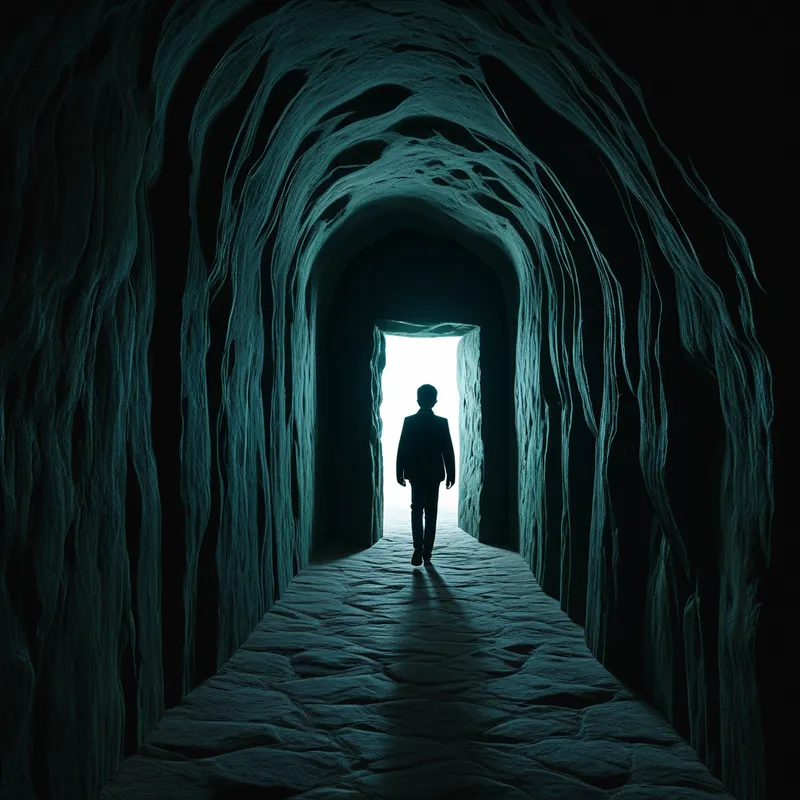
When this myth stirs in the modern dreamer, it often manifests as dreams of traversing terrifying yet compelling landscapes: endless underground tunnels, decaying familiar neighborhoods at night, or vast, empty institutional hallways. The somatic feeling is one of dread mixed with a strange, compelled forward motion.
Psychologically, this dream pattern signals that the individual is navigating a core existential threshold. The ego is being compelled to confront what it has avoided—a repressed memory, a denied aspect of personality, a looming life change, or the raw fact of one’s own fragility. The dream is not a warning to turn back, but a symbolic enactment of the process already underway. The feeling of a “presence”—perhaps a comforting figure, a guiding light, or simply a knowing that one is not alone in the dream—is the psyche’s assurance of the Self’s participation. The dream confirms: you are in the valley. And you are walking through.
Alchemical Translation
The alchemy of this myth is the transmutation of fear into trust, and of a paralyzing shadow into an integrated part of the soul’s journey. It models individuation not as a glorious ascent to a sunlit peak, but as a courageous descent into, and passage through, the personal [underworld](/myths/underworld “Myth from Greek culture.”/).
The first operation is Acceptance of the Descent. The conscious personality (the shepherd) must acknowledge the valley’s necessity. There is no bypass. Spiritual or psychological growth requires this confrontation with the non-ideal, the broken, the mortal.
The gold is not found by avoiding the leaden dark, but by submitting to the crucible of its embrace.
The second operation is the Activation of Inner Resources (the rod and staff). This is the recalling of one’s core values, disciplines, and supportive memories. It is the internal dialogue that says, “This is my boundary; that thought does not define me,” and “I have endured before; I can lean on that strength.”
The final and crucial operation is the Recognition of the Companion. This is the experience of the transcendent function—the emergence of a new, reconciling perspective from the tension between the ego and the shadow. The “presence” is the felt reality of the integrating psyche. One does not become fearless; one becomes faithful to the process itself. The valley, once integrated, ceases to be a place of terror and becomes a sacred passage, a testament to resilience. The individual emerges not unscathed, but fundamentally altered—wider, deeper, and possessing an authority born not of conquest, but of passage. They have walked through the shadow of death, and in doing so, have claimed a more fully lived life.
Associated Symbols
Explore related symbols from the CaleaDream lexicon: