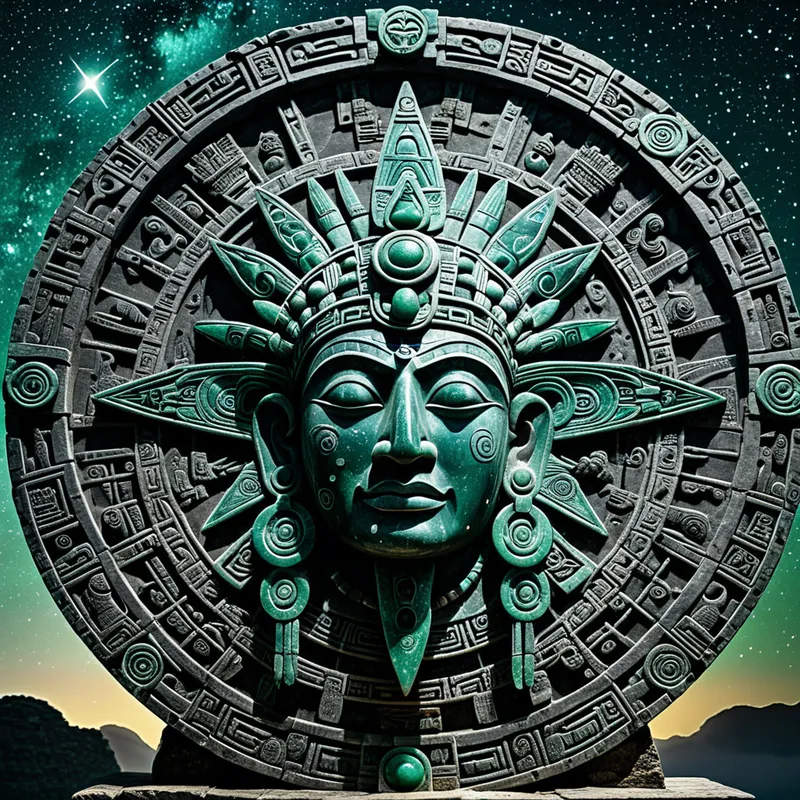
Uinal Myth Meaning & Symbolism
The myth of Uinal tells of the gods' sacrifice to create the 20-day month, establishing the sacred rhythm that binds humanity to the cosmos.
The Tale of Uinal
Listen. Before the count of days, there was only the great, silent breath of the cosmos. The gods, the K’uh, moved through a formless eternity. There was sun, but no dawn to mark its rising. There was moon, but no measure of its waxing. The world below was a lush, teeming chaos—a garden without a gardener, a song without a beat.
A longing grew in the heart of the divine. To witness not just being, but becoming. To see the story of life unfold in chapters, not as a single, overwhelming shout. But to tell a story, one needs words. To sing a song, one needs rhythm. And for rhythm, one needs time.
The gods gathered at the navel of the world, where the Wakah Chan pierces the layers of reality. Their council was not of war, but of profound offering. “What is the vessel that can hold the essence of life?” asked the Hun Hunahpu. “What is the thread that can connect the sprouting seed to the ripe ear, the birth cry to the elder’s wisdom?”
The Ix Chel, her silver hair flowing like a waterfall of stars, spoke softly. “The vessel must be sacred. The thread must be of our own substance. The sky observes, but does it feel? Let us give it a pulse.”
And so, they began the great alchemy. It was not a theft, but a gift. From the Chaac, they drew a tear of rain, the first unit—K’in, the sun day. From the Hun-Came, they drew a breath of the deep earth, the second. One by one, the deities offered a fragment of their own nature: a jaguar’s stealth, a wind’s whisper, a serpent’s wisdom, an eagle’s sight. Each essence was a unique flavor of existence, a note in a cosmic scale.
But nineteen essences lay upon the sacred slab, and the rhythm was incomplete. The song would not resolve. The vessel had no lid. A silent dread fell. A cycle must close to begin anew; a container must be whole to hold anything at all.
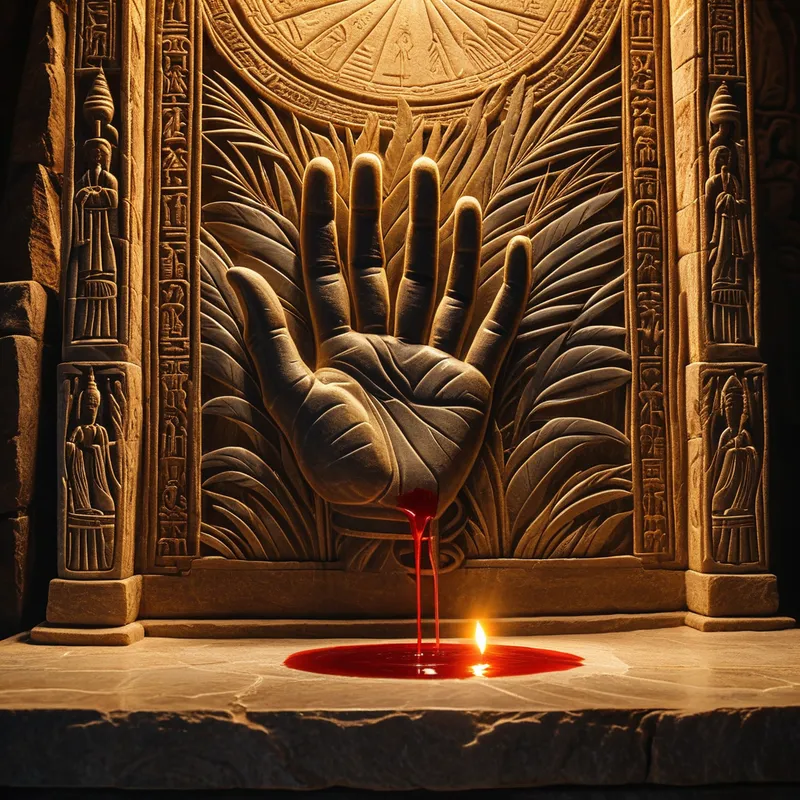
Then, the Itzamna, the lord of knowledge, who had given the glyph of writing, stepped forward. He had given form to thought. Now, he would give boundary to time. He did not draw from an external power. He placed his own hand upon the stone. “The vessel itself must be part of the offering,” he intoned. From the very concept of sacred order, from the law that binds the stars, he drew the twentieth essence. It was not an element, but the space between. The day of rest, of completion, of return. The day that makes all other days possible.
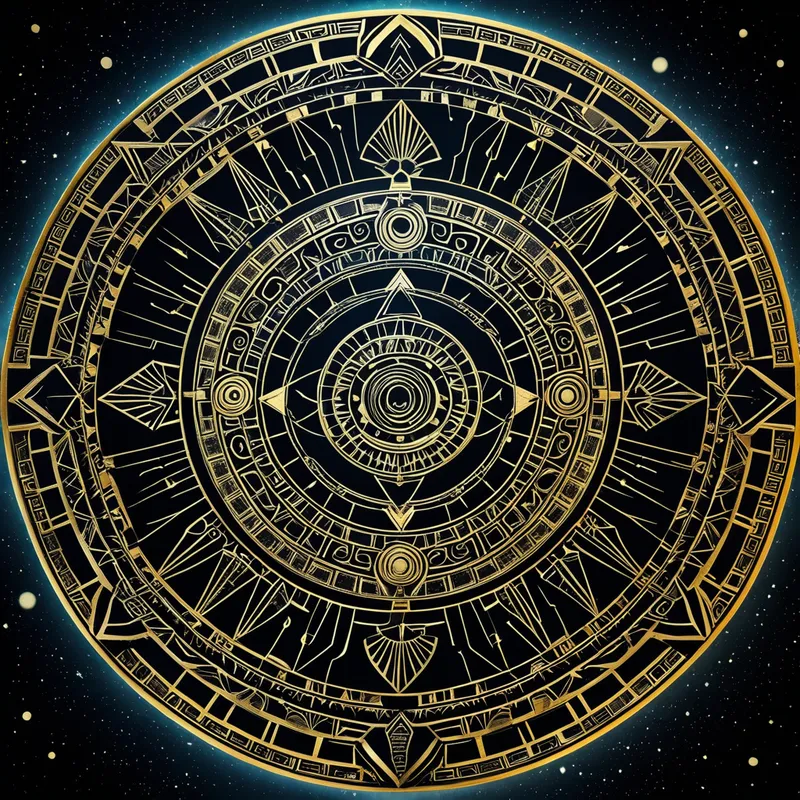
As this final essence joined the others, a thunderous, silent hum filled the cosmos. The nineteen active days swirled around the twentieth, the still point. They coalesced into a radiant wheel—the Uinal. It clicked into place within the great machinery of the heavens. And with that first, resonant click, the universe exhaled. Dawn broke on a day that had a name. The first human, molded from maize, felt a heartbeat that was now in time with the turning sky.
Cultural Origins & Context
The myth of the Uinal is not a singular story found in one codex, but the foundational logic embedded in the very bones of Mayan civilization—its calendars. It was passed down through the Ah Kin, the day-keepers, who were astronomers, historians, and mystics. For the Maya, time was not a linear river but a complex, sacred geometry. The Tzolk’in and the 365-day Haab’ interlocked like gears, and the Uinal was the essential cog in both.
This myth served a profound societal function: it sacralized the mundane. Planting, harvesting, rituals, markets, and governance were all conducted under the influence of specific, named days within the Uinal. Each of the twenty day-glyphs (like Imix, Ik, Ak’b’al) carried the essence of the divine sacrifice that created it. To live by the Uinal was to participate directly in the gods’ original act of cosmic ordering. It was a constant reminder that human life was woven into a divine tapestry of time.
Symbolic Architecture
At its core, the myth of the Uinal is about the creation of a meaningful container. Before the sacrifice, existence was pure potential—powerful, but chaotic and unarticulated. The gods’ offering transforms potential into pattern, chaos into cosmos.
The sacrifice of the gods is not a loss, but an investment of consciousness into the framework of reality. It is the act of giving form to the formless, which is the first and most fundamental creative act.
The nineteen active days represent the diverse energies of life: growth, conflict, love, decay, inspiration. The twentieth day is the critical, often overlooked, symbol of receptivity and integration. It is the Sabbath principle, the blank page, the silence after the note, the womb-space. It represents the psychological necessity of pause, reflection, and completion. Without this containing, restful principle, the other nineteen would be a frantic, unsustainable expenditure of energy leading to burnout and dissolution. The myth teaches that true order requires both expression and the sacred space that holds it.
The Dreamer’s Resonance
When this myth stirs in the modern unconscious, it often manifests in dreams of searching for order amidst chaos. One might dream of trying to assemble a broken clock whose gears are made of organic matter, or of being in a beautiful but overwhelming garden that desperately needs to be divided into plots. There is a somatic sense of being “out of sync”—a heartbeat that feels irregular, a breath that cannot find its rhythm.
Psychologically, this signals a process of individuation where the conscious ego is confronted with the rich, chaotic potential of the unconscious (the teeming garden). The dreamer is being called to become the Ah Kin of their own psyche. The struggle is to find the personal “twenty essences”—the unique combination of talents, traits, and experiences that define one’s character—and, crucially, to discover the twentieth: the sacred boundary, the capacity for rest and integration that allows the personality to cohere into a sustainable, rhythmic whole.
Alchemical Translation
The alchemical journey modeled by the Uinal myth is the transmutation of chronos (clock time) into kairos (sacred, opportune time). For the modern individual, the “formless eternity” is the undifferentiated mass of societal expectations, digital noise, and internal drives. The “gods” are the archetypal potentials within us: the inner warrior, lover, sage, and caregiver.
The sacrifice is the difficult, conscious work of discernment and limitation. It is choosing which twenty “essences” will form the structure of your life’s purpose, and willingly giving up the illusion of doing and being everything. It is carving out your unique Uinal from the block of possibility.
The final, twentieth essence—the space of completion—is the most crucial alchemical ingredient. It is the conscious practice of introspection, rest, and release. In psychological terms, it is the transcendent function, the internal process that reconciles opposites and generates new, more whole states of being.
The triumph is not in endless activity, but in achieving a self-created rhythm. It is the moment your life stops feeling like a frantic reaction to external demands and starts feeling like a sacred, cyclical ceremony—where each phase of effort is naturally followed by a phase of integration, and where the completion of one cycle cleanly prepares the ground for the next. You become both the sacrificer and the vessel, living in a time of your own divine making.
Associated Symbols
Explore related symbols from the CaleaDream lexicon: