Typhon Myth Meaning & Symbolism
The ultimate monster born of primordial chaos, Typhon challenged Zeus for cosmic rule, embodying the raw, untamed forces of nature and the unconscious.
The Tale of Typhon
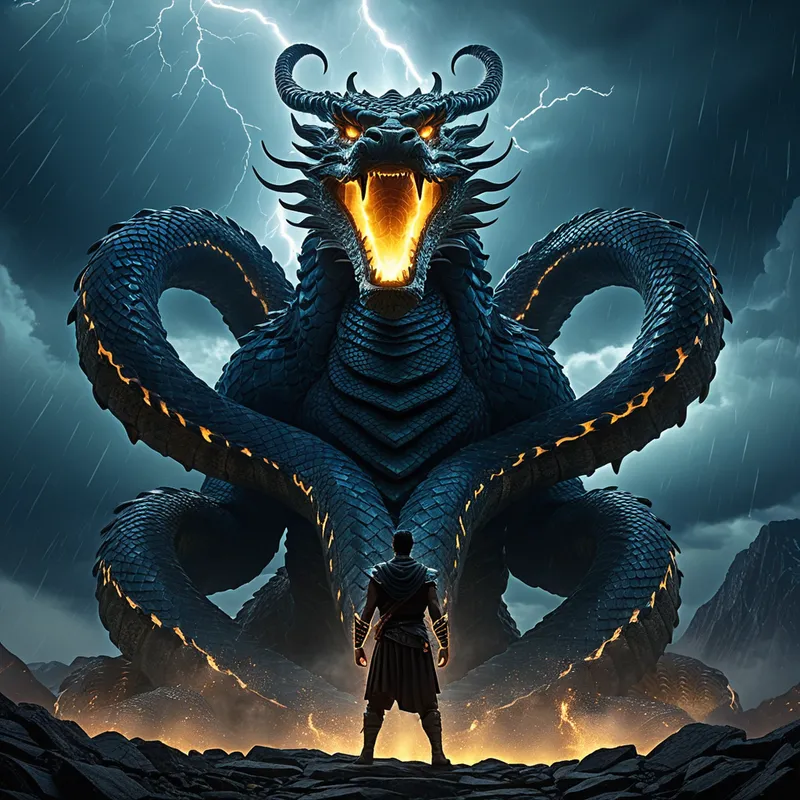
Listen, and hear the tale of the last great terror, the final child of the ancient dark. After [the Titans](/myths/the-titans “Myth from Greek culture.”/) were bound in [Tartarus](/myths/tartarus “Myth from Greek culture.”/), [the Earth](/myths/the-earth “Myth from Hindu culture.”/), Gaia, groaned in fury. From her deepest wounds, in the shadowed caves of Cilicia, she brought forth her most dreadful son: Typhon.
He was not a god like the others. He was a storm given flesh, a cataclysm given will. From the thighs down, he was a tangle of colossal viper coils, hissing and crushing the stone beneath. Where a man’s head should be, a hundred serpent heads sprouted, each with black, forked tongues and eyes that glowed like embers. Their voices were a cacophony—the roar of lions, the bellow of bulls, the sharp bark of hounds, and the piercing hiss of serpents, all woven into a sound that froze the blood. Fire blazed from every mouth.
The very air curdled as he rose. The gods of Olympus saw him ascend and, for the first time since the war with the Titans, knew true fear. They fled, transforming into animals to hide their divine shame. Only Zeus stood firm, his brow thunderous, the master bolt crackling in his grip.
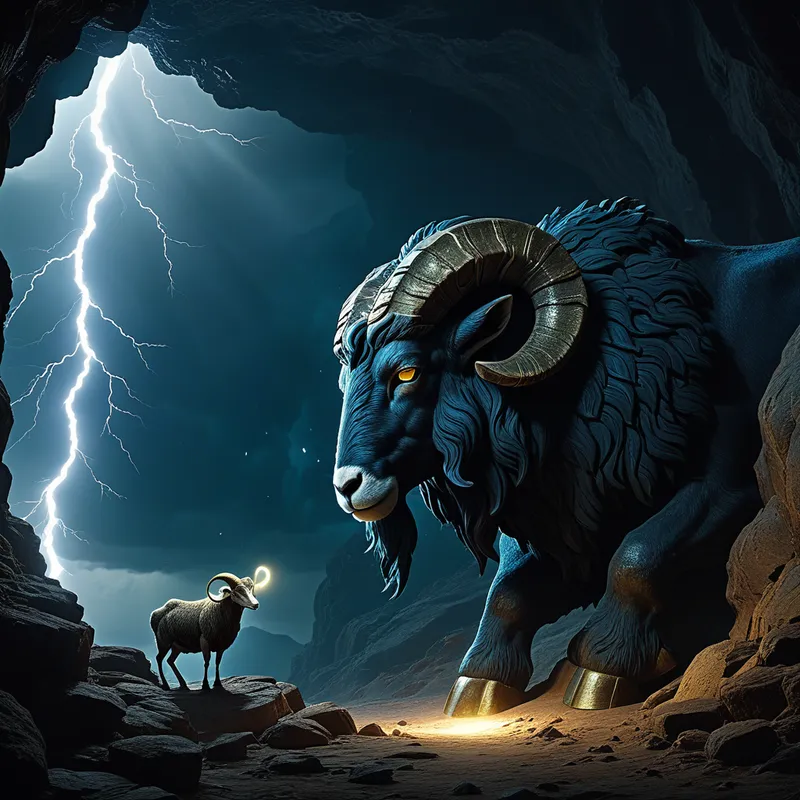
The battle shook the pillars of [the world](/myths/the-world “Myth from Tarot culture.”/). Typhon tore mountains from their roots and hurled them like stones. He wrapped his serpent-limbs around Zeus, wresting the thunderbolt from his hand, and with a searing tendril, cut the sinews from the god’s hands and feet. He imprisoned the crippled Zeus in a cave, a hidden, damp prison, and set the she-dragon Delphyne to watch over him.
Hope seemed as dead as the silent god. But cunning [Hermes](/myths/hermes “Myth from Global/Universal culture.”/) and the great Pan searched the desolate land. They found [the cave](/myths/the-cave “Myth from Platonic culture.”/), they tricked the guardian, and they stole back the divine sinews, stitching them once more into Zeus’s limbs. Power returned, flooding his veins with lightning.
The final confrontation was the birth-cry of the world’s order. Zeus, restored and wrathful, pursued Typhon across the earth, his bolts carving new seas and scarring continents. He drove the monster to the very edge of the world, to the volcanic plains of Sicily. There, with a final, cataclysmic strike, he pinned the monstrous form beneath the weight of the mountain Aetna. Typhon’s fire became the volcano’s eternal flame, his struggles the earthquakes that still tremble through the land. The last child of chaos was bound, and the reign of the Olympian order was sealed in thunder.
Cultural Origins & Context
The myth of Typhon is a foundational boundary story, emerging from the complex layering of Greek myth. Its earliest known telling comes from Hesiod’s Theogony, an 8th-century BCE epic that sought to catalog the genealogy and authority of the gods. Here, Typhon is the final, most dangerous opponent of Zeus, a narrative capstone that solidifies the Olympian regime after the overthrow of the Titans.
Scholars, such as the late Walter Burkert, have noted the myth’s likely origins in Near Eastern antecedents, particularly the Hittite myth of the storm god battling the serpent Illuyanka. For the ancient Greeks, Typhon represented not just a monster, but the ultimate “other”—the chaotic forces of the natural world that their burgeoning philosophy and city-state structure sought to comprehend and control. The story was told not merely for entertainment, but as a cosmological explanation for volcanic activity, earthquakes, and terrifying storms, phenomena that were literally the breath and thrashing of the imprisoned giant. It served a societal function of reinforcing the necessity of divine (and by extension, human) order (cosmos) over primal, annihilating disorder (chaos).
Symbolic Architecture
Typhon is the embodied [Shadow](/symbols/shadow “Symbol: The ‘shadow’ embodies the unconscious, repressed aspects of the self and often represents fears or hidden emotions.”/) of the Olympian [pantheon](/myths/pantheon “Myth from Roman culture.”/), and by extension, of the conscious, ordering [psyche](/myths/psyche “Myth from Greek culture.”/). He is not evil in a moral sense, but represents the totality of what has been repressed to create a stable [identity](/symbols/identity “Symbol: Identity represents the sense of self, encompassing personal beliefs, cultural background, and social roles.”/). He is the unintegrated rage, the volcanic [passion](/symbols/passion “Symbol: Intense emotional or physical desire, often linked to love, creativity, or purpose. Represents life force and deep engagement.”/), the instinctual [chaos](/symbols/chaos “Symbol: In Arts & Music, chaos represents raw creative potential, uncontrolled expression, and the breakdown of order to forge new artistic forms.”/) that civilization—and the conscious ego—must [wall](/symbols/wall “Symbol: Walls in dreams often symbolize boundaries, protection, or obstacles in one’s life, reflecting the dreamer’s feelings of confinement or security.”/) away to exist.
The monster buried under the mountain is not destroyed; its fire becomes the creative and destructive furnace of the world. To deny the Shadow is to live atop a volcano, ignorant of the power that sustains and threatens you.
Zeus’s initial defeat is critical. It signifies the inevitable [moment](/symbols/moment “Symbol: The symbol of a ‘moment’ embodies the significance of transient experiences that encapsulate emotional depth or pivotal transformations in life.”/) when [the ego](/myths/the-ego “Myth from Jungian culture.”/)’s constructed order is overwhelmed by the raw power of the repressed. The theft of his sinews—the very connectors of power and [action](/symbols/action “Symbol: Action in dreams represents the drive for agency, motivation, and the ability to take control of situations in waking life.”/)—shows that when [the Shadow](/myths/the-shadow “Myth from Jungian culture.”/) rises, it paralyzes the conscious will. The [rescue](/symbols/rescue “Symbol: The symbol of rescue embodies themes of salvation, support, and liberation from distressing circumstances.”/) by Hermes ([trickster](/symbols/trickster “Symbol: A boundary-crossing archetype representing chaos, transformation, and the subversion of norms through cunning and humor.”/) intelligence) and Pan (instinctual, untamed [nature](/symbols/nature “Symbol: Nature symbolizes growth, connectivity, and the primal forces of existence.”/)) reveals that [the ego](/myths/the-ego “Myth from Jungian culture.”/) cannot reintegrate [the Shadow](/myths/the-shadow “Myth from Jungian culture.”/) alone. It requires guile and a reconnection with the primal, non-oppositional aspects of the psyche.
The Dreamer’s Resonance
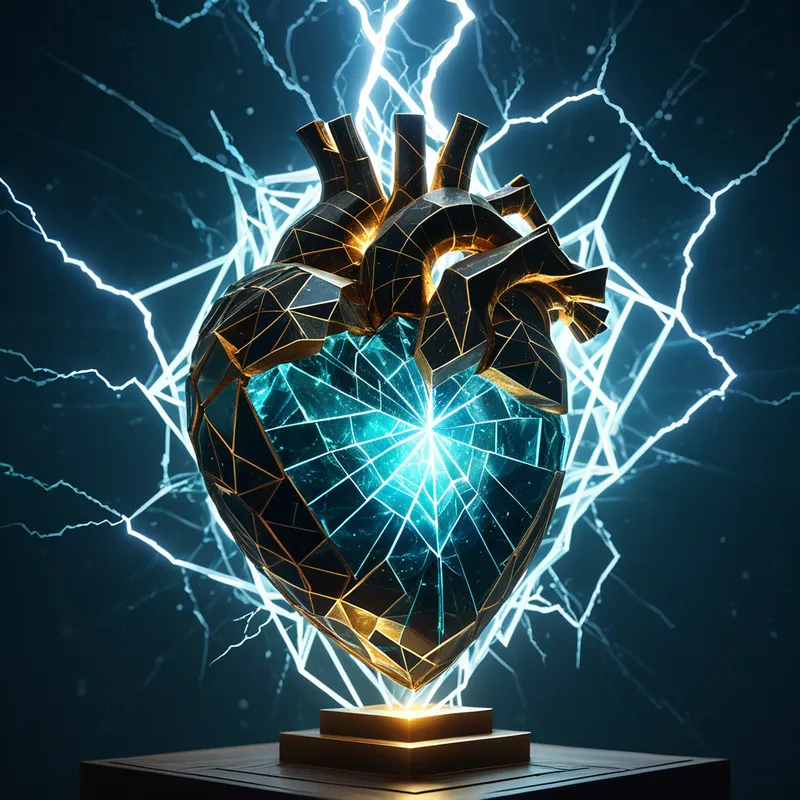
When the pattern of Typhon stirs in the modern dreamscape, it heralds a profound somatic and psychological upheaval. This is not a dream of a simple monster, but of a geological event within the soul. The dreamer may experience landscapes cracking open, cities being swallowed by tidal waves of mud or fire, or being pursued by a force that is simultaneously a storm, an earthquake, and a beast.
Somatically, this can correlate with periods of intense anxiety, unexplained panic, or a feeling of being “shaken to the core.” Psychologically, it indicates that a long-buried complex—perhaps a foundational rage, a tidal grief, or a denied wildness—has gained critical mass and is demanding recognition. The dream-ego, like Zeus, may feel its power (its “sinews”) stolen, leading to waking life experiences of paralysis, depression, or a sense of being controlled by an unknown inner force. The dream is the psyche’s violent, necessary announcement: the foundation must be shaken for a new, more authentic structure to be possible.
Alchemical Translation
The myth of Typhon models the alchemical stage of [nigredo](/myths/nigredo “Myth from Alchemical culture.”/)—the blackening, the putrefaction, the confrontation with the [prima materia](/myths/prima-materia “Myth from Alchemical culture.”/) in its most chaotic and terrifying form. The process of individuation is not a gentle path of self-improvement; it is, at times, a cataclysmic battle for the sovereignty of [the Self](/myths/the-self “Myth from Jungian culture.”/).
The journey begins with the inflation of the conscious attitude (the Olympian order), which inevitably generates its monstrous opposite in the unconscious. The ego’s defeat is not a failure, but the necessary dissolution of its tyranny. The “cave” where Zeus is imprisoned is the [vas hermeticum](/myths/vas-hermeticum “Myth from Alchemical culture.”/), the sealed [vessel of transformation](/myths/vessel-of-transformation “Myth from Alchemical culture.”/) where the old king must be humbled and stripped of his false trappings.
The lightning bolt must be lost before it can be truly wielded. Only by having our defining power stolen can we learn its true source.
The retrieval and restoration by Hermes and Pan symbolize the activation of transcendent functions—cunning and instinct—that operate beyond the ego’s binary battle. The final binding of Typhon under Aetna is the alchemical coagulatio: the fixation of the volatile spirit. The chaotic energy is not eliminated; it is harnessed, its fire transformed into the engine of creation (the volcano’s fertile soil) and the source of the soul’s tremors (earthquakes of continued growth). The modern individual undergoing this transmutation moves from being a ruler terrified of rebellion to becoming a sovereign who understands that their power and creativity are fed by the very chaos they have integrated. The monster becomes the foundation.
Associated Symbols
Explore related symbols from the CaleaDream lexicon: