Triptolemus' Plow Myth Meaning & Symbolism
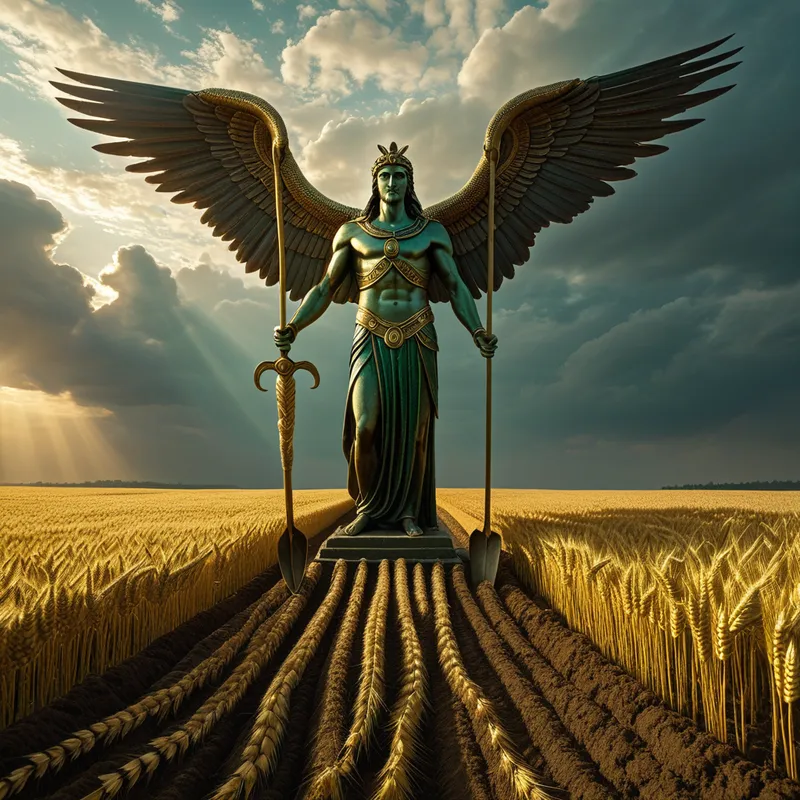
Demeter gifts a winged, serpent-drawn plow to Triptolemus, sending him across the world to teach humanity the sacred art of agriculture and civilization.
The Tale of Triptolemus’ Plow
Hear now the story not of a warrior’s sword, but of a farmer’s blade—a blade that cuts the earth to give life, not take it. It begins in the deep, grieving heart of the goddess Demeter. Her daughter, the radiant Persephone, had been swallowed by the dark maw of the underworld. In her wrath and sorrow, Demeter cast a pall over the world. Seeds shriveled in the furrow. The green earth hardened into a tomb of dust. Humanity trembled on the brink of a silent, starving extinction.
In the royal house of Eleusis, a mortal child named Triptolemus lay near death, another victim of the great famine. His parents, the king and queen, had shown the disguised goddess kindness. Moved by their piety and the boy’s innocence, Demeter laid her immortal hands upon him. She breathed not just life back into his lungs, but a purpose into his soul. She anointed him as her chosen one.
When Persephone was restored to the light for part of the year, and the world bloomed again in hesitant joy, Demeter’s work was not finished. The memory of hunger was a fresh scar on the soul of humanity. She summoned Triptolemus to a sun-drenched field outside Eleusis. There, she presented him with her most profound gift.
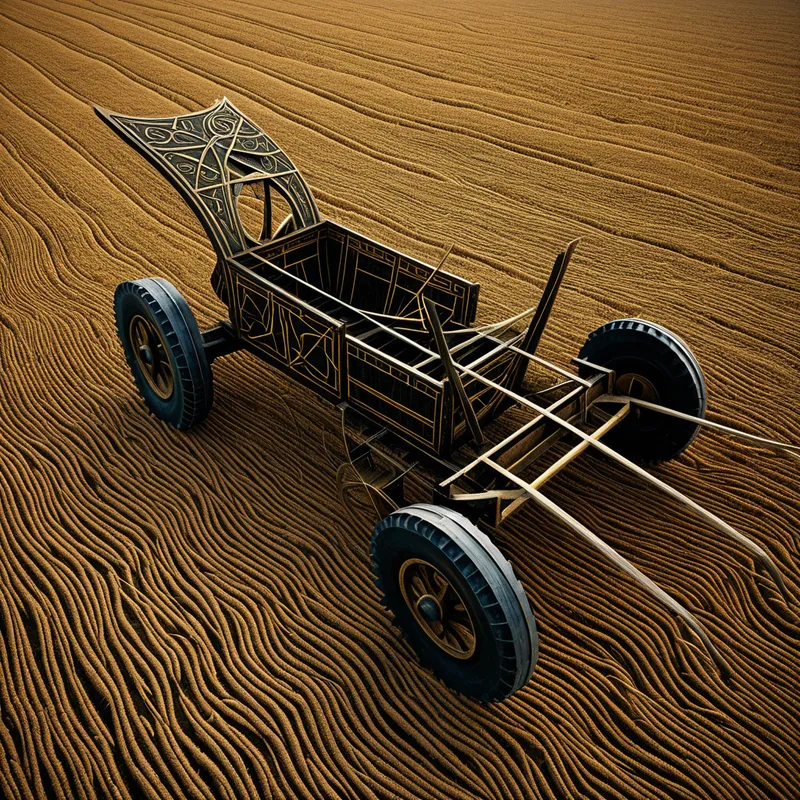
It was a plow, but unlike any carved by mortal hands. Fashioned of polished oak and gleaming bronze, it was a vessel of sacred technology. And it was alive. From its yoke, two great serpents—embodiments of chthonic wisdom and regenerative power—coiled and hissed, ready to pull. Most wondrous of all, from its sides sprouted vast, feathered wings, like those of a divine eagle.
“Go,” commanded the goddess, her voice the rustle of ripe barley. “Take this gift. Take these seeds of wheat. Do not hoard them for your own field. You are to be my herald. Fly across the wide earth. Teach all peoples, from the rising to the setting sun, the sacred art of the furrow, the secret of the seed, the holy rhythm of sowing and reaping. Where you go, wilderness shall become home. Hunger shall become harvest.”
And so Triptolemus mounted the miraculous plow. The serpents surged forward; the great wings beat the air. He became a flying sower, a celestial farmer. He crisscrossed the continents, descending to kings and commoners alike. He showed calloused hands how to break the unyielding sod, how to place the golden kernel in the dark womb of the earth, how to trust the unseen growth. He taught not just technique, but a covenant: tend the earth, and it will tend to you. Some say he completed his world-spanning mission. Others whisper that he still flies, in the form of the first swallow of spring, or in the spirit of any who turn the soil with reverence.
Cultural Origins & Context
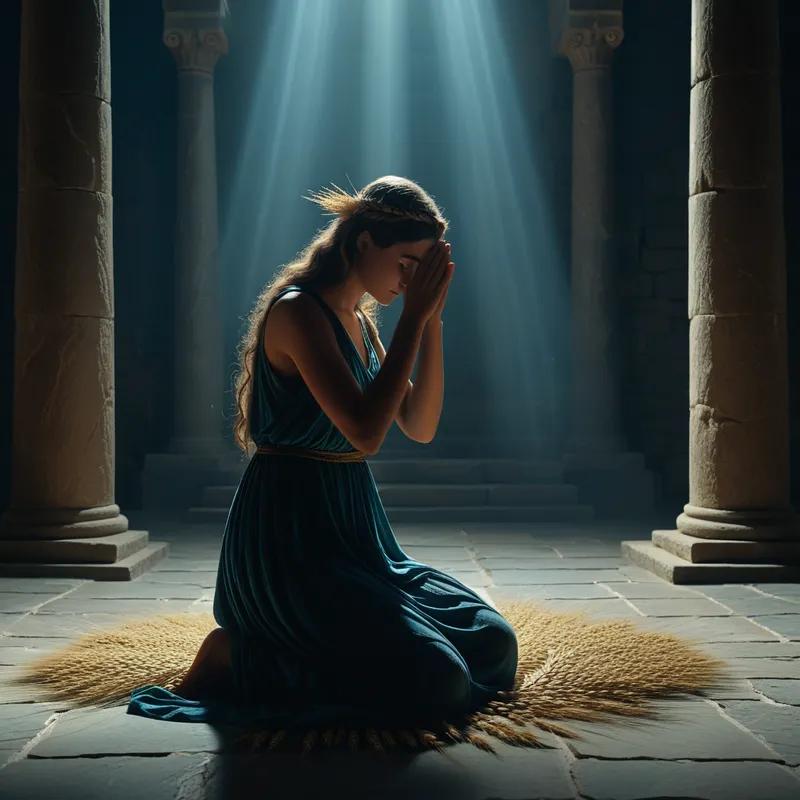
This myth is inextricably woven into the fabric of the Eleusinian Mysteries, the most sacred and revered initiatory cult of the ancient Greek world. For nearly two millennia, initiates—from slaves to emperors—traveled to Eleusis to partake in rites that promised knowledge concerning the afterlife and the cycle of life and death. Triptolemus was not merely a folktale hero here; he was a central figure in the hieros logos, the sacred story reenacted.
The myth functioned as a divine charter for Greek civilization itself. It answered the profound question: how did we transition from nomadic scavengers and hunters to settled, grain-growing communities? The answer was not mere human ingenuity, but a theodosia—a gift from the gods. Agriculture, the foundation of city, law, and culture (polis, nomos, paideia), was thus sanctified. It placed human work within a cosmic order governed by Demeter’s law. The myth was told in hymns, depicted on sacred vessels, and carved into temple reliefs, most famously on the great Telesterion at Eleusis, ensuring its passage from the Bronze Age into the heart of the classical world.
Symbolic Architecture
At its core, Triptolemus’ Plow represents the archetypal moment where raw, undifferentiated nature (chaos/the wilderness) is consciously engaged and transformed into cultivated, life-sustaining order (cosmos/the field). It is the primordial act of consciousness imposing purposeful pattern upon the fertile but chaotic ground of being.
The plowshare is the first question asked of the earth, and the furrow is the earth’s long, thoughtful reply.
The plow itself is a perfect symbol of hieros gamos—the sacred marriage. The masculine, penetrating share (bronze, crafted, directed) enters the receptive, feminine earth (soil, dark, nurturing) to instigate creation. The winged ascent signifies this is no mundane chore, but a spiritual vocation that elevates both the laborer and the land. The serpent-drawn chariot is profoundly alchemical: the serpent, a creature of the underworld (instinct, the unconscious, death-and-rebirth), is harnessed in service of a celestial purpose (conscious cultivation, growth, civilization). It represents the taming and utilization of our deepest, often chthonic, psychic energies for a creative, life-affirming goal.
Triptolemus himself is the archetype of the initiated mortal. He is the vessel (pistos) chosen by the goddess. He does not invent; he receives and disseminates. He is the prophet of the grain, the first teacher, modeling the role of the one who mediates between divine gift and human need.
The Dreamer’s Resonance
When this myth stirs in the modern dreamer, it often signals a profound inner process of cultivation. To dream of a plow, especially an ancient or magical one, points to a readiness to “break new ground” in the psyche. The untamed field in the dream is the dreamer’s own latent potential, overgrown with the weeds of old habits, unprocessed emotions, or neglected talents.
The somatic sensation is often one of resistance—the feeling of the plowshare catching on a root or a stone. This is the psyche’s natural resistance to being turned over, to having its hidden layers exposed to the light of consciousness. Dreaming of sowing seeds after plowing indicates a hopeful, generative phase where new ideas, projects, or aspects of self are being planted. Dreaming of the winged plow in flight suggests the dreamer is recognizing their life’s work or a core purpose as something sacred and transcendent, lifting them above petty concerns.
Conversely, dreaming of a broken plow or barren furrows may speak to a feeling of creative impotence, a disconnection from one’s “fertile ground,” or a sense that one’s efforts are not blessed or supported by a deeper, instinctual wisdom (the missing or hostile serpents).
Alchemical Translation
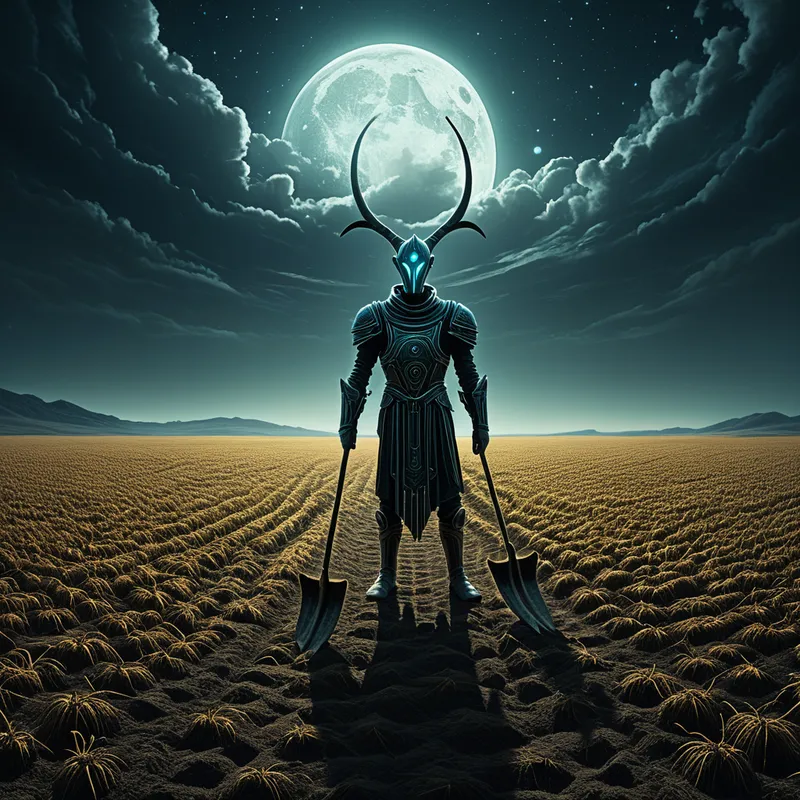
The journey of Triptolemus is a masterful map for the modern individuation process. It begins in the nigredo—the blackening. This is the famine, the personal “fallow period” of depression, loss, or meaninglessness, where the old ways of being yield no nourishment. The encounter with Demeter is the crucial moment of grace or insight—often through therapy, art, nature, or crisis—where a new, nourishing principle enters the psyche and chooses us for a task.
Individuation is not about finding oneself in the wild, but about learning to cultivate the self one has been given.
Receiving the plow is the act of accepting one’s unique tool or vocation. It is the recognition of our inherent “technology” for working on the raw material of our soul. The alchemical work is in the harnessing: we must yoke our serpentine instincts—our passions, our shadows, our primal drives—to this tool. We do not kill them; we direct their immense power.
The flight across the world symbolizes the application of this inner work to all domains of life (the “four corners of the self”). We teach ourselves agriculture. We learn to sow our time, our love, our attention with intention, and to wait with faith for the harvest. The ultimate goal is not to possess a private, hoarded garden, but to become a sower in the world, contributing to the psychic and cultural fertility of our community. In the end, the myth teaches that civilization of the soul mirrors the civilization of the field: both are sacred acts of partnership between conscious will and the mysterious, generative dark.
Associated Symbols
Explore related symbols from the CaleaDream lexicon: