Tikkun Olam Repair of the World Myth Meaning & Symbolism
A myth of divine light, cosmic shattering, and the human calling to gather the scattered sparks and mend a broken world through sacred action.
The Tale of Tikkun Olam Repair of the World
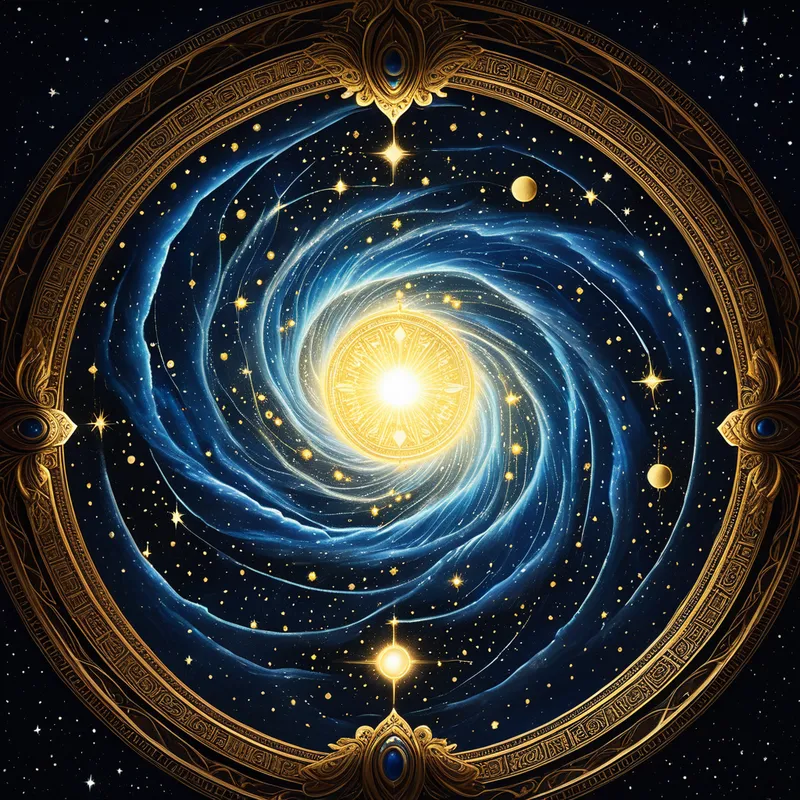
In the beginning, before beginnings were counted, there was only the Infinite. Ein Sof. A presence so boundless, so complete, that there was no room for anything else—no world, no story, no other. To make a place for creation, Ein Sof contracted. It drew in its breath, creating a hollow, a womb of potential within the endless light. Into this void, it poured a single, radiant ray of itself.
From this ray, vessels were formed. Ten sacred vessels, crafted to hold the streaming, effulgent light of the Divine. They were made to receive, to contain, to give form to the formless. The light poured forth, a river of pure essence, singing with the names of all things that ever would be. But the light was too potent, too fierce with the desire to be given. The vessels, yearning to hold it all, could not withstand the glory.
A great cry echoed through the unborn cosmos. The vessels shattered.
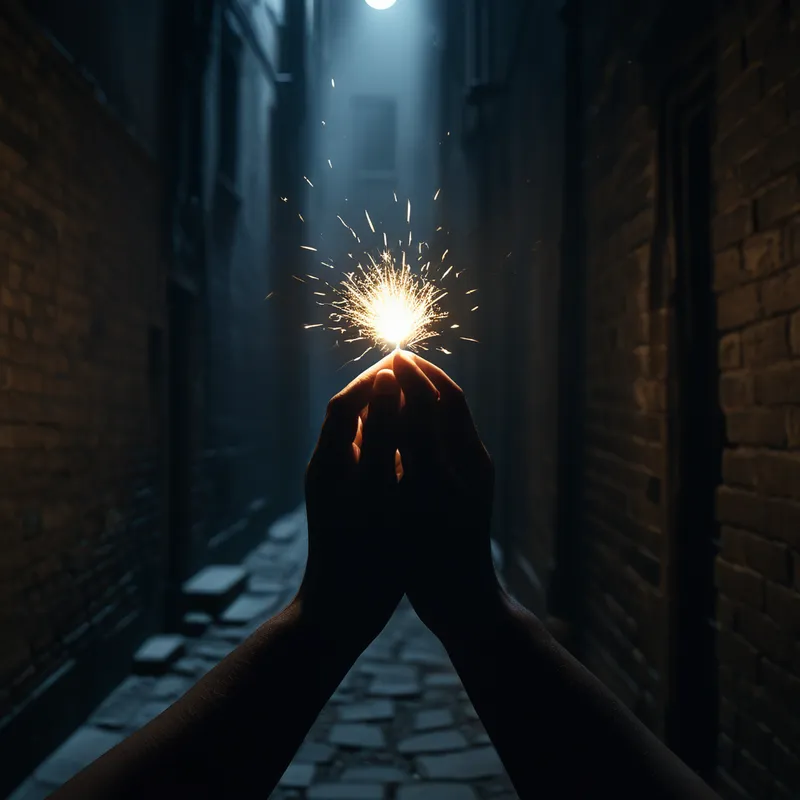
Not a clean break, but a catastrophic bursting. Shards of the vessels, now heavy with the residue of divine light, were flung into the farthest, darkest reaches. And the light itself—it scattered. It fractured into ten thousand times ten thousand sparks, each a fragment of the original radiance. They fell like a rain of silent stars, embedding themselves in the debris of the broken vessels. The holy light became trapped, buried in the shells of its own intended home. The world was born from this cataclysm—a world of fragments, a cosmos where holiness is hidden within husks of darkness, where every stone and leaf holds a captive spark waiting to be found.
And then, a whisper within the silence. A new decree, not of formation, but of redemption. Humanity was placed within this broken world. Your hands, your eyes, your every mundane act—these are now the tools of a cosmic repair. You are not here by accident, but by sacred design. You are the gatherer of the lost light. With every act of kindness, justice, and conscious beauty, you lift a spark. With every choice that honors the hidden divinity in the other, in the earth, in yourself, you mend a shard. The world is broken, yes. But it is yours to repair. The work is called Tikkun Olam. It began with a shattering. It continues with your next breath.
Cultural Origins & Context
The myth of Tikkun Olam finds its most elaborate and mystical expression in the Zohar and the teachings of the 16th-century mystic Isaac Luria and his school in Safed. This narrative, known as the Shevirat HaKelim, provided a profound theodicy—an explanation for the presence of evil and imperfection in a world created by a perfect God. It was not an ancient, popular folktale but a deeply esoteric teaching passed from master to disciple, a secret map of the cosmos meant for those prepared to grapple with the origins of suffering.
Its societal function was dual. For the traumatized Jewish communities of the post-Spanish Expulsion era, it offered a framework to understand their exile and persecution not as meaningless punishment, but as part of a vast, cosmic drama of fragmentation and hidden light. More broadly, it instilled a radical sense of human purpose and agency. It taught that the divine is not remote, but immanent and trapped, and that the most ordinary human ethical and ritual action (mitzvot) holds cosmic, restorative power. The myth was the engine for a spirituality of sacred activism, where repairing society and tending to the material world became a direct participation in healing God’s own being.
Symbolic Architecture
The myth presents a powerful symbolic [architecture](/symbols/architecture “Symbol: Architecture in dreams often signifies structure, stability, and the framing of personal identity or life’s journey.”/) for the [human](/symbols/human “Symbol: The symbol of a human represents individuality, complexity of emotions, and social relationships.”/) [condition](/symbols/condition “Symbol: Condition reflects the state of being, often focusing on physical, emotional, or situational aspects of life.”/). The Shattering of the Vessels represents the primordial [trauma](/symbols/trauma “Symbol: A deeply distressing or disturbing experience that overwhelms the psyche, often manifesting in dreams as unresolved emotional wounds or psychological injury.”/) of [separation](/symbols/separation “Symbol: A spiritual or mythic division between realms, states of being, or consciousness, often marking a transition or loss of connection.”/)—the fall from unity into multiplicity, from psyche’s wholeness into the fragmented state of [consciousness](/symbols/consciousness “Symbol: Consciousness represents the state of awareness and perception, encompassing thoughts, feelings, and experiences.”/) and ego. The scattered sparks symbolize the divine essence, or the Self in Jungian terms, that is buried within the complexes, traumas, and “shells” (Kelipot) of our personal and collective [shadow](/symbols/shadow “Symbol: The ‘shadow’ embodies the unconscious, repressed aspects of the self and often represents fears or hidden emotions.”/).
The world is not merely flawed; it is a divine puzzle, and we are both a piece of it and the solver.
The human [role](/symbols/role “Symbol: The concept of ‘role’ in dreams often reflects one’s identity or how individuals perceive their place within various social structures.”/) in Tikkun Olam symbolizes the [individuation process](/symbols/individuation-process “Symbol: The psychological journey toward self-realization and wholeness, integrating conscious and unconscious aspects of personality.”/): the lifelong [task](/symbols/task “Symbol: A task represents responsibilities, duties, or challenges one faces.”/) of integrating the unconscious, of “gathering” the lost, disowned, or hidden parts of our psyche (the sparks) and restoring them to the service of the whole [personality](/symbols/personality “Symbol: Personality in dreams often symbolizes the traits and characteristics of the dreamer, reflecting how they perceive themselves and how they believe they are perceived by others.”/). The broken vessels are the structures of our lives—relationships, identities, beliefs—that proved too fragile to contain the full intensity of our potential or our experience, and which now must be patiently reassembled, not to their original, inadequate form, but into a new, more resilient [vessel](/symbols/vessel “Symbol: A container or structure that holds, transports, or protects something essential, representing the self, emotions, or life journey.”/) of being.

The Dreamer’s Resonance
When this myth stirs in the modern dreamer, it often manifests as dreams of broken objects needing repair, of searching for lost, precious items in cluttered or ruined spaces, or of trying to contain a spill of brilliant, liquid light. Somaticly, one might feel a profound sense of responsibility or a nagging incompleteness, a sense that something vital is scattered and must be gathered.
Psychologically, this signals a process of reclaiming projection. The “sparks” are those golden qualities—creativity, power, love, anger—that we have disowned and see only in others or perceive as “out there” in the world. The dreamer is being called to recognize that the light they seek is trapped within their own unexamined experiences, their own “shells” of shame, grief, or old wounds. The dream is an invitation to begin the meticulous, often frustrating work of inner archaeology, to sift through the debris of personal history and identity to find and liberate the captive energy within.

Alchemical Translation
The alchemical process mirrored in Tikkun Olam is the opus contra naturam—the work against nature. It is the reversal of the primal catastrophe. The first stage, nigredo, is the confrontation with the shattered state: the depression, confusion, and acknowledgment of one’s inner and outer brokenness. The Shevirah is the blackening.
The gathering of sparks is the albedo, the whitening. It is the careful, discerning work of analysis, of bringing unconscious contents to light, of recognizing one’s patterns and complexes. Each insight, each moment of reclaimed emotion or memory, is a spark lifted.
The final goal is not to return to a pristine, pre-shattered state, but to create a new vessel—the integrated Self—that can consciously hold both the light and the knowledge of the break.
The final mending, the Tikkun itself, is the rubedo, the reddening. This is the stage of synthesis and embodiment. The gathered insights are not just catalogued but woven back into daily life through changed behavior, creative expression, and renewed relationship. The ego, once a fragile vessel that shattered under the weight of the Self, is now reconstituted as a stronger, more conscious vessel in service to that greater Self. The individual becomes an active agent in the repair of their own soul, which is, according to the myth, inseparable from the repair of the world itself.
Associated Symbols
Explore related symbols from the CaleaDream lexicon:
- Light — The scattered divine essence or the core Self; the ultimate goal of the search, representing consciousness, truth, and liberated psychic energy.
- Vessel — The structure of the psyche or the world, meant to contain wholeness but prone to fragmentation; symbolizes the ego, relationships, and belief systems that must be repaired.
- Spark — An individual fragment of the divine light; represents a lost talent, a buried memory, a disowned emotion, or a piece of insight waiting to be reclaimed.
- Shadow — The “shells” or Kelipot that trap the light; the personal and collective unconscious where our rejected parts reside.
- Journey — The endless, sacred task of gathering and mending; symbolizes the individuation process and the lifelong path of psychological and spiritual development.
- Healing — The core action of Tikkun Olam; represents the integration of opposites and the restoration of wholeness from a state of brokenness.
- Sacrifice — The initial divine contraction and the ongoing human effort required for repair; symbolizes the letting go of egoic completeness to make space for a greater wholeness.
- Order — The desired state of a mended world and an integrated psyche; the harmony that emerges from consciously reassembling the fragments of chaos.
- Circle — The original unity of Ein Sof and the goal of restoration; symbolizes wholeness, cyclicity, and the return of all things to their source.
- Key — The conscious act, insight, or mitzvah that unlocks a spark from its shell; represents the tool of psychological liberation and understanding.
- Earth — The realm where the sparks are hidden and the repair must take place; symbolizes the concrete, material reality where spiritual work is grounded and enacted.
- Dream — The inner landscape where the search for lost sparks often begins; represents the communication from the unconscious, guiding the dreamer toward the fragments of their own light.