Tiamat's Withdrawal Myth Meaning & Symbolism
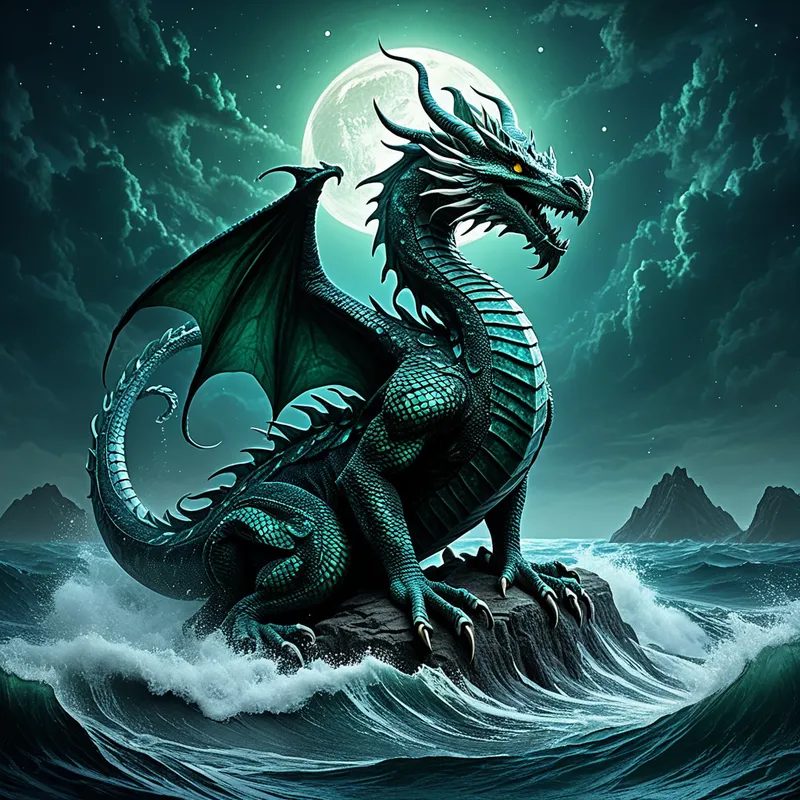
The primordial withdrawal of the saltwater goddess Tiamat, whose silent grief and rage become the raw material for a new, structured cosmos.
The Tale of Tiamat’s Withdrawal
In the beginning, there was no name for heaven above, nor earth below. There was only Apsu, the sweet, gathering waters, and [Tiamat](/myths/tiamat “Myth from Mesopotamian culture.”/), the salt, the chaos, the deep. They mingled their waters, and in that mingling, the first generations were stirred into being: Lahmu and Lahamu. From them came the horizons, the foundations. And from those foundations came a clamor, a shining, restless host: the younger gods.
Their light was beautiful, and their noise was terrible. It pierced the timeless, watery silence of [the abyss](/myths/the-abyss “Myth from Kabbalistic culture.”/). Apsu, the sweet [water](/myths/water “Myth from Chinese culture.”/), could not rest. “By day I find no relief, by night I cannot sleep!” he cried to Tiamat. “Let us destroy their ways, that quiet may return!” But Tiamat, the great salt sea, the mother of all, recoiled. “Shall we destroy what we ourselves have made? Their ways are troublesome, but let us be patient.”
But Apsu’s counsel was taken by his vizier, Mummu, and a plot was woven in the deep. Yet the plot was overheard. The cleverest of the young gods, Ea, heard the murmurs of dissolution. He wove a powerful spell of sleep upon Apsu, then took his crown, slew him, and built his own shining abode upon the sweet waters. Here, in this fortress of order, Ea and his consort Damkina conceived a son of terrifying brilliance: [Marduk](/myths/marduk “Myth from Mesopotamian culture.”/).
And what of Tiamat? She had withdrawn. She had heard her consort’s fury, she had counseled patience, and now he was gone—slain by the children of her own waters. A grief older than time itself began to [ferment](/myths/ferment “Myth from Alchemical culture.”/) in the abyss. It was not a gentle sorrow, but a rage that churned the primordial deep. The younger gods, in their triumphant noise, did not see her silent convulsions. They did not feel the temperature of creation drop as her maternal patience curdled into a monstrous, creative wrath.
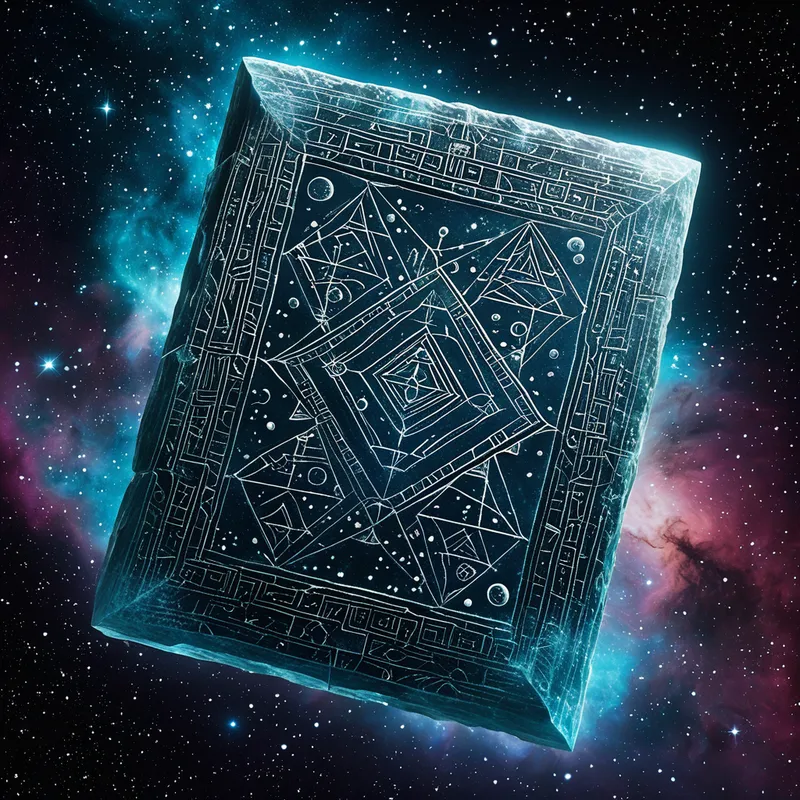
She began to give birth again, but not to horizons or foundations. From the dark ferment of her being, she birthed an army: sharp-toothed serpents, raging lion-demons, the [Mushussu](/myths/mushussu “Myth from Mesopotamian culture.”/) dragon, and the scorpion-man. She made Kingu her new consort, fastened the Tablet of Destinies to his breast, and gave him command. The silent withdrawal was over. The abyss had decided to take back its own.
The young gods’ light now flickered in genuine fear. Their noise turned to panicked whispers. They had mastered the sweet waters of logic and craft (Apsu), but they had forgotten the salt waters of the source. They sent one god, then another, to face Tiamat’s rising tide. Each returned trembling, defeated by her mere presence. Finally, the mighty Marduk, born in the fortress of order, stepped forward. He agreed to be their champion, but on one condition: absolute sovereignty.
Armed with the seven winds, a bow of lightning, and a net held by the four directions, Marduk rode his storm-chariot to the edge of being. He faced Tiamat, who had taken the form of a vast, gaping dragon of the deep. He shouted accusations, challenging her to single combat. She answered with a roar that was the sound of the abyss itself. As she opened her maw to consume him, Marduk drove the evil winds into her, inflating her like a monstrous bellows. He shot an arrow of lightning down her throat, piercing her heart, and extinguished her life.
Then, the artisan god set to work. He stood upon her vast, silent corpse. He split her skull like a clamshell, and his helpers held one half high. It became the vault of heaven, where he set the stars to mark the seasons and bound the waters above. From the other half of her body, he fashioned [the earth](/myths/the-earth “Myth from Hindu culture.”/), the mountains her breasts, the rivers her veins, the Tigris and Euphrates flowing from her eyes. From the blood of the defeated Kingu, he mixed the clay to make humankind, to bear the labor of the gods. Order was established, from the bones of the mother of all.
Cultural Origins & Context
This myth, known to us primarily from the Babylonian creation epic the Enuma Elish, was not merely a story. It was a liturgical text, recited during the Akitu festival in Babylon. Its performance was a ritual act of cosmic renewal, reaffirming Marduk’s (and by extension, Babylon’s) kingship and the stability of [the world](/myths/the-world “Myth from Tarot culture.”/) order against the ever-present threat of chaos.
The tale’s roots are older than its Babylonian form, drawing from Sumerian cosmology where the primal separation of heaven and earth (An and Ki) was a primary act. In the Enuma Elish, this separation is dramatized as a violent, generational conflict. The storytellers were likely priest-scribes, custodians of temple knowledge, who shaped the narrative to serve a theological and political purpose: to elevate the city-god Marduk to the head of [the pantheon](/myths/the-pantheon “Myth from Greek culture.”/). Its societal function was profound—it explained the origin of the world, justified the hierarchical structure of the universe (and thus society), and provided a sacred narrative that quelled existential anxiety by showing that order, though born of violence, was divinely ordained and perpetually reaffirmed.
Symbolic Architecture
At its core, Tiamat’s withdrawal and subsequent [eruption](/symbols/eruption “Symbol: A sudden, violent release of pent-up energy or emotion from beneath the surface, often representing transformation or crisis.”/) symbolize the [psyche](/myths/psyche “Myth from Greek culture.”/)’s [relationship](/symbols/relationship “Symbol: A representation of connections we have with others in our lives, often reflecting our emotional state.”/) with the primordial, unstructured ground of being—the unconscious. She is not evil, but prior. She is the undifferentiated state from which [consciousness](/symbols/consciousness “Symbol: Consciousness represents the state of awareness and perception, encompassing thoughts, feelings, and experiences.”/) (the younger gods) emerges.
The first act of creation is not an attack, but a withdrawal. Consciousness must differentiate itself from the oceanic unconscious to exist at all.
Tiamat represents the materia prima, the raw, chaotic, and infinitely potential substance of [soul](/symbols/soul “Symbol: The soul represents the essence of a person, encompassing their spirit, identity, and connection to the universe.”/)-stuff. Her initial patience is the unconscious’s tolerance of [the ego](/myths/the-ego “Myth from Jungian culture.”/)’s early explorations. Apsu’s desire for quiet is the ego’s wish to repress the disturbing, irrational, or overwhelming contents that bubble up. When Ea slays Apsu, it represents the ego’s initial victory of reason and cunning over the simpler, more immediate drives. But this victory is incomplete. It ignores the deeper, more complex [layer](/symbols/layer “Symbol: Layers often symbolize complexity, depth, and protection in dreams, representing the various aspects of the self or situations.”/)—the maternal [matrix](/symbols/matrix “Symbol: A dream symbol representing the fundamental structure of reality, consciousness, or the self. It often signifies feelings of being trapped, controlled, or questioning the nature of existence.”/) (Tiamat) that feels betrayed by this act of patricide and [differentiation](/symbols/differentiation “Symbol: The process of distinguishing or separating parts of the self, emotions, or identity from a whole, often marking a developmental or psychological milestone.”/).
Her monstrous [rebirth](/symbols/rebirth “Symbol: A profound transformation where old aspects of self or life die, making way for new beginnings, growth, and renewal.”/) is the [shadow](/symbols/shadow “Symbol: The ‘shadow’ embodies the unconscious, repressed aspects of the self and often represents fears or hidden emotions.”/)’s [response](/symbols/response “Symbol: Response in dreams symbolizes how one reacts to situations, often reflecting the subconscious mind’s processing of events.”/) to being ignored and dishonored. When the unconscious is not integrated but merely suppressed, it returns not as gentle potential, but as a terrifying, autonomous complex—an army of “monsters” that threaten to overwhelm the conscious [personality](/symbols/personality “Symbol: Personality in dreams often symbolizes the traits and characteristics of the dreamer, reflecting how they perceive themselves and how they believe they are perceived by others.”/). Marduk, then, symbolizes the heroic ego-consciousness that must now face this amplified [shadow](/symbols/shadow “Symbol: The ‘shadow’ embodies the unconscious, repressed aspects of the self and often represents fears or hidden emotions.”/), not with cunning alone, but with the full arsenal of differentiated psychic functions (the winds, the net, the storm).
The Dreamer’s Resonance
When this mythic pattern stirs in the modern dreamer, it often signals a profound somatic and psychological process: the ego’s confrontation with a long-withdrawn, foundational layer of [the Self](/myths/the-self “Myth from Jungian culture.”/). One does not dream of Tiamat herself, but of her symbolic equivalents.
The dreamer may find themselves in a vast, dark ocean, feeling both terrified and strangely at home. They may encounter immense, slow-moving creatures of the deep, or be pursued by a formless, enveloping presence that feels maternal and destructive simultaneously. There may be dreams of a quiet, neglected space in the childhood home that suddenly teems with insect life or begins to flood with dark water. Somatic sensations often accompany these dreams: a feeling of immense, silent pressure in the chest; a sense of being weighed down or dissolved; or a paradoxical, profound grief for something never known.
This is the psyche signaling that a foundational complex—often related to the mother, the body, or one’s most basic sense of security and existence—is withdrawing its silent support and demanding recognition. The “young gods” of the dreamer’s adapted personality (their achievements, logic, and [persona](/myths/persona “Myth from Greek culture.”/)) are being shown to be insufficient. A deeper, more chaotic, and more creative power is mobilizing from the depths, and the conscious attitude must prepare for a transformative, and potentially terrifying, engagement.
Alchemical Translation
The myth of Tiamat models the alchemical process of psychic transmutation, the core of Jungian individuation. It maps the journey from unconscious unio to conscious complexio.
The initial state is the massa confusa, the chaotic mixture of Apsu and Tiamat. The first separation (the birth of the gods) is the [separatio](/myths/separatio “Myth from Alchemical culture.”/), necessary for life but inherently traumatic to the whole. Ea’s slaying of Apsu is an initial mortificatio—a killing of the old, simple state—but it is a partial, arrogant act that believes the work is done. Tiamat’s withdrawal is the [nigredo](/myths/nigredo “Myth from Alchemical culture.”/), the darkening. It is the soul’s descent into the black, salty waters of melancholia and rage, where all light of consciousness seems absent. This is not a pathology, but a necessary incubation.
The new cosmos cannot be built from the materials of the old ego-fortress. It must be fashioned from the substance of the defeated, transformed dragon.
Her monstrous rebirth is the terrifying appearance of the contents of the nigredo—all the repressed instincts, wounds, and potentials now wearing monstrous guises. Marduk’s confrontation is the coniunctio, [the sacred marriage](/myths/the-sacred-marriage “Myth from Various culture.”/) of consciousness with this terrifying unconscious content. He does not reason with her; he engages her fully, using the very forces of chaos (the winds) against her. His victory is another mortificatio, but this time of the unconscious in its destructive, autonomous form.
The final act is the true alchemy: the [solutio](/myths/solutio “Myth from Alchemical culture.”/) and coagulatio. Marduk does not discard Tiamat’s corpse; he dissolves it (solutio) and re-coagulates it (coagulatio) into the structured world. The unformed potential of the mother-dragon is transmuted into [the vessel](/myths/the-vessel “Myth from Alchemical culture.”/) of life itself. For the modern individual, this translates to the process of taking the raw, chaotic material of a psychic crisis—a depression, a rage, a foundational grief—and, through conscious engagement and symbolic understanding, transforming it into the very structure of one’s renewed life. The heavens of our aspiration and the earth of our grounded reality are built from the body of [the dragon](/myths/the-dragon “Myth from Chinese culture.”/) we were forced to face. We do not escape the primal mother; we learn to live in the world made from her substance.
Associated Symbols
Explore related symbols from the CaleaDream lexicon: