Theseus's Thread Myth Meaning & Symbolism
A hero enters a monstrous maze with only a thread to guide him, facing his deepest fears to reclaim his destiny and liberate his people.
The Tale of Theseus’s Thread
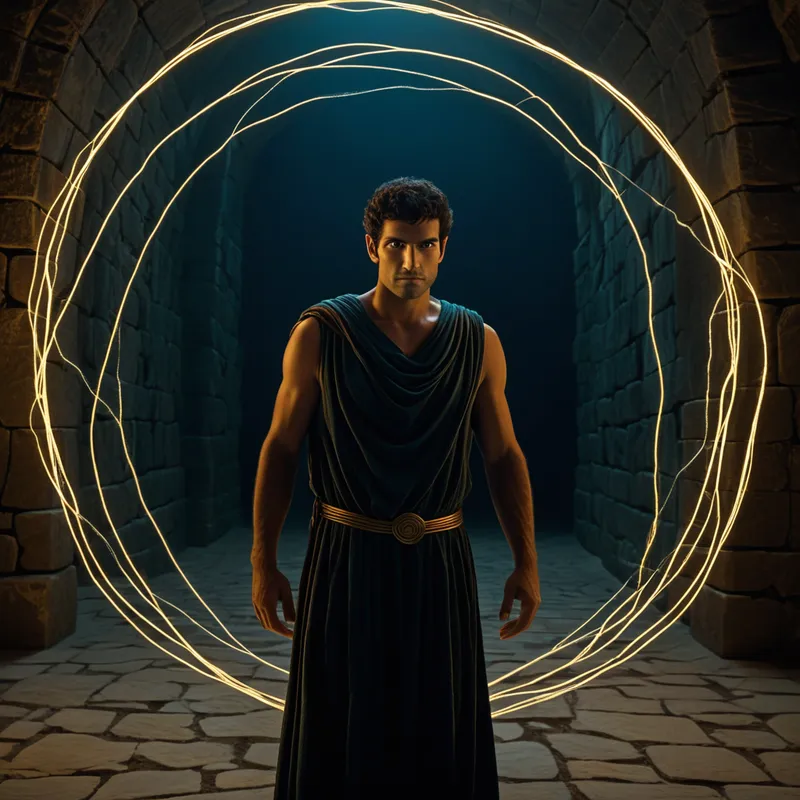
Hear now the tale of the thread that pierced [the world](/myths/the-world “Myth from Tarot culture.”/)’s heart of darkness. The air in Crete was thick with salt and dread, for every ninth year, the black-sailed ship carried a cargo of weeping Athenian youth to feed the hunger of the [Minotaur](/myths/minotaur “Myth from Greek culture.”/). This time, among them walked a prince with [the sea](/myths/the-sea “Myth from Greek culture.”/) in his eyes: [Theseus](/myths/theseus “Myth from Greek culture.”/). He came not as tribute, but as a blade hidden in a sheath of sorrow.
In the sun-bleached palace of King [Minos](/myths/minos “Myth from Greek culture.”/), a princess watched. Ariadne felt the thread of her own fate snag on this foreign prince. In the deep of night, she came to him, her hands not empty. In one, a sword, its edge hungry for monster-blood. In the other, a simple skein of thread, its end tied fast to the lintel of the great bronze door.
“Take this,” she whispered, her voice the only soft [thing](/myths/thing “Myth from Norse culture.”/) in that hard land. “Unwind it as you go. It will remember [the way](/myths/the-way “Myth from Taoist culture.”/) your feet forget.”
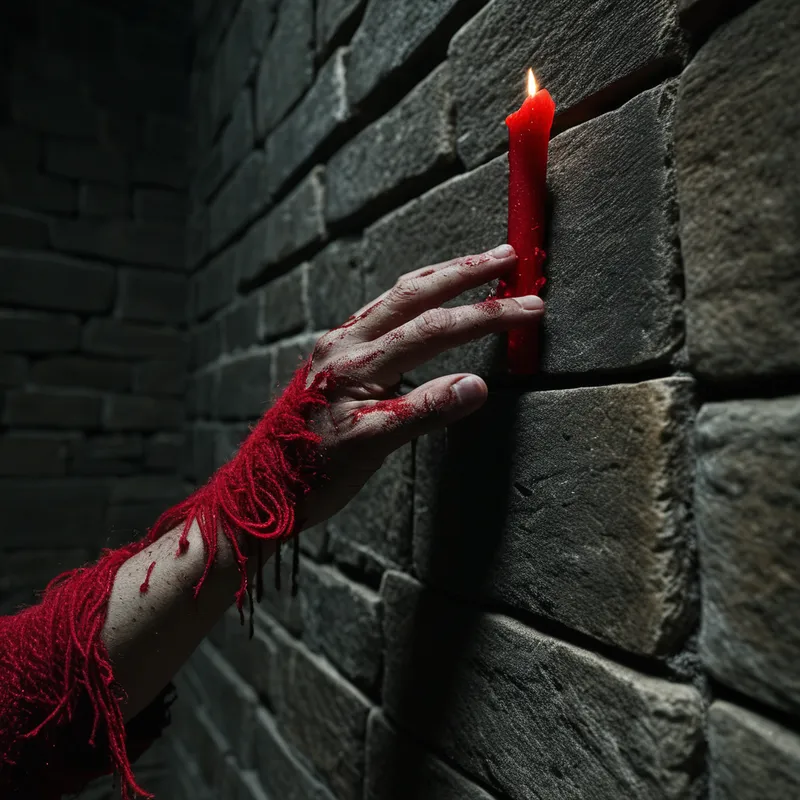
At dawn, the great doors groaned open, revealing not an entrance, but a devouring mouth. The [Labyrinth](/myths/labyrinth “Myth from Various culture.”/) breathed out a chill, stone-scented breath. Theseus stepped in, and the world changed. Light died. Sound warped; the weeping of Athens faded, replaced by the drip of distant [water](/myths/water “Myth from Chinese culture.”/) and the thunder of his own heart. Left, right, up, down—the path was a lie, the walls a shifting mockery of memory. Only the thread in his hand was true, a trembling, crimson nerve connecting him to the world of sun and air.
Deeper he wound, the thread pooling at his feet before snaking onward. The stench found him first—blood, old straw, and a feral musk that coated the tongue. Then, the sound: a low, guttural breathing that vibrated in the stone. In the absolute dark of the central chamber, two points of brute awareness ignited. The Minotaur charged, a tempest of bone and rage.
The battle was not of epic flourishes, but of desperate, close-quarter terror—the scrape of horn on stone, the hot gust of animal breath, the metallic taste of fear. Theseus became an extension of [the labyrinth](/myths/the-labyrinth “Myth from Greek culture.”/) itself, using its deceitful turns until, with a final surge, the borrowed sword found its home. The beast fell with a sigh that seemed to come from [the earth](/myths/the-earth “Myth from Hindu culture.”/).
Silence, heavier than before. Then, the thread. It lay there, a luminous path on the dark floor. Hand over hand, heart over hammering heart, he followed the slender cord back through the winding gut of the stone beast, past the echoes of the monster, past the ghosts of his own dread, until a sliver of true light pierced the gloom. He emerged, bloodied, into the shocking brightness of day, the thread coiled in his hand, now a lifeline not into darkness, but out of it.
Cultural Origins & Context
This core strand of the Theseus saga was woven into the fabric of Greek consciousness primarily through the epic poetry of the archaic age, later crystallized in the works of authors like Plutarch. It was not merely an adventure story but a foundational narrative for Athenian identity. Theseus was the proto-Athenian, the unifier of Attica, and his [triumph](/myths/triumph “Myth from Roman culture.”/) over [the Minotaur](/myths/the-minotaur “Myth from Greek culture.”/) symbolized Athens’s political and cultural emergence from a subordinate, sacrificial relationship with the Minoan thalassocracy of Crete.
The myth was performed, painted, and sculpted, serving a societal function far beyond entertainment. It was a parable of civic courage and intelligent planning over brute chaos. The Labyrinth itself may echo the complex palatial structures of historical Minoan Crete, which would have seemed bewildering and imposing to mainland Greeks. The thread, therefore, represents the application of reason ([logos](/myths/logos “Myth from Christian culture.”/)) and technological aid (techne)—the gifts of Athena as much as of Ariadne—to navigate a politically and psychologically oppressive system. It modeled for the Athenian citizen how to confront overwhelming, chaotic forces with guided, deliberate action.
Symbolic Architecture
At its [heart](/symbols/heart “Symbol: The heart symbolizes love, emotion, and the core of one’s existence, representing deep connections with others and self.”/), the myth is a masterful map of the [psyche](/myths/psyche “Myth from Greek culture.”/)’s deepest [terrain](/symbols/terrain “Symbol: Terrain in dreams often represents the landscape of one’s life, including challenges, opportunities, and feelings about one’s current circumstances.”/). The [Labyrinth](/symbols/labyrinth “Symbol: The labyrinth represents a complex journey, symbolizing the intricate path toward self-discovery and understanding one’s life’s direction.”/) is the ultimate [symbol](/symbols/symbol “Symbol: A symbol can represent an idea, concept, or belief, serving as a powerful tool for communication and understanding.”/) of the unconscious mind—not a random [maze](/symbols/maze “Symbol: A maze represents confusion, complexity, or a search for truth, often reflecting life’s challenges or inner turmoil.”/), but a meaningful but incomprehensible [structure](/symbols/structure “Symbol: Structure in dreams often symbolizes stability, organization, and the framework of one’s life, reflecting how one perceives their environment and personal life.”/). It is designed, implying an intelligence behind our [confusion](/symbols/confusion “Symbol: A state of mental uncertainty or disorientation, often reflecting internal conflict, lack of clarity, or overwhelming choices in waking life.”/), yet its [logic](/symbols/logic “Symbol: The principle of reasoning and rational thought, often representing order, structure, and intellectual clarity in dreams.”/) is inaccessible to the conscious ego. It is the winding, solitary [path](/symbols/path “Symbol: The ‘path’ symbolizes a journey, choices, and the direction one’s life is taking, often representing individual growth and exploration.”/) of one’s unique neurosis, [trauma](/symbols/trauma “Symbol: A deeply distressing or disturbing experience that overwhelms the psyche, often manifesting in dreams as unresolved emotional wounds or psychological injury.”/), or destined challenge.
The [Minotaur](/symbols/minotaur “Symbol: The Minotaur, a creature from Greek mythology, is often interpreted as a symbol of inner turmoil and the struggle between human and beast.”/) is the [shadow](/symbols/shadow “Symbol: The ‘shadow’ embodies the unconscious, repressed aspects of the self and often represents fears or hidden emotions.”/) incarnate, the bestial, untamed complex at the center of our personal labyrinth. Born of a transgressive union ([Queen](/symbols/queen “Symbol: A queen represents authority, power, nurturing, and femininity, often embodying leadership and responsibility.”/) Pasiphaë and a [bull](/symbols/bull “Symbol: The bull often symbolizes strength, power, and determination in many cultures.”/)), it represents the primal, instinctual [energy](/symbols/energy “Symbol: Energy symbolizes vitality, motivation, and the drive that fuels actions and ambitions.”/) that is both a monstrous [threat](/symbols/threat “Symbol: A threat in dreams often reflects feelings of vulnerability, anxiety, or fear regarding one’s safety or well-being. It can indicate unresolved conflicts or the presence of external pressures.”/) and a [source](/symbols/source “Symbol: The origin point of something, often representing beginnings, nourishment, or the fundamental cause behind phenomena.”/) of tremendous power if confronted and integrated.
The thread is not strength, but the memory of connection. It is the fragile, continuous trace of consciousness itself.
Ariadne represents the [anima](/symbols/anima “Symbol: The feminine archetype within the male unconscious, representing soul, creativity, and connection to the inner world.”/), the [soul](/symbols/soul “Symbol: The soul represents the essence of a person, encompassing their spirit, identity, and connection to the universe.”/)-guide or the connecting function of love and [intuition](/symbols/intuition “Symbol: The immediate, non-rational understanding of truth or insight, often described as a ‘gut feeling’ or inner knowing that bypasses conscious reasoning.”/). She provides the soteria, the means of salvation, which is not the sword ([the ego](/myths/the-ego “Myth from Jungian culture.”/)’s will) but the thread (the ego’s link to the outer world and to the compassionate other). The thread is the slender, vital tether to [reality](/symbols/reality “Symbol: Reality signifies the state of existence and perception, often reflecting one’s understanding of truth and life experiences.”/), to [relationship](/symbols/relationship “Symbol: A representation of connections we have with others in our lives, often reflecting our emotional state.”/), to the guiding principles (love, duty, promise) that prevent the [hero](/symbols/hero “Symbol: A hero embodies strength, courage, and the ability to overcome significant challenges.”/) from being lost forever in his own inner darkness.
The Dreamer’s Resonance
When this myth stirs in the modern dreamer, it signals a profound engagement with the process of individuation. To dream of being in a labyrinth is to experience the somatic truth of confusion—the tightening chest, the quickened pulse of a psyche that has turned in on itself. The dream labyrinth is often constructed from the materials of one’s own life: office corridors that morph into childhood homes, or endless staircases filled with the faces of forgotten acquaintances.
The thread in a dream may appear as a literal string, a trail of light, a voice, a remembered melody, or the presence of a trusted figure. Its appearance marks a critical shift from being lost to being on a path, however obscure. The dream-Minotaur is rarely a classical monster; it is more likely the overwhelming emotional complex one has been avoiding—a shape of pure rage, a pool of bottomless grief, or a chilling void of meaninglessness. The dreamwork is the confrontation, the acknowledgment of this inner “beast.” The act of following the thread back out signifies the dreamer’s psyche successfully navigating a deep regression in service of healing, retrieving a lost piece of energy and returning it to the light of waking life.
Alchemical Translation
The journey of Theseus is a perfect allegory for the alchemical opus, [the great work](/myths/the-great-work “Myth from Alchemical culture.”/) of psychic transmutation. The hero enters the [prima materia](/myths/prima-materia “Myth from Alchemical culture.”/)—the chaotic, base material of the soul, represented by the labyrinth’s stone. His descent (nekyia) is a necessary dissolution, a surrender of the ego’s known maps.
The confrontation with the Minotaur is the [nigredo](/myths/nigredo “Myth from Alchemical culture.”/), the blackening, the darkest moment where one faces the unvarnished truth of one’s shadow. This is not about slaying the beast in a final sense, but about overcoming its autonomous, destructive power. The victory is an integration, where the raw, bull-like vitality is harnessed by the human, conscious self (Theseus).
The labyrinth transforms the hero, and the thread is the proof of his transformation—a linear record of a nonlinear journey.
The return, hand-over-hand along the thread, is the albedo, the whitening, the ascent into clarity. The thread, now bloodied and dust-stained, is no longer a virgin promise but a proven record. It is the integrated experience itself, the new neural pathway forged through the old trauma. The ego that emerges is not the same one that entered; it is tempered, wiser, and carries the hard-won treasure of self-knowledge. For the modern individual, the “thread” is any practice that maintains a tether to [the Self](/myths/the-self “Myth from Jungian culture.”/) during deep work: journaling, therapy, meditation, creative expression, or loyal relationship. It is what allows us to dare the labyrinth of transformation, trusting that a part of us remains anchored in the world, ready to guide us home.
Associated Symbols
Explore related symbols from the CaleaDream lexicon: