The Alchemy of Courage: Dreaming the Impossible Threshold
The Somatic Echo
Before the image forms, before the story begins, courage announces itself as a vibration in the marrow. It is not a thought, but a resonance—a low hum in the solar plexus that tightens the diaphragm and sends a current of cold fire down the spine. The breath catches, not in paralysis, but in a profound gathering. The body becomes a still point in a turning world, a paradox of absolute tension and absolute readiness. This is the somatic echo: the visceral recognition of a threshold. It is the feeling of standing before a door you know you must open, where the handle is both ice and ember. The mind will later narrate this as fear, but the body knows it as potential energy—the coiled spring of a self about to become more than it was.
The Dreamer's Log
The dreamer stands in a cavernous, forgotten server room, the air thick with the hum of dormant data. Rows of black monoliths tower in the gloom. In the center of the room, an impossible door—old, oak, scarred with time—stands ajar. From the crack pours a light so pure and white it seems to dissolve the very edges of the machines. A voice, neither internal nor external, whispers: "You can close it. You can walk away and the hum will continue. Or you can step through and the hum will stop." The dreamer’s hand reaches for the edge of the door.
This is the alchemical moment: the system’s maintenance protocol (the hum) offering the choice between continued, safe operation and a total, unknown rewrite.

The False Lead
Courage is not recklessness. The dream is not urging you to quit your job impulsively or confront every passerby. It is not the adrenaline-charged bravado of the Shadow Hero, which is often merely fear disguised as aggression, a pre-emptive strike against vulnerability. Nor is it the stoic endurance of the Shadow Orphan, who grits their teeth and bears a burden they secretly believe they deserve. These are bypasses, not passages. True courage in the dreamscape is specific, intimate, and terrifyingly quiet. It is the recognition of the one door, in the architecture of your own psyche, that you have been paid to ignore. The dream does not show you a battlefield of a thousand foes; it shows you the one lock your key fits.
Psychological Architecture
To understand the architecture of courage is to map the fault line between two internal families. On one side: the loyal soldiers. The Manager who maintains the hum, the Procrastinator who oils the hinges so the door never squeaks, the Rationalist who has blueprints proving the room beyond is a structural impossibility. They are not enemies; they are protectors, tasked with keeping the system online and the identity intact. Their terror is valid.
On the other side of the threshold is the Exile. This is the disowned part, the silenced memory, the unlived life, the genius, the grief, the joy too vast to permit. It is banished because its energy, if integrated, would dismantle the current operating system. The courageous act in the dream is not an act of war against the protectors, but an act of diplomacy. It is the conscious Self, the inner sovereign, moving past the guards not to destroy them, but to retrieve what they guard. The pressure is the unbearable tension of holding both realities: the absolute necessity of the system and the absolute necessity of its transformation. The heat is the shame, the grief, the sheer vulnerability of admitting, "This way of being is killing me, and I am the one who architected it."
Mythic Resonance
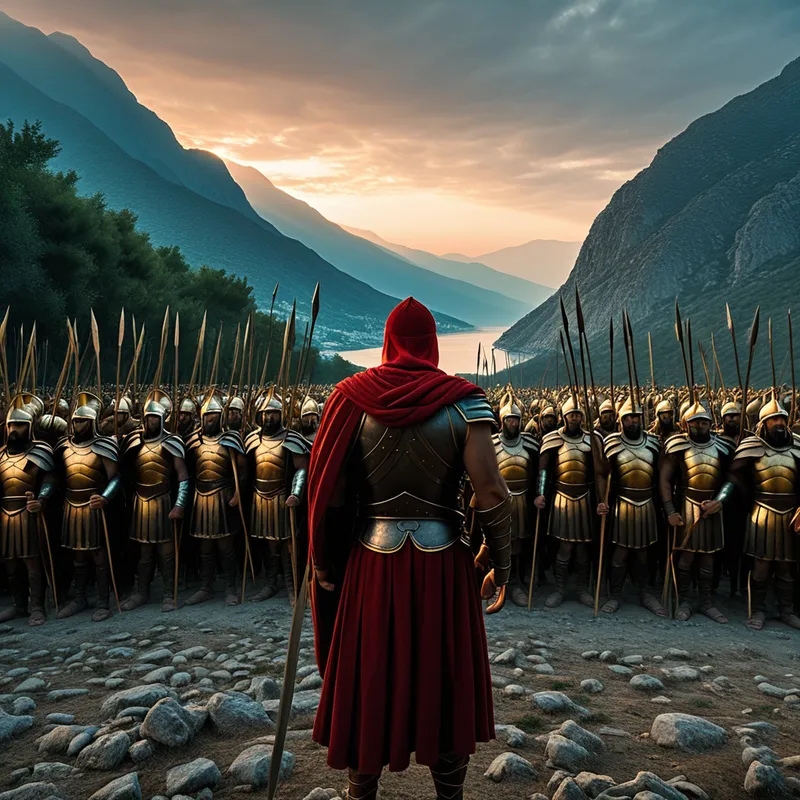
We see this in the Norse myth of the god Tyr. The gods need to bind the monstrous wolf Fenrir, who grows ever stronger and more threatening. The wolf, cunning, will only submit to being bound by a magical ribbon if one of the gods places a hand in his mouth as a pledge of good faith. All hesitate, knowing the bond will hold and the pledge will be forfeit. It is Tyr, the god of law and justice, who steps forward. He places his right hand—his hand of oath, of action—into the wolf’s jaws. The bond is secured, Fenrir is bound, and Tyr’s hand is severed. His courage is not in winning a fight, but in knowingly sacrificing a part of his own sovereignty to create a new, necessary order. He integrates the shadow (the wolf) into the cosmic structure, at a terrible, personal cost. The dream of courage often asks for a similar pledge: to place a part of your current identity in the jaws of the unknown.
Symbolic Nodes
- The Ajar Door/Uncrossed Threshold: The central symbol. It represents a specific point of potential transition that is already active; the choice is imminent, not theoretical.
- Standing Before a Vast, Silent Audience: The feeling of being seen in your truth by the entirety of your own psyche.
- Holding a Key That Fits Only One Lock: The realization that your unique wound or gift is also your unique tool.
- A Small, Defiant Act in a Oppressive System: Planting a seed in concrete, whispering a truth in a hall of shouts.
- A Shield That is Also a Mirror: The defensive structure you must turn inward to see yourself truly.
Archetypal Resonance
The energy of this theme resonates most powerfully with The Hero Archetype.
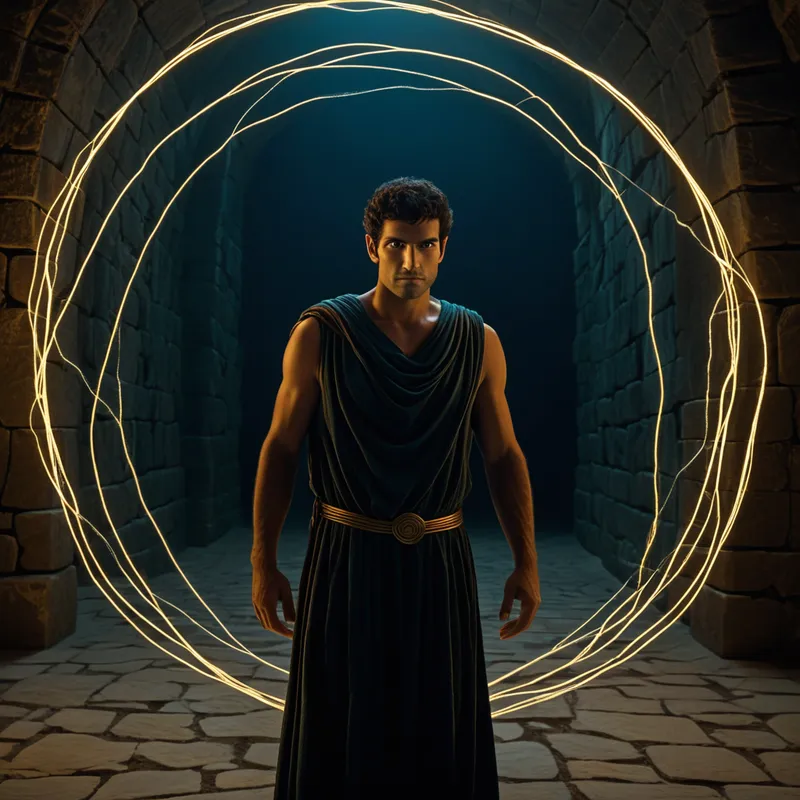
The Hero is not merely the one who slays dragons, but the one who answers the call to leave the familiar village and cross into the unknown territory of the Self. The somatic echo of courage—the gathered tension, the cold fire in the spine—is the Hero’s call manifesting in the body before it reaches the ears. This archetype’s core task is to face the threshold guardian (our internal protectors and fears) not to annihilate it, but to win its permission to pass. The alchemical potential lies in the Hero’s journey being, ultimately, a circuit. The treasure retrieved from the abyss (the integrated Exile) must be brought back to transform the ordinary world (the conscious personality). The courage dream is the map for this circuit, showing us the exact location of our personal abyss and the specific guardian we must engage.
The Alchemical Process
The transmutation here is of terror into territory. The base material is the paralyzing fear, the grief of what must be left behind, the shame of having waited so long. The alchemical vessel is the conscious, witnessing Self that can hold this intense conflict without fragmenting. The heat is applied by sustained attention—by refusing to look away from the ajar door, by feeling the full somatic echo without anesthetic. The pressure is the ethical imperative: the growing, undeniable knowledge that to turn away now is to betray your own potential.
The process is one of sacred digestion. You are not battling the monster; you are metabolizing it. You sit with the exiled part in the room of white light. You listen to its story. You feel its grief as your own. This is the dissolution (solutio)—the old boundaries of "me" and "not-me" melt in the intensity of this encounter. From this dissolved state, a new compound emerges: sovereignty. It is not control, but authority. It is the ability to hold the tension of opposites within your own being—strength and vulnerability, power and compassion, the hum of the system and the silence beyond it—and act from their integrated center.
The Integration Protocol
Question 1: Where in your waking life do you feel that same low hum in the solar plexus—the somatic echo of a threshold you are avoiding?
Question 2: If the door in your dream leads to a room containing a single, forgotten truth about yourself, what is the first word of that truth?
Question 3: What loyal, internal protector would be most terrified if you stepped through that door, and what is its primary, positive intention for keeping you safe?
Action 1 (Threshold Mapping): For one week, carry a small notebook. Do not write paragraphs. Simply note, in one or two words, every moment you feel the somatic echo—the catch in the breath, the tension. At week’s end, look not for the grand theme, but for the common, mundane context. Courage often hides in the micro-refusals.
Action 2 (Creative Pact): Take a single sheet of paper. On the left side, using any medium (ink, charcoal, collage), create an image or texture representing the "hum"—the current system. On the right side, represent the "white light"—the unknown. In the center, draw the door. Do not aim for art; aim for a pact. Then, write a one-sentence treaty between the two sides, signed by your name.
Action 3 (Somatic Rehearsal): In a private space, stand comfortably. Recall the dream’s threshold. Feel the echo in your body. Now, physically take one slow, deliberate step forward. As you do, exhale fully and whisper a sound of release—a sigh, a hum, a word. The action is not about changing your life yet; it is about teaching your nervous system the kinesthetics of passage.
Final Validation
It is valid that the door frightens you. It is valid that part of you longs for the simpler, quieter hum of the old server room, where your tasks were clear and your identity was certain. That longing is not a failure; it is the proof of the cost. Honor it. And then, know this: the light beyond the door does not exist to obliterate you. It exists because of you. It is the latent luminosity of your own disowned wholeness, waiting in the silence for the hum to stop so it can finally greet itself. The courage to step through is, ultimately, the courage to meet yourself as both the seeker and the found.