The Willow in the Flood Myth Meaning & Symbolism
A celestial willow tree sacrifices its form to become a living dam, saving a valley from a divine flood through profound, yielding resilience.
The Tale of The Willow in the Flood
Listen, and let the mists of time part. In an age when the Jade Emperor still walked the dreams of mortals, there was a valley cradled by the Kunlun Mountains. It was a place of emerald rice terraces and peach blossoms that never seemed to fall. The people there lived in harmony, their lives a gentle rhythm measured by the sun and the moon. But above, in the celestial courts, a great discord had arisen.
The Long Wang of the Eastern Sea, in a fit of prideful wrath, had neglected his duties. The delicate balance of the waters was shattered. Clouds, heavy with grievance, gathered not for gentle rain but for a deluge of divine punishment. The Jade Emperor, seeing the disruption to the earthly order, decreed a flood to wash the valley clean, a resetting of the cosmic ledger.
The first drops were as heavy as stones. Then the sky tore open. It was not rain, but the ocean falling from the heavens. The river swelled, burst its banks, and became a roaring, brown dragon consuming everything in its path. Homes of timber and clay dissolved like sugar. The people fled to the highest hill, their cries swallowed by the thunder of water. They watched in horror as the life they knew was erased, wave by terrible wave. All seemed lost.
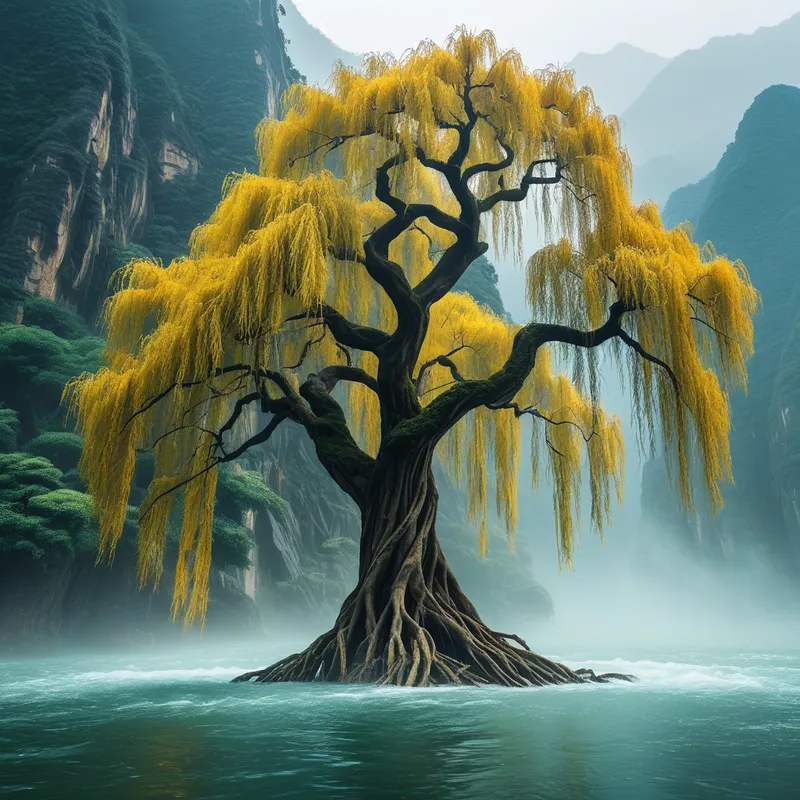
But at the valley’s narrow mouth, where the river once chuckled over rocks, stood an ancient willow. It was no ordinary tree. For a thousand years, it had drunk deep from the earth’s qi, and in turn, had heard the whispered joys and sorrows of every generation that rested in its shade. It felt the terror of the people, the drowning of the land it called home.
As the cataclysmic wall of water charged toward the last refuge on the hill, the willow did not brace in defiance. Instead, it began to sing—a sound like the wind through a million leaves, yet deeper, a vibration from the roots of the world. It did not fight the current. It invited it. Its long, pliant branches swept into the flood, not resisting, but guiding. They wove with the debris, with stones, with the very soil of the valley, creating a living, breathing net.
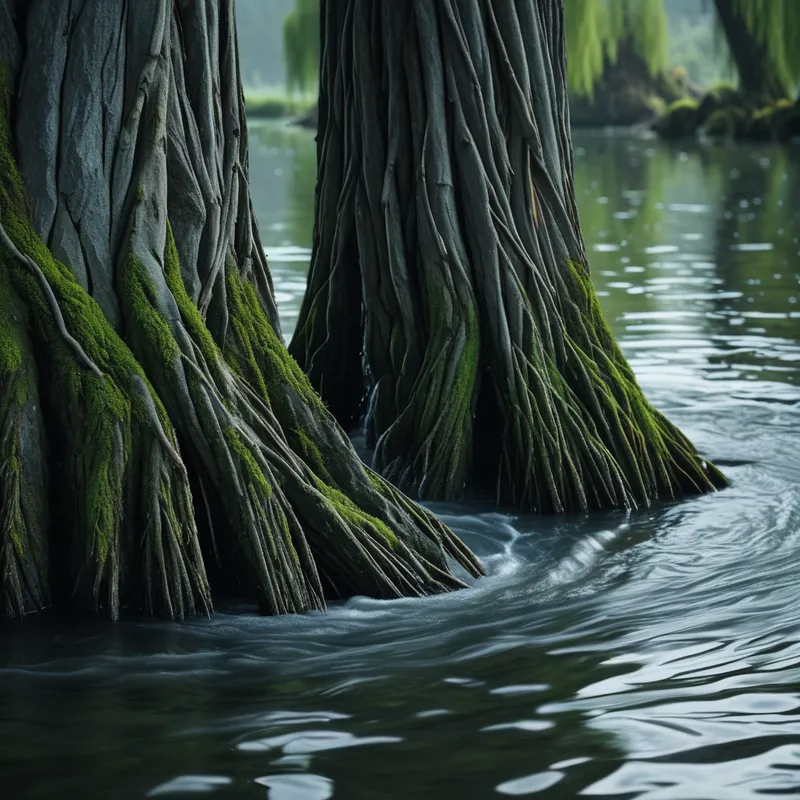
The tree poured its essence, its accumulated millennia of peaceful qi, into this act of ultimate yielding. Its bark, once soft and green, greyed and hardened like river stone. Its trunk thickened, sinking deeper, becoming one with the bedrock. The furious floodwaters slammed into this sudden, living dam. The willow bent, groaned with the strain of continents, but it did not break. It held. The water, confused, began to slow, to pool, to rise against this gentle, unbreakable barrier. It carved a new course, sparing the hill. The people, huddled and weeping, saw the waters recede from their feet. They saw the willow, now a permanent, serene statue of wood and stone, holding back the sea, its remaining leaves a defiant crown of green in the settling mist.
Cultural Origins & Context
This myth finds its roots in the vast, animistic soul of ancient Chinese folk tradition, long before the formalization of major philosophical schools. It belongs to the world of village elders and storytelling grandmothers, told not in imperial courts but under moonlit skies after harvest. These stories served as ecological and ethical parables, encoding vital survival wisdom. China’s history is etched by its great rivers—the Yellow River, the Yangtze—givers of life and bringers of catastrophic floods. The myth of the Willow is a psychic response to this perennial reality.
It functions as a etiological myth, explaining the presence of certain ancient, gnarled trees by riverbanks often considered sacred or lucky. More importantly, it transmits a core cultural principle: the power of rou gang, or “soft strength.” This concept, later refined in Daoist thought (e.g., Dao De Jing, Chapter 76: “The hard and stiff will be broken. The soft and supple will prevail.”), is here rendered in narrative form. The story was a societal instruction manual on resilience, teaching that survival often depends not on rigid opposition, but on intelligent, adaptive yielding and profound connection to one’s place.
Symbolic Architecture
The Willow is the ultimate symbol of the Caregiver Archetype, but one that operates through a logic of nature, not of force. Its sacrifice is not a violent offering, but a transmutation.
The deepest strength is not found in the unyielding rock, but in the root that bends to find water and the branch that flows with the storm to avoid breaking.
The Flood represents the unconscious, chaotic, and overwhelming forces that periodically erupt into life—personal trauma, collective crisis, or uncontrollable change. It is the shadow of the nurturing river, life-giving energy turned destructive.
The Transformation from Wood to Stone is the key alchemical image. Wood (Mu) is alive, flexible, growing. Stone or earth (Tu) is stable, enduring, protective. The Willow does not die; it changes its elemental state. It internalizes the crisis (the flood’s force) and, through the act of yielding, converts it into a permanent, protective structure. This is the psyche’s ability to metabolize trauma into wisdom, to turn a painful experience into the bedrock of one’s character.
The Dreamer’s Resonance
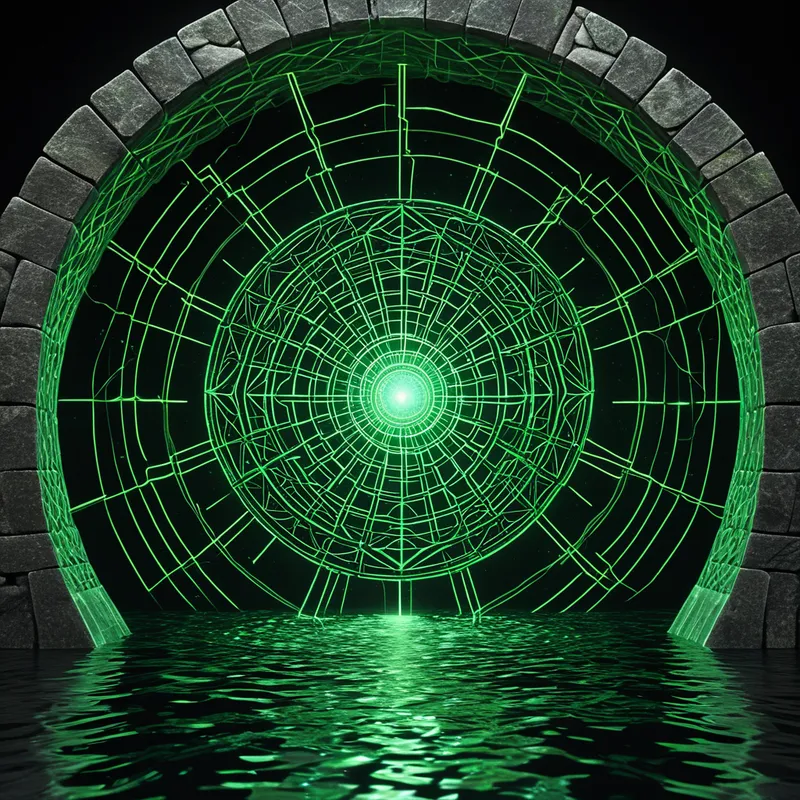
When this myth stirs in the modern unconscious, it often manifests in dreams of overwhelming fluidity. You may dream of your house flooding, of being caught in a tidal wave, or of standing in a river that is rising too fast. The somatic feeling is one of helpless saturation, of being emotionally drowned.
To dream of the flood is to feel the psyche’s banks overflowing; the task is not to build a higher wall, but to become the willow at the narrows.
The appearance of a tree in such a dream—especially one that bends, that interacts with the water—signals the emergence of this archetypal pattern. The dream-ego may feel like it is turning to stone, becoming numb or rigid. This is not a negative sign, but a reflection of the psyche’s instinctive, mythic response: it is beginning the alchemical process of transmuting the fluid terror into solid, containable form. The anxiety is in the transition, the feeling of losing one’s familiar, “green” self to a new, untested stability.
Alchemical Translation
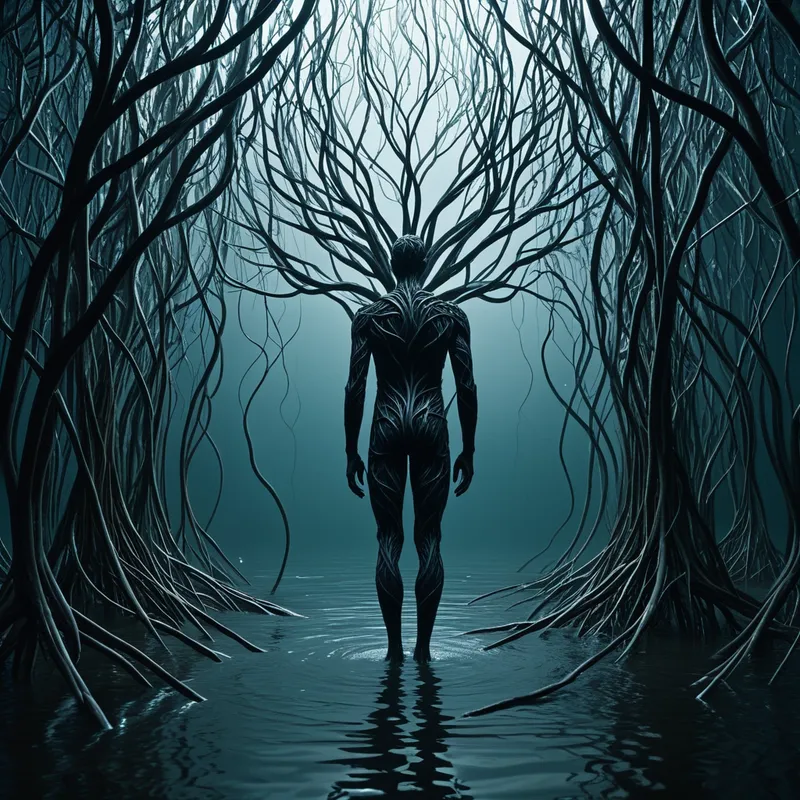
The individuation journey modeled here is the path of conscious yielding. In our modern context, we are taught the heroism of the dam—of willpower, resistance, and control. The Willow’s myth teaches the heroism of the living levee.
The first step is Rooted Perception: like the Willow feeling the valley’s distress, we must develop a deep, somatic awareness of our own “ecosystem.” What is the true source of the flood? Is it external pressure, or an internal Long Wang—a repressed emotion or ignored duty—running amok?
The second is Invitation, Not Resistance: This is the counter-intuitive heart of the work. Rather than tensing against the crisis (which often amplifies it), we must learn to “sing it in.” This means accepting the reality of the flood—the grief, the failure, the anxiety—allowing it to flow into our awareness without immediate judgment or panic.
The alchemy occurs in the space between resistance and collapse; it is the conscious, creative surrender that transmutes the destroyer into the foundation.
The final stage is Transmutation into Shelter: Our flexible, growing, “wooden” identity—our old ways of being—must temporarily harden into “stone.” This may feel like protective numbness, setting a firm boundary, or creating a simple, rigid routine amidst chaos. The goal is not to remain stone forever, but to use that solidified space to protect the inner, living core (the hilltop of the soul) until the waters find a new equilibrium. In doing so, the crisis becomes integrated. We are not the same as before; we are both the enduring stone and the resilient green shoot that grows from it, forever changed, forever a sanctuary shaped by the flood.
Associated Symbols
Explore related symbols from the CaleaDream lexicon: