The White Rock of Huanacauri Myth Meaning & Symbolism
The founding myth of the Inca, where a sacred white rock marks the site where the first Inca king emerged from the earth to claim his destiny.
The Tale of The White Rock of Huanacauri
Listen. The world was a tapestry of warring peoples and forgotten gods. From the depths of Lake Titicaca, where the sun itself was born, the creator [Viracocha](/myths/viracocha “Myth from Incan culture.”/) commanded a new order to rise. He called forth four brothers and four sisters, the Ayar, and gave them a sacred charge: to wander the earth until their golden staff, the tapac-yauri, sank completely into the soil, signifying the fertile heart of their destined kingdom.
Their journey was a crucible. The mountains were jagged teeth against the sky; the winds sang of ancient sorrows. One by one, the siblings were transformed or turned to stone, their essences returning to the Pachamama. Only the most resolute, Manco Cápac, and his sister-wife, Mama Ocllo, remained. They climbed ever higher, their hope a fragile ember in the vast Andean cold.
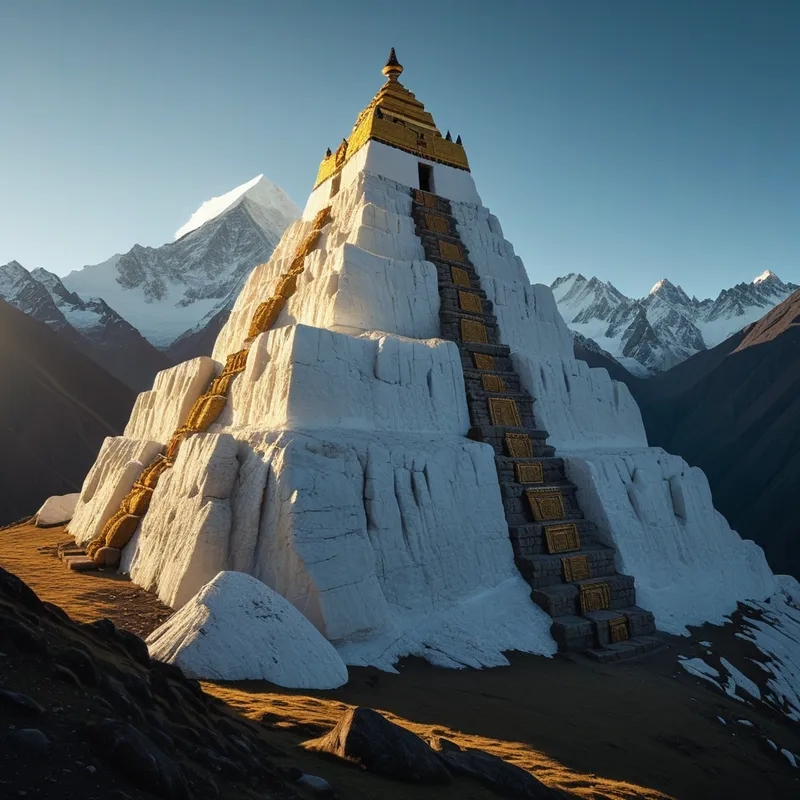
Then, they came to a high, windswept pass. Before them stood a great, smooth huaca, a rock of pure, blinding white. This was Huanacauri. As Manco Cápac approached, a profound stillness fell. The rock was not inert; it pulsed with a silent presence. It was an ancestor, a sentinel, a doorway. Here, he performed the rites. He offered prayers that were swallowed by the thin air. He saw, in the stone’s luminous surface, visions of a city yet unbuilt, a people yet unified.
It was at Huanacauri that Manco Cápac truly became the Sapa Inca. The rock was his anointing. From its shadow, he looked upon the valley below. He plunged the golden staff into the earth at the future site of Cusco, and it vanished into the rich soil. The land had accepted him. The white rock stood witness, a permanent testament to the moment the divine will touched the earthly plane and a lineage of stone and star was born.
Cultural Origins & Context
This myth is the foundational charter of the Tawantinsuyu. It was not merely a story but the sacred history recited by the Amautas during coronations and the great festival of Inti Raymi. Its primary function was to legitimize the divine right of the Inca ruler. By tracing his lineage back to the emergence at Lake Titicaca and the anointing at Huanacauri, the Sapa Inca became the living link between the people, the land (Pachamama), and the celestial order (Inti).
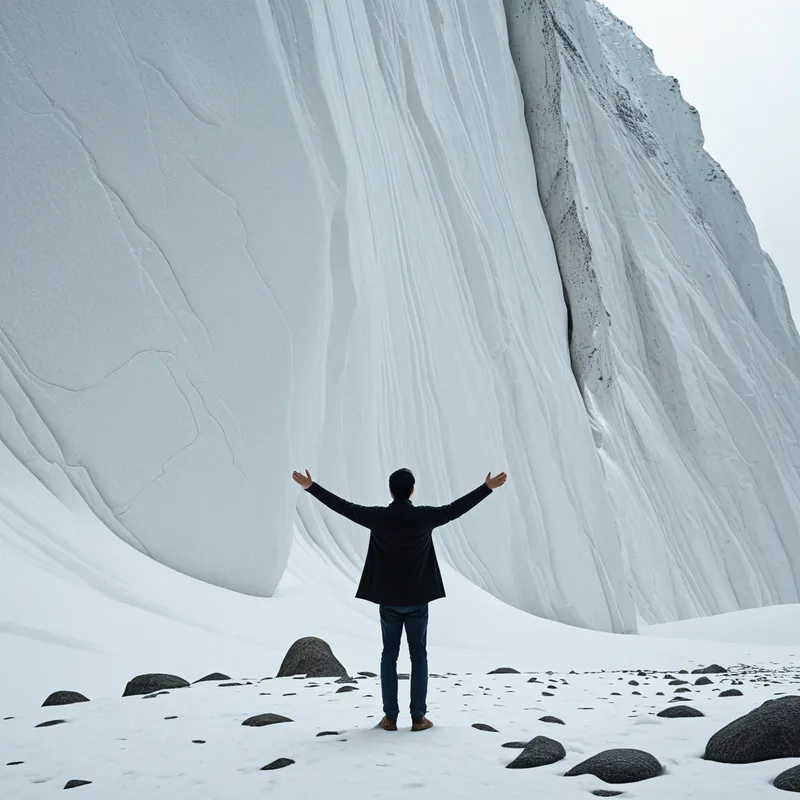
The White Rock itself was a physical huaca of immense power, located on a mountain of the same name southeast of Cusco. It served as a major pilgrimage site, especially for young nobles undergoing the huarachicoy ceremony. To journey to the rock was to re-enact the foundational pilgrimage of Manco Cápac, integrating the youth into the body politic and the cosmic narrative of their civilization. The myth was thus a map of identity, etched in landscape and memory.
Symbolic Architecture
At its core, the myth is about the [emergence](/symbols/emergence “Symbol: A process of coming into being, rising from obscurity, or breaking through a barrier, often representing birth, transformation, or revelation.”/) of [consciousness](/symbols/consciousness “Symbol: Consciousness represents the state of awareness and perception, encompassing thoughts, feelings, and experiences.”/) and order from the primal, undifferentiated [matrix](/symbols/matrix “Symbol: A dream symbol representing the fundamental structure of reality, consciousness, or the self. It often signifies feelings of being trapped, controlled, or questioning the nature of existence.”/). The [Lake](/symbols/lake “Symbol: A lake often symbolizes a place of reflection, emotional depth, and the subconscious mind, representing both tranquility and potential turmoil.”/) Titicaca represents the unconscious, the [source](/symbols/source “Symbol: The origin point of something, often representing beginnings, nourishment, or the fundamental cause behind phenomena.”/) of all potential. The arduous [journey](/symbols/journey “Symbol: A journey in dreams typically signifies adventure, growth, or a significant life transition.”/) is the struggle of the nascent ego or cultural complex to find its place in the world. The transformation of the other Ayar siblings signifies the necessary sacrifices and [differentiation](/symbols/differentiation “Symbol: The process of distinguishing or separating parts of the self, emotions, or identity from a whole, often marking a developmental or psychological milestone.”/) of psychic functions required for a coherent [identity](/symbols/identity “Symbol: Identity represents the sense of self, encompassing personal beliefs, cultural background, and social roles.”/) to form.
The White Rock of Huanacauri is the ultimate [symbol](/symbols/symbol “Symbol: A symbol can represent an idea, concept, or belief, serving as a powerful tool for communication and understanding.”/) of the self, in the Jungian sense—the [archetype](/symbols/archetype “Symbol: A universal, primordial pattern or prototype in the collective unconscious that shapes human experience, behavior, and creative expression.”/) of wholeness and the central regulating principle of the psyche.
It is the point where the wandering, seeking consciousness finally meets the eternal, unmoving center. The rock is not conquered; it is recognized.
Its whiteness signifies purity, divinity, and the [integration](/symbols/integration “Symbol: The process of unifying disparate parts of the self or experience into a cohesive whole, often representing psychological wholeness or resolution of internal conflict.”/) of all colors (all aspects of the self). It is both an [altar](/symbols/altar “Symbol: An altar represents a sacred space for rituals, offering, and connection to the divine, embodying spirituality and devotion.”/) and a mirror. Manco Cápac does not take from it; he sees himself and his [destiny](/symbols/destiny “Symbol: A predetermined course of events or ultimate purpose, often linked to spiritual forces or cosmic order, representing life’s inherent direction.”/) reflected in it. The subsequent founding of Cusco, the “navel of the world,” is the external manifestation of this internal [discovery](/symbols/discovery “Symbol: The act of finding something previously unknown, hidden, or lost, often representing personal growth, new opportunities, or hidden aspects of the self.”/)—the establishment of a conscious, ordered [life](/symbols/life “Symbol: The symbol of ‘Life’ represents a journey of growth, interconnectedness, and existential meaning, encompassing both the joys and challenges that define human experience.”/) around this sacred, central [truth](/symbols/truth “Symbol: Truth represents authenticity, honesty, and the quest for knowledge beyond mere appearances.”/).

The Dreamer’s Resonance
When this myth pattern stirs in the modern dreamer, it often manifests as a profound transition or initiation. To dream of a lone, significant white stone on a hill or mountain pass suggests the psyche is navigating a critical threshold. The dreamer may be in a period of searching, having left an old “lake” of familiar unconsciousness, but not yet having found their “Cusco”—their true place or purpose.
The somatic feeling is one of both awe and acute solitude—the thin air of high altitude. There is a confrontation with something immense, ancient, and impersonal (the rock). This can feel like encountering one’s own destiny or core self, which can be intimidating in its objectivity. The dream may evoke a sense of being tested or anointed, of preparing to take up a new authority or responsibility in one’s life. The rock in the dream asks the dreamer: What is your golden staff? Where will it sink? It is a call to commit to the fertile ground of one’s authentic life.
Alchemical Translation
The alchemical process mirrored here is that of coagulatio—the solidification of spirit into matter, of potential into actuality. The initial solutio (dissolution) occurs in the waters of Lake Titicaca, where the archetypal forms are born. The long pilgrimage is the separatio and mortificatio, the burning away of irrelevant or competing identities (the transformed siblings).
The encounter with the White Rock is the pivotal moment of coniunctio—the sacred marriage between the striving, temporal self (Manco Cápac) and the eternal, static self (the rock).
The hero does not slay the dragon of the mountain; he marries the mountain itself. His triumph is not dominance, but alignment.
For the individual, this models the journey of individuation. We wander through life’s trials, shedding outdated versions of ourselves. The “Huanacauri moment” is that point of profound self-recognition, often in mid-life or during a crisis, where we touch the non-negotiable, foundational truth of who we are—our personal “white rock.” From that solid, centered place, we can then “found our Cusco”: build a life of meaning, order, and creativity that is in true alignment with that inner sanctum. The rock remains, an inner touchstone of integrity to which we can always return.
Associated Symbols
Explore related symbols from the CaleaDream lexicon:
- Mountain — The sacred height of Huanacauri represents the arduous ascent toward destiny, the place of ordeal and revelation where the mortal meets the divine.
- Stone — The fundamental symbol of the myth; the White Rock embodies permanence, the eternal self, and the foundational truth upon which an empire or an individual identity is built.
- Journey — The long pilgrimage of the Ayar siblings from Lake Titicaca mirrors the soul’s necessary voyage through trials and transformations to discover its purpose.
- Destiny — The myth is an archetypal map of fate, where divine will, personal action, and the responsiveness of the world converge at a sacred site.
- Sun — Representing Inti, the celestial father whose light validates the chosen path and whose energy the Inca ruler channeled for the world’s order.
- Earth — As Pachamama, she is the receptive force that accepts the golden staff, symbolizing the fertile partnership between conscious intention and the nourishing unconscious.
- Gold — The material of the tapac-yauri, symbolizing divine sanction, solar lineage, and the invaluable, tested worth of the true self.
- Vision — What Manco Cápac receives at the rock; a prophetic understanding of the future kingdom, representing the moment of inspired clarity that guides all subsequent action.
- Rebirth — The emergence of Manco Cápac as Sapa Inca at the rock is a spiritual rebirth, a death of the wandering seeker and a birth of the anointed sovereign.
- Temple — The White Rock itself is a natural temple, and the city of Cusco founded from its vision becomes the temple-city, the ordered world built around a sacred center.
- Hero — Manco Cápac embodies this archetype not through brute strength, but through endurance, piety, and the capacity to bear the weight of a divine mandate.
- Root — The myth establishes the mythological and psychic roots of an entire civilization, anchoring its identity in a specific, sacred interaction with the landscape.