The Well of Segais Myth Meaning & Symbolism
A sacred well of wisdom, guarded by nine hazel trees, whose salmon of knowledge brings ultimate insight to the one who dares to seek it.
The Tale of The Well of Segais
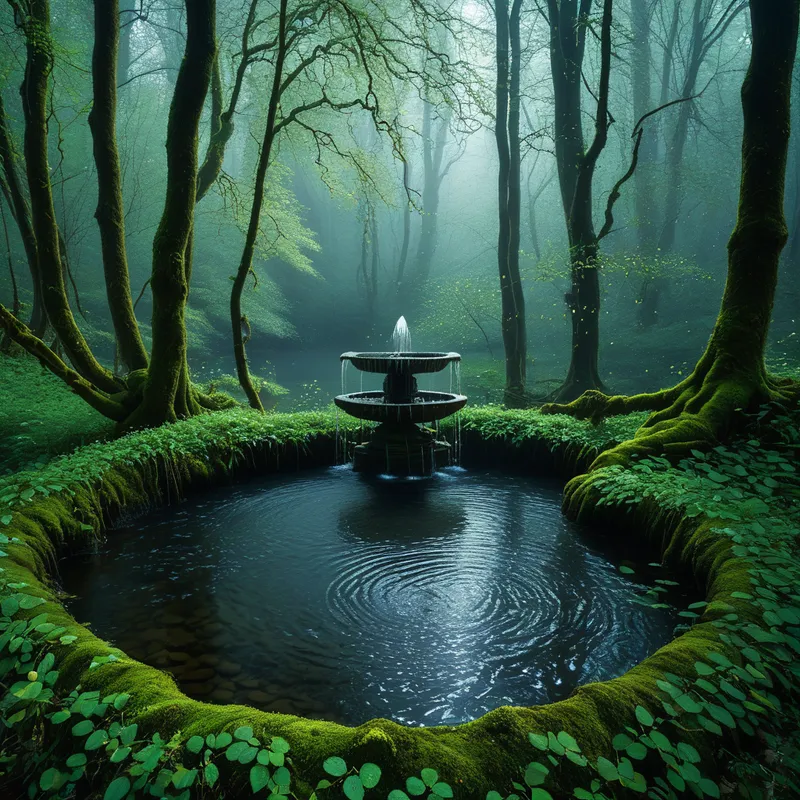
Listen, and let the mists of [the Otherworld](/myths/the-otherworld “Myth from Celtic culture.”/) part. In the deep, green heart of the land, where the veils between worlds are thin as morning dew, there lies a place of profound silence. This is not a silence of emptiness, but of potent, listening life. Here, you will find The [Well of Segais](/myths/well-of-segais “Myth from Celtic culture.”/).
Its waters are clearer than thought, bubbling up from the very bones of [the earth](/myths/the-earth “Myth from Hindu culture.”/). But the well is not alone. Nine hazel trees of perfect wisdom stand sentinel around its mossy rim. They are the Tuatha Dé Danann in arboreal form, their branches heavy with knowledge. In the autumn, their purple nuts ripen and fall. Not to [the earth](/myths/the-earth “Myth from Hindu culture.”/), but into the waiting, dark [water](/myths/water “Myth from Chinese culture.”/) of the well with a soft, echoing plink.
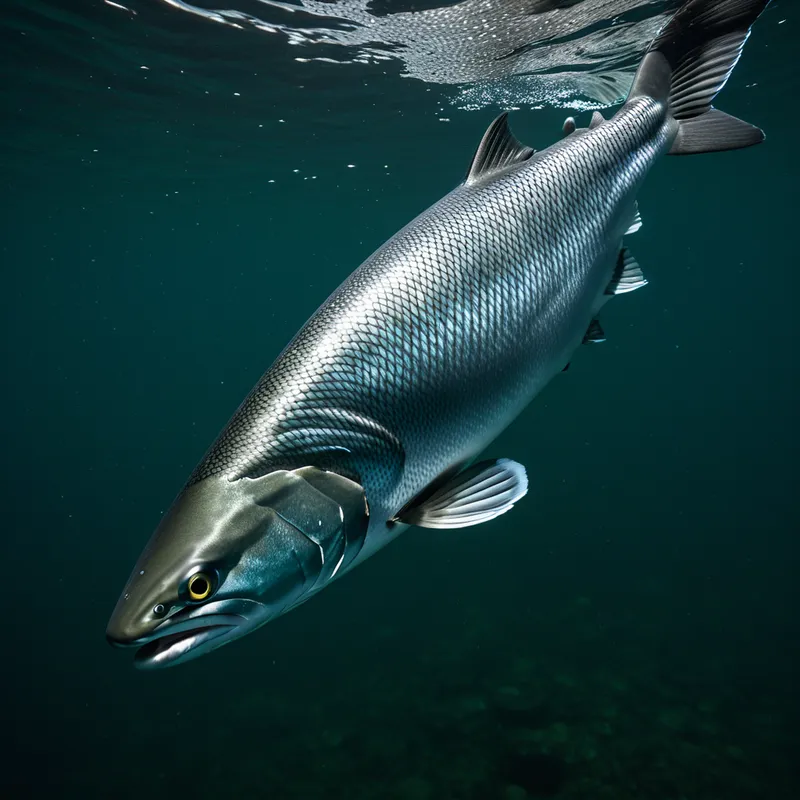
In the depths, a great salmon waits. It is no ordinary fish. Its scales hold the sheen of twilight, and its eyes are pools of ancient knowing. As each hazelnut falls, the salmon glides upward, consuming it. With every nut, a spark of cosmic insight—of poetry, of prophecy, of all arts and sciences—ignites within its being. The salmon becomes a living library, swimming in circles of endless, contained wisdom.
The well is guarded. It is the treasure of [Nuada](/myths/nuada “Myth from Celtic culture.”/) and the Brigid, a source too powerful for mortal minds. To drink from it unbidden is to invite a cataclysm of the soul, for such undiluted truth can shatter an unprepared spirit. The water does not merely quench thirst; it floods the drinker with a totality of being, past, present, and future, all at once. It is the ultimate boon and the ultimate curse, reserved for the gods and the rarest of heroes who have been tempered by fate itself.
And so the well sits, a pulsating heart of mystery in the silent wood, its wisdom cycling eternally from tree to nut to fish to water. It is the still point of the turning world, the source of the seven streams of knowledge that water the land. It waits. It always waits, for the one whose need is pure and whose spirit is strong enough not to be drowned, but to be reborn, in its terrifying, luminous truth.
Cultural Origins & Context
The Well of Segais is a cornerstone of the Irish mythological cycle, primarily preserved in texts like the Metrical Dindshenchas (Lore of Places) and later manuscripts. It is crucial to understand that “Celtic” is a broad linguistic and cultural umbrella; this myth is specifically Irish, emerging from a worldview where landscape features were not just scenery but embodiments of divine narrative. Every river, hill, and well had a story, and Segais’s story was the genesis of wisdom itself.
This myth was not mere entertainment. It was a foundational etiological tale, explaining the origin of Ireland’s great rivers (like the Boyne and the Shannon) as flowing from this primal source. More importantly, it functioned as a map of the [psyche](/myths/psyche “Myth from Greek culture.”/) for the filid, the poet-seers. For them, inspiration (imbas) was not a vague muse but a tangible, dangerous force to be ritually sought and carefully handled. The myth of Segais provided the archetypal template for their own poetic journeys: the descent into the deep source (the unconscious), the encounter with the numinous (the salmon), and the careful integration of that knowledge into art (the flowing rivers). It was a sacred technology of the mind, passed down to validate and guide the terrifying process of true creation.
Symbolic Architecture
At its core, the Well of Segais is an [image](/symbols/image “Symbol: An image represents perception, memories, and the visual narratives we create in our minds.”/) of the unconscious psyche in its pristine, pre-conscious state. The well is the deep, collective [source](/symbols/source “Symbol: The origin point of something, often representing beginnings, nourishment, or the fundamental cause behind phenomena.”/). The nine hazel trees represent the structured, organic processes of [nature](/symbols/nature “Symbol: Nature symbolizes growth, connectivity, and the primal forces of existence.”/) and mind that “drop” potential insights (nuts) into the [depths](/symbols/depths “Symbol: Represents the subconscious, hidden emotions, or foundational aspects of the self, often linked to primal fears or profound truths.”/). The salmon is the transformative agent—[the Self](/myths/the-self “Myth from Jungian culture.”/), in Jungian terms—that metabolizes these raw archetypal fragments into integrated wisdom.
The well is the unconscious mind; the salmon is the conscious ego that must dive into it to become something more.
The prohibition against drinking directly is profoundly psychological. It warns of “[inflation](/symbols/inflation “Symbol: A dream symbol representing feelings of diminishing value, loss of control, or expansion beyond sustainable limits in one’s life or psyche.”/)”—[the ego](/myths/the-ego “Myth from Jungian culture.”/) being overwhelmed and dissolved by direct contact with archetypal, non-personal psychic [energy](/symbols/energy “Symbol: Energy symbolizes vitality, motivation, and the drive that fuels actions and ambitions.”/). The raw unconscious is not meant to be consumed wholesale; it must be mediated, transformed. The salmon models the correct [relationship](/symbols/relationship “Symbol: A representation of connections we have with others in our lives, often reflecting our emotional state.”/): it does not drink the [water](/symbols/water “Symbol: Water symbolizes the subconscious mind, emotions, and the flow of life, representing both cleansing and creation.”/); it lives within it, gradually incorporating its essence through the symbolic nuts. This is the [path](/symbols/path “Symbol: The ‘path’ symbolizes a journey, choices, and the direction one’s life is taking, often representing individual growth and exploration.”/) of indirect [assimilation](/symbols/assimilation “Symbol: The process of integrating new experiences, identities, or knowledge into one’s existing self, often involving adaptation and transformation.”/), where wisdom is earned through lived experience and symbolic [digestion](/symbols/digestion “Symbol: Represents processing, assimilation, and elimination of experiences, emotions, or information. Often symbolizes how we handle life’s challenges and absorb what nourishes us.”/), not seized in a [moment](/symbols/moment “Symbol: The symbol of a ‘moment’ embodies the significance of transient experiences that encapsulate emotional depth or pivotal transformations in life.”/) of reckless greed.
The Dreamer’s Resonance
When this myth stirs in the modern dreamer, it often signals a profound encounter with the deep, nourishing, yet intimidating waters of the inner self. To dream of a secret well or spring, especially one that feels both alluring and forbidden, points to the emergence of a new source of psychic energy or creativity.
The somatic experience might be one of simultaneous thirst and fear—a compelling pull toward a truth one instinctively knows will change everything. Dreaming of a fish, particularly a large, wise, or glowing one in a confined or sacred body of water, can represent the nascent, guiding intelligence of the Self beginning to make itself known. If the dream involves a fear of falling into the well or drowning in its waters, it reflects the ego’s terror of being dissolved by the insights bubbling up from within. The dream is an invitation to not flee from this depth, but to learn, like the salmon, to swim within it—to let the truths “eat” you, piece by piece, until you are remade by them.
Alchemical Translation
The alchemical process mirrored in this myth is the [solutio](/myths/solutio “Myth from Alchemical culture.”/)—the dissolution—followed by the coagulatio—the re-solidification into a higher form. The seeker (the ego) must first recognize the existence of the sacred well (the Self). The initial desire is often to possess its contents directly (the [nigredo](/myths/nigredo “Myth from Alchemical culture.”/), or blackening, of despair and inflation). This is the folly of the untempered seeker.
The true work is to become the salmon. One must willingly descend into the watery depths of the unconscious (solutio), not to be annihilated, but to live there. There, one consumes the “hazelnuts”—the individual insights, painful memories, creative sparks, and shadow aspects that fall from the “trees” of one’s life experiences. This is a slow, cyclical, digestive process.
Individuation is not drinking from the well of the Self; it is becoming the creature that can live within it.
Finally, having integrated this knowledge, the transformed psyche does not hoard it. Like the rivers flowing from Segais, the individuated person allows this hard-won wisdom to flow out into [the world](/myths/the-world “Myth from Tarot culture.”/) as creativity, compassion, and authentic presence. The salmon’s journey is the model: we are not meant to steal wisdom, but to be transformed by it, so that we ourselves become a source of life-giving water for the world around us. The myth teaches that ultimate knowledge is not a commodity to be owned, but a state of being to be inhabited.
Associated Symbols
Explore related symbols from the CaleaDream lexicon: