The Wall of Jericho Myth Meaning & Symbolism
A story of a city's impenetrable walls, a people's faith, a seven-day ritual, and a final, shattering blast that brings liberation.
The Tale of The Wall of Jericho
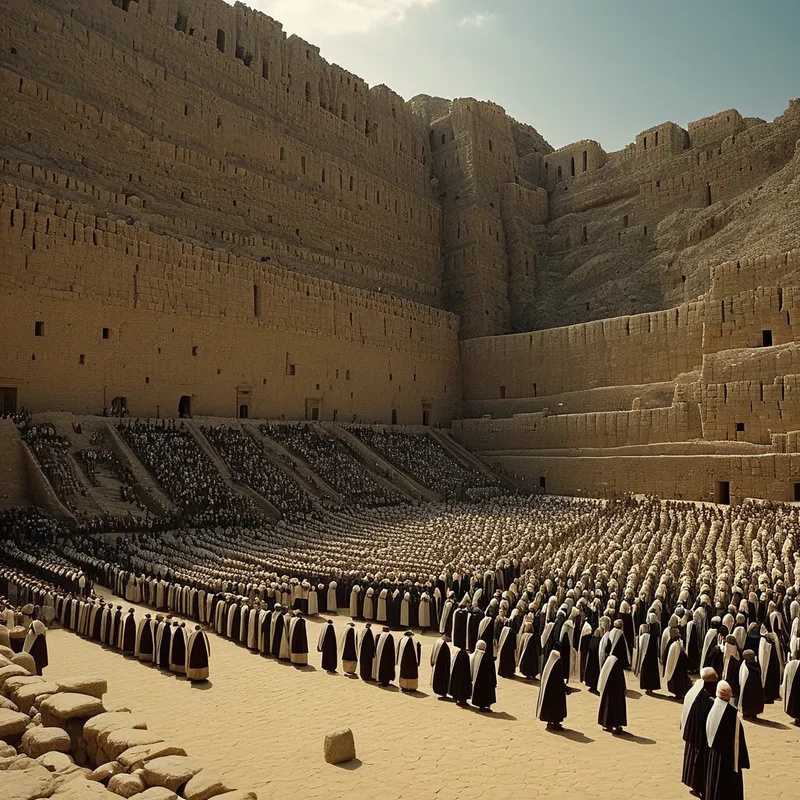
Hear now, of a wall that was said to be the fist of the earth itself, clenched against the sky. Jericho. Its name was a whisper of fear and a promise of sweet water in the Jordan Valley. Its walls were not built; they were grown, stone upon impossible stone, rising so high they drank the dawn before the streets below saw light. Behind them, a city breathed in the shadow of its own might, believing itself cradled in stone, eternal and unassailable.
And then came the people. A nation forged in desert crucibles, led by Joshua, a man with fire in his veins and sand in his soul. They stood on the plains, a tide of dust and determination, and looked upon the citadel. No siege towers were built. No battering rams were fashioned. For a command had come, not from the general’s tent, but from a voice that spoke in the space between the heartbeats of the world.
For six days, as the sun bled across the sky, a silent procession unfolded. The fighting men, the Kohanim bearing the sacred Ark of the Covenant, and seven priests with seven shofars made one circuit around the immense wall. No shout was raised. No sword was drawn. Only the muffled tread of feet on earth, the faint, mournful bleat of the ram’s horns, and the palpable, trembling silence from the battlements above. The people within mocked, then grew uneasy, then fearful. What magic was this? What army marches in utter quiet?
Dawn of the seventh day. The air was taut, a drumskin waiting for the strike. This time, they circled not once, but seven times. On the seventh circuit, as the priests’ lungs burned and the people’s faith stretched thin, Joshua’s voice tore the silence. “Shout! For YHWH has given you the city!”
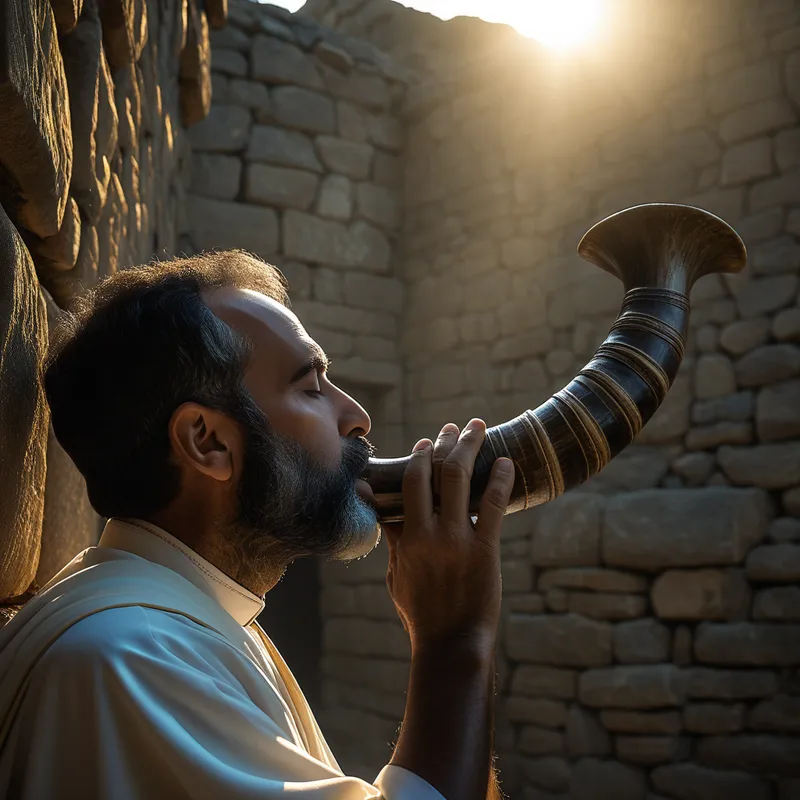
And they shouted. A roar that began in the belly of a nation and erupted from thousands of throats. The seven priests blew a long, piercing, final blast on the shofars—a sound that was not of this earth, a tectonic cry.
Then, the world unmade itself.
The ground did not shake; it sighed. A deep, groaning exhalation from the foundations of the earth. The mighty stones of Jericho did not fall outward; they slumped inward, as if the will that held them upright had been suddenly revoked. The wall collapsed upon itself in a cloud of powdered limestone and thunder, leaving only a sloping ramp of rubble where a fortress had stood. The silence that followed was deeper than the one that preceded it, filled now with the settling dust of an ended age.
Cultural Origins & Context
This narrative is anchored in the Book of Joshua, a foundational text that chronicles the entry of the Israelite tribes into the Promised Land. It functions as a pivotal etiological myth, explaining not just a military victory, but the theological and moral justification for that conquest. It was a story told not primarily in royal courts, but around campfires and in communal gatherings, recited by priests and elders to solidify a collective identity forged in covenant.
Its societal function was multifaceted. For a people transitioning from nomadic hardship to settled life, it was a potent reminder that their success was not due to martial superiority, but to divine favor and obedience to a sacred law. The highly ritualized, non-violent (initially) protocol for the city’s fall served to distinguish the Israelites from surrounding cultures, framing their campaign as a holy execution of divine judgment rather than mere territorial expansion. The story cemented Joshua’s legitimacy as Moses’s successor and reinforced the core tenet that faith and ritual obedience, not human strength, were the ultimate sources of security and victory.
Symbolic Architecture
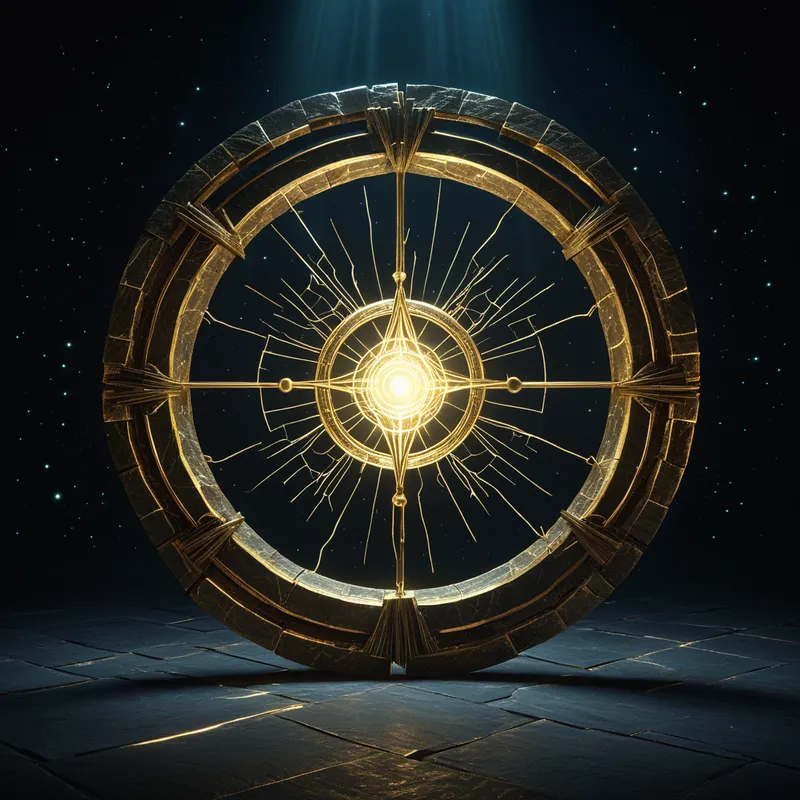
At its heart, the myth is not about a military tactic, but a profound lesson in the architecture of consciousness. The Wall is the ultimate symbol of the hardened, seemingly insurmountable complex.
The wall we must bring down is always first an inner one, a fortification of fear, dogma, or old identity that believes itself permanent.
Jericho represents the entrenched, autonomous psyche—the “fortified city” of the ego or a dominant cultural complex that feels separate, self-sufficient, and impregnable. Its walls are the psychological defenses: rationalizations, pride, trauma, or inherited beliefs that separate what is within (the unconscious contents, the promised land of the Self) from what seeks to enter (a new consciousness, a calling).
The seven-day ritual is the archetypal pattern of sacred time and necessary preparation. The silent circling signifies containment, focus, and the application of consistent, patient pressure—not brute force, but the power of presence and attention. The shout and the shofar blast represent the catalytic moment when focused intention (the silent march) meets inspired, eruptive expression. It is the logos, the word or sound that carries the authority to disintegrate a structure that has lost its divine right to stand.
The Dreamer’s Resonance
When this myth stirs in the modern dreamer, it often manifests as dreams of confronting immense, impossible barriers: vast walls, frozen cliffs, or domed enclosures that cannot be breached. The dreamer may find themselves walking in circles around an office building, a childhood home, or a featureless monolith. There is a somatic quality of building tension, of a necessary but frustrating gestation period.
Psychologically, this signals that the ego is confronting a profound inner obstruction. This could be a core belief (“I am not worthy”), a traumatic memory walled off from consciousness, or a life pattern that has become a prison. The silent marching in the dream reflects the often tedious, repetitive inner work of therapy, meditation, or journaling—the process of “circling” the issue, observing it from all angles without yet attacking it. The impending “shout” is the felt-sense of an approaching breakthrough, where accumulated insight and emotional pressure are about to find their voice and release, leading to a collapse of the old inner structure and a new, terrifying, and liberating openness.

Alchemical Translation
The alchemy of Jericho is a precise model for psychic transmutation, the core of the individuation process. The first stage, circulatio, is embodied in the silent marching. The psychic energy is not discharged outwardly in conflict but is drawn inward and circulated around the problem. This containment heats and prepares the raw material of the psyche.
The sevenfold pattern aligns with the classic alchemical stages, culminating in the coniunctio—the marriage of opposites. Here, the opposites are silent obedience and eruptive proclamation, human ritual and divine intervention. The shout and the shofar blast represent the moment of separatio, where the spirit (ruach, the breath and sound) separates the rigid, earthly element (the wall) from its animating principle, causing it to collapse into its base state.
The promised land is not given to those who are merely strong, but to those who have the courage to let their old fortifications be destroyed by a sacred sound they agreed to become.
For the modern individual, the triumph is not in the destruction itself, but in the faithful adherence to the irrational, ritual protocol. It models that our most entrenched personal “walls”—addictions, narcissism, crippling anxiety—are not overcome by direct, willful assault. They fall when we commit to the disciplined, often silent, circling work of awareness, and when we finally give voice, from the depths of our being, to the truth that has been gathering force all along. The collapse is both an end and a beginning: the end of an old, defensive identity, and the terrifying, open ground of the promised land of the more authentic Self.
Associated Symbols
Explore related symbols from the CaleaDream lexicon: