The Valley of the Shadow of Death Myth Meaning & Symbolism
A soul's journey through a valley of ultimate fear, guided by an unseen presence, to emerge into a place of restoration and profound peace.
The Tale of The Valley of the Shadow of Death
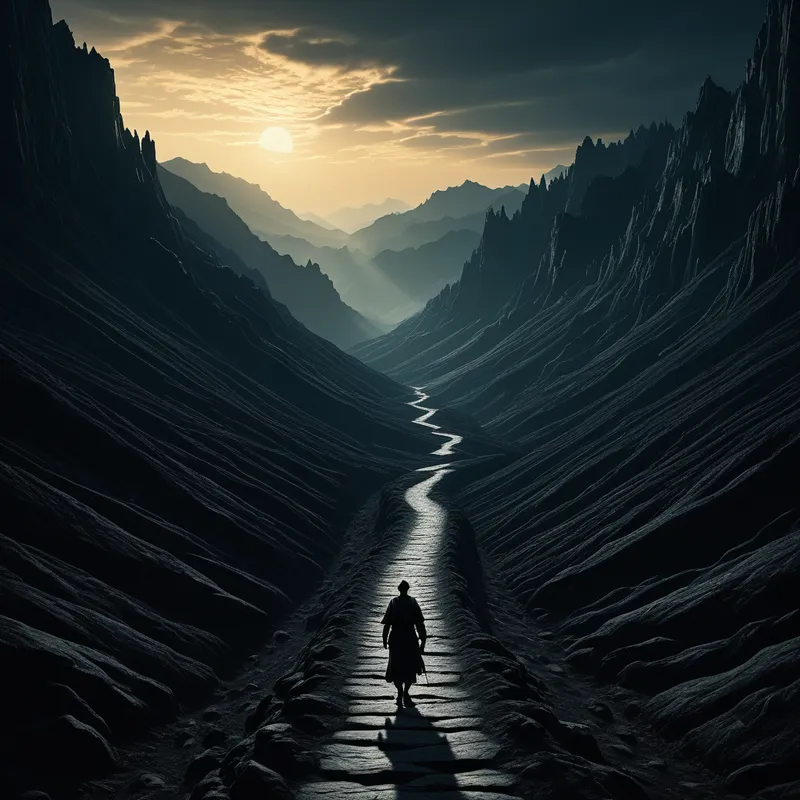
Listen. There is a road every soul must walk, but not all roads are made of earth and stone. There is a road that leads downward, away from the green pastures and the still, quiet waters. It is a road that descends into a place where the sun forgets to shine, a cleft in [the world](/myths/the-world “Myth from Tarot culture.”/) so deep it drinks the light.
This is the [Valley of the Shadow of Death](/myths/valley-of-the-shadow-of-death “Myth from Biblical culture.”/).
Here, the air is not air but a cold breath that carries no scent of life—only dust, and the memory of stone. The shadows here are not mere absences of light; they are entities. They cling to the canyon walls, they pool in the ravines, and they move. They have weight. To walk here is to feel them brush against your skin like cold silk, to hear whispers in a language of rustling decay. The path is narrow, littered with the sharp flints of despair and the crumbling bones of forgotten hopes. Every step echoes, a solitary sound swallowed by a vast, listening silence.
The traveler on this road is alone, and yet… not alone. For he walks with a presence. He carries no torch, for no flame born of man can pierce this gloom. His guide is not a voice in his ear, but a knowing in his chest. A rod, an unseen staff of authority, prods him onward when his legs would falter. A staff, an invisible crook of belonging, rests on his shoulder, a counterweight to the pressing dark.
The conflict is not with a beast of fang and claw, though such terrors may lurk in the mind. The conflict is with [the Shadow](/myths/the-shadow “Myth from Jungian culture.”/) itself. It is the fear that whispers, “You are alone.” It is the dread that murmurs, “This darkness is all there is.” It is the rising, suffocating certainty that the path ends only in oblivion. The valley tests not the strength of the body, but the substance of the soul’s declaration: “I will fear no evil.”
And then, the resolution comes not as a bursting forth into sunlight, but as a gradual, dawning realization. The shadows begin to thin. They lose their substance. The path, though still in the valley, becomes firmer. For the traveler understands the most profound truth of the journey: the Shadow is cast by something. It is the proof of a light behind him. He walks through it; he does not live within it. And ahead, hinted at by a softening in the air, is the promise of a table set in the very presence of those old, haunting fears, a cup that overflows, and dwelling—not just visiting, but dwelling—in a house of belonging, forever.
Cultural Origins & Context
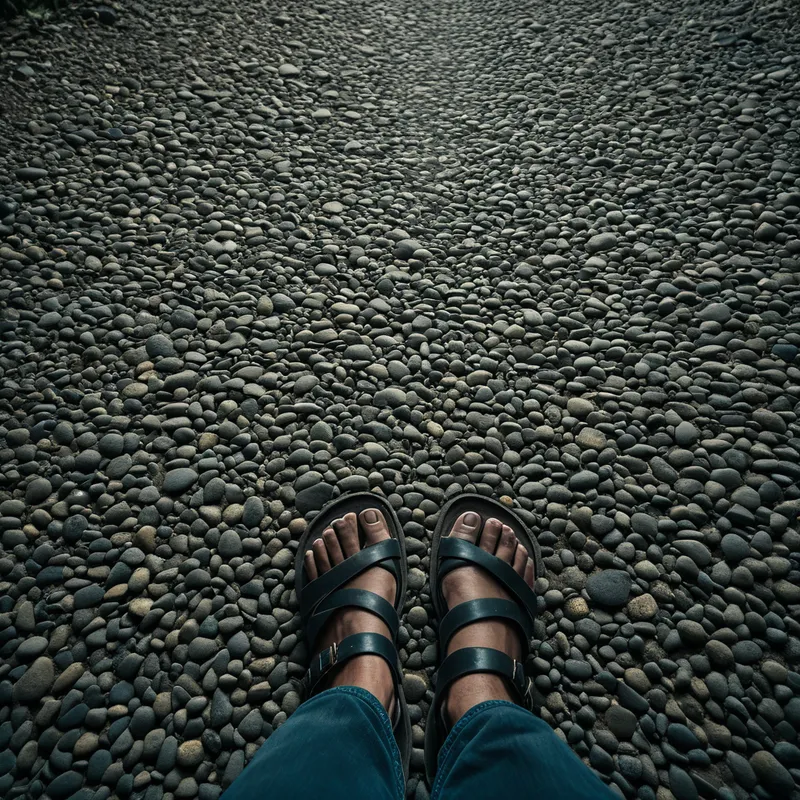
This mythic journey is embedded in the <abbr title="A sacred song or poem, often attributed to King David">Psalm</abbr> 23, a text central to Christian liturgy, personal devotion, and funeral rites for millennia. Its authorship is traditionally ascribed to King David, a shepherd-king who knew the literal dangers of the Judean wilderness—ravines, predators, and desolate places. The psalm transformed these physical realities into a universal spiritual topography.
It was passed down orally and in scrolls, recited by priests, sung by pilgrims, and whispered by the dying. Its societal function was multifaceted: it was a comfort for the bereaved, a courage-song for the persecuted, and a map for the seeker. It served to frame extreme suffering—grief, persecution, mortal fear—not as a meaningless void, but as a passage, a defined segment of a larger, guided journey. It gave a name, “the valley of the shadow of death,” to the unnamedble terror, thereby containing it within a narrative of ultimate safety and destination.
Symbolic Architecture
The [Valley](/symbols/valley “Symbol: A valley often symbolizes a period of transition or a place of respite between two extremes.”/) is the quintessential [symbol](/symbols/symbol “Symbol: A symbol can represent an idea, concept, or belief, serving as a powerful tool for communication and understanding.”/) of the [Shadow](/symbols/shadow “Symbol: The ‘shadow’ embodies the unconscious, repressed aspects of the self and often represents fears or hidden emotions.”/) encounter. It is not evil itself, but its [shadow](/symbols/shadow “Symbol: The ‘shadow’ embodies the unconscious, repressed aspects of the self and often represents fears or hidden emotions.”/)—the looming, distorted, and frightening [aspect](/symbols/aspect “Symbol: A distinct feature, quality, or perspective of something, often representing a partial view of a larger whole.”/) of [reality](/symbols/reality “Symbol: Reality signifies the state of existence and perception, often reflecting one’s understanding of truth and life experiences.”/), [mortality](/symbols/mortality “Symbol: The awareness of life’s finitude, often representing transitions, impermanence, or existential reflection in dreams.”/), and the unconscious.
The valley is not the absence of the shepherd; it is the place where his presence is known only by faith, not by sight.
The <abbr title="A metaphorical figure representing divine guidance, protection, and authority">rod</abbr> and <abbr title="A herder's crook, symbolizing guidance, rescue, and belonging">staff</abbr> are the twin instruments of this psychic [journey](/symbols/journey “Symbol: A journey in dreams typically signifies adventure, growth, or a significant life transition.”/). The rod is [the principle](/symbols/the-principle “Symbol: A fundamental truth, law, or doctrine that serves as a foundation for a system of belief, behavior, or reasoning, often representing moral or ethical standards.”/) of discipline, [structure](/symbols/structure “Symbol: Structure in dreams often symbolizes stability, organization, and the framework of one’s life, reflecting how one perceives their environment and personal life.”/), and boundaried [truth](/symbols/truth “Symbol: Truth represents authenticity, honesty, and the quest for knowledge beyond mere appearances.”/) that prods us forward when we would prefer to collapse in [paralysis](/symbols/paralysis “Symbol: A state of being unable to move or act, often representing feelings of powerlessness, fear, or being trapped in waking life.”/). The staff is the principle of grace, support, and hooked-in belonging that pulls us back from the precipices of our own [despair](/symbols/despair “Symbol: A profound emotional state of hopelessness and loss, often signaling a need for transformation or surrender to deeper truths.”/). The [traveler](/symbols/traveler “Symbol: A person on a journey, representing movement, transition, and the search for new experiences or self-discovery.”/) is the conscious ego, frail and perceptive, undertaking the perilous but necessary [journey](/symbols/journey “Symbol: A journey in dreams typically signifies adventure, growth, or a significant life transition.”/) through its own repressed [material](/symbols/material “Symbol: Material signifies the tangible aspects of life, often representing physical resources, desires, and the physical world’s influence on our existence.”/) and existential fears.

The Dreamer’s Resonance
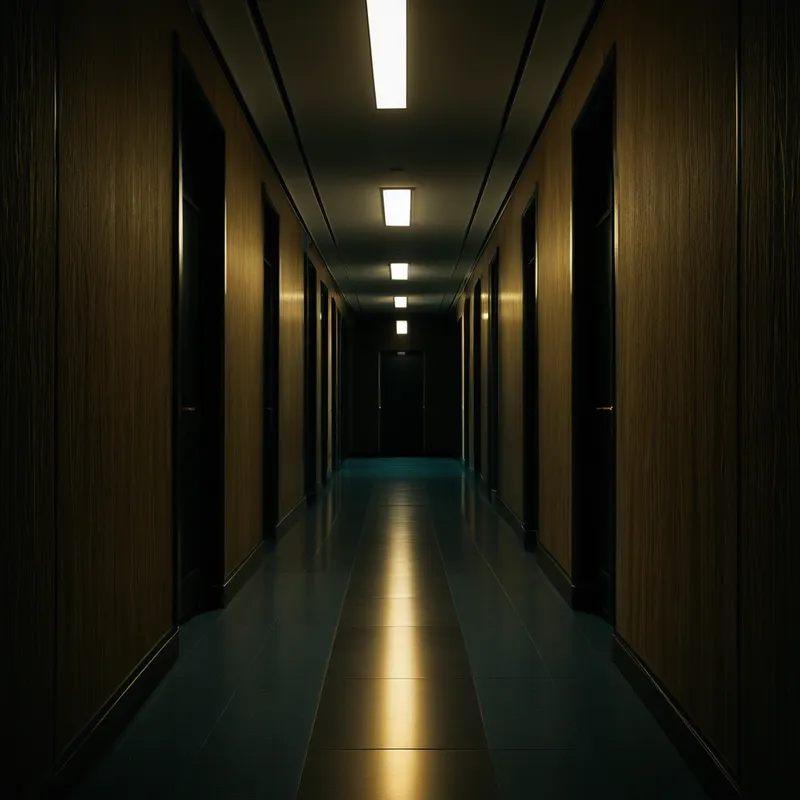
When this myth surfaces in modern dreams, it rarely appears as a biblical pastiche. Instead, the dreamer may find themselves in an endless, darkened parking garage, a labyrinthine subway tunnel after hours, or a decaying, empty house where every door opens onto a deeper darkness. The somatic feeling is one of profound dread, a cold weight in the stomach, and the sense of being watched by a formless presence.
Psychologically, this signals a process of confronting a repressed complex—perhaps a buried grief, a denied fear of failure, or an unacknowledged aspect of one’s own power or vulnerability (the complex). The dream is not a prediction of doom, but an enactment of the journey through. The dream-ego’s survival, its continued movement despite the terror, mirrors the psalm’s central act of “walking through.” The process is one of somaticizing fear and, by enduring it in the dreamscape, beginning to metabolize it.
Alchemical Translation
In the alchemy of individuation, the Valley represents the <abbr title="A central alchemical and Jungian stage involving decomposition, putrefaction, and the confrontation with shadow content">[nigredo](/myths/nigredo "Myth from Alchemical culture."/)</abbr>—the blackening, the descent into the primal matter of the soul. It is the necessary dissolution of [the ego](/myths/the-ego “Myth from Jungian culture.”/)’s sunny, daytime certainty.
The triumph is not in avoiding the shadow, but in discovering that one’s fundamental identity is not annihilated by walking within it.
The guided journey models the relationship between the conscious ego and the <abbr title="In Jungian psychology, the archetype of wholeness and the regulating center of the psyche; often symbolized by a divine figure">Self</abbr>. The ego does not navigate the valley by its own cleverness; it is navigated by a larger, organizing principle within the [psyche](/myths/psyche “Myth from Greek culture.”/) ([the Self](/myths/the-self “Myth from Jungian culture.”/)). The “table prepared in the presence of mine enemies” symbolizes the ultimate goal: not the eradication of one’s inner conflicts or mortal fears, but the achievement of a conscious state that can sit in sustained, unshaken awareness of them. The cup that overflows represents the psychic energy (libido) no longer locked in fighting the shadow, but now available for creativity, love, and life. The valley’s work is the alchemical transmutation of paralyzing fear into grounded presence, where the shadow, having been walked through, loses its power to haunt and instead becomes part of the landscape of a whole life.
Associated Symbols
Explore related symbols from the CaleaDream lexicon: